
Should You Buy A Used Tesla? What Are Pros And Cons?
“You wouldn't know that my car is a 2016 at all."
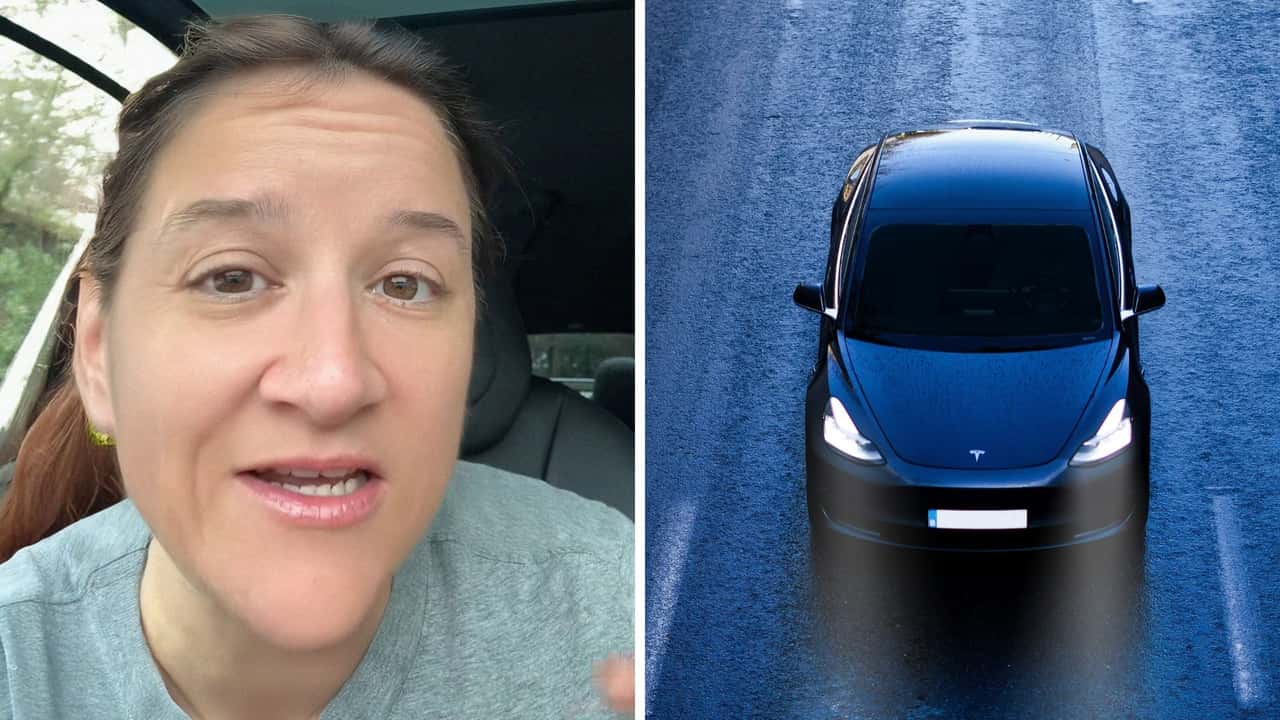



Buying a used car is always a gamble. Buying a used electric car can feel like an even bigger one, especially when the most expensive part of the vehicle is a battery you can’t see. A viral TikTok praising used Teslas has ignited debate on buying a used EV, along with a growing list of reasons some buyers think the risk might be worth it.
The clip from EV enthusiast Jeanne (@jeanne.ugc.conten) leans into some of the doubts about buying a used Tesla, but she quickly becomes a cheerleader for her 2016 model, which she says delivers all the value and comfort she needs.
“You wouldn't know that my car is a 2016 at all. I have people that get in my car and say, ‘This is not a 2016,’” she said in the clip that’s been viewed more than 7,000 times. “When I go on a road trip, I don't pay for anything. I just plug into my supercharger, and I charge for free. A lot of people don't know about that.”
One of the strongest points in Jeanne’s argument is that her nearly decade-old Tesla continues to receive over-the-air software updates, which remain relatively rare in the broader auto market. Tesla regularly pushes updates that can refine navigation, add entertainment features, tweak driver-assistance behavior or improve efficiency, even on older vehicles.
According to Tesla, software updates are delivered to most vehicles built since 2012, though the features available can vary by hardware generation and the sensors installed at the factory. That distinction matters: While a 2016 Model X may still receive updates, it won’t necessarily gain the newest Full Self-Driving visualizations or features designed for Tesla’s latest Hardware 4 platform.
Still, for many owners, the ability to wake up to a car that has subtly improved overnight is a major selling point, helping older Teslas feel more modern than their age might suggest.
Battery Life: The Biggest Question Mark
Unsurprisingly, most of the skepticism in the TikTok comments centers on battery health. Several viewers asked how Jeanne’s battery has held up after years of use, while others warned against buying a Tesla that’s already outside its battery warranty period.
FROM THE TRENDING NEWS DESK
Viral bits from across the social media landscape
Our team of experts tracks what's trending so you don't have to—from viral videos to online debates that have everyone talking.
Tesla’s battery and drive unit warranties typically cover eight years, with mileage limits ranging from 100,000 to 150,000 miles depending on the model and battery size. While that coverage has given many early buyers peace of mind, used-car shoppers often encounter vehicles nearing or already beyond that threshold.
Data collected by firms such as Recurrent Auto suggests that modern EV batteries tend to degrade gradually rather than fail suddenly. Studies have found that many Teslas lose roughly 10 to 15 percent of their original range after 150,000 to 200,000 miles, though outcomes can vary based on climate, charging habits, and usage patterns.
That reality sits somewhere between the extremes seen in the comment section, where some users insist Tesla batteries regularly last 300,000 miles or more. In contrast, others argue that any meaningful range loss makes an older EV impractical.
Jeanne’s most attention-grabbing claim involves free Supercharging for life, a perk that Tesla once offered to early Model S and Model X buyers. Known internally as “SC01,” the benefit allows unlimited use of Tesla’s Supercharger network at no cost, provided it remains tied to the vehicle.
That detail is crucial. Tesla discontinued free Supercharging years ago, and most Model 3 and Model Y vehicles were never eligible. Even among older Model S and X cars, the perk does not always transfer if the vehicle has changed ownership or passed through Tesla’s own resale channels.
Commenters with firsthand experience warned that many third-party dealers either misunderstand or misrepresent the feature. Tesla owners say the only reliable way to confirm free Supercharging is by checking the vehicle’s charging details directly in the car or through the Tesla app. If it shows “Pay Per Use,” the perk isn’t there—no matter what a listing claims.
Software Features Don’t Always Transfer
Another recurring question in the comments involves Full Self-Driving, Tesla’s controversial driver-assistance package. While some used Teslas include FSD if purchased outright by a previous owner, the feature doesn’t always transfer between owners, particularly if the car passes through Tesla’s inventory.
Hardware also plays a role. Older vehicles may run earlier Autopilot systems that limit which FSD features are available, even if the software license is present. That means two Teslas with the same badge year can offer very different experiences depending on when they were built and what hardware they carry.
For buyers expecting the latest autonomy features, that nuance can be a disappointment. For others, basic Autopilot and adaptive cruise control may be more than sufficient.
The TikTok that sparked the discussion doesn’t settle the debate over used Teslas, but it does highlight why the question keeps resurfacing. Compared with gas-powered vehicles, EVs tend to have fewer wear items, lower routine maintenance needs, and drivetrains that age differently over time.
At the same time, battery health, warranty status, and software eligibility introduce risks that traditional used-car buyers may not be accustomed to evaluating. For shoppers who understand those trade-offs and carefully verify features, a used Tesla can still be a compelling entry point into EV ownership.
InsideEVs reached out to Jeanne via email and direct message. We’ll update this if they respond.
RECOMMENDED FOR YOU

Woman Buys Cadillac EV. Then They Offer Her A Deal On EVgo
This 380,000-Mile Tesla Model 3 Has Its Original Battery. Range Loss Is Huge
"The Motor Is Supposed To Last 1 Million Miles": Man Hits 360,000 Miles On His Model 3. Is That The Norm?
This Theft-Proof E-Bike Is A Cheat Code For NYC Streets
"Dealerships Are Shady": Man Says Texas Toyota Dealership Agreed To Sell Highlander Hybrid For $26,900, Then Jacked Up The Price
EVs Slashed Global Fuel Consumption Massively In 2025
Can Waze Still Track The Police?