
'I Need You Take It Back To Hertz': Florida Tow Truck Driver Picks Up Kia EV Because The Driver Let The Battery Go To 0%
"You’re paying for that tow, buddy, not them.”
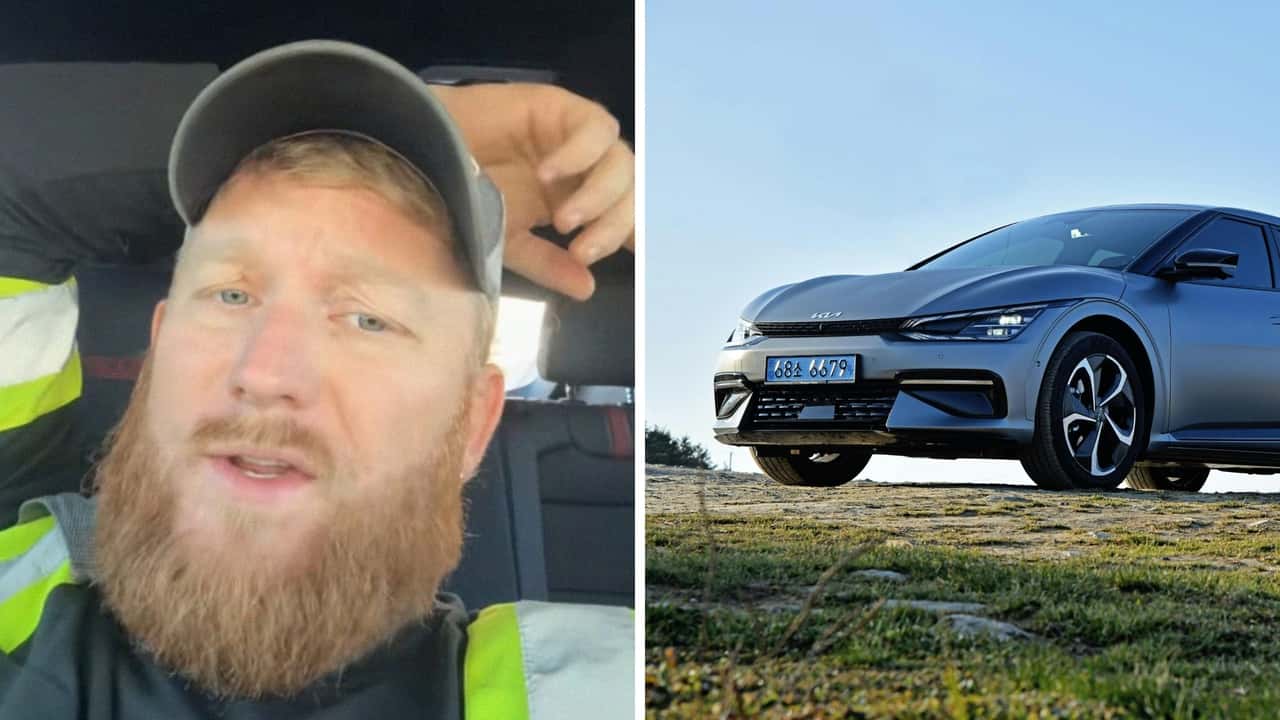

A Florida tow truck driver expected he’d have to rescue a broken-down electric car on a recent call. Instead, he arrived to find a fully functional Kia EV, towed not because it failed but because its driver didn’t feel like charging it.
The viral clip from creator Tow Ginger (@towginger) gives us an up-close look at the laborious and complicated steps involved in handling electric vehicles, which can take a whole lot more time and care than standard gasoline vehicles.
“Do you realize that I have to put four skates on it 'cause it's all-wheel drive?” he asks in the clip that’s been viewed more than 2,200 times.
“Do you realize I have to put a winch cable on it, spin it around 180 degrees, pull it on the truck, remove the skates, strap it down, chain it down, whatever the case may be. Drive all the way across town, put four skates back on it, and winch the vehicle off my truck?”
The moment quickly escalates from annoyance to disbelief. As the tow truck driver explains in the clip, the Kia wasn’t suffering from a mechanical failure at all. The renter had simply let the battery drain completely, then decided it was easier to order a tow than detour to a charging station before returning the vehicle to Hertz.
“Because you are too lazy to go to the charging station to charge the vehicle that you put on your credit card,” he says in the video. “Yeah. I called the manager at Hertz. You’re paying for that tow, buddy, not them.”
Why Towing EVs Isn’t Simple
While the situation itself sparked heated debate in the comments, the video also unintentionally highlights a lesser-known reality of electric vehicle ownership: Towing an EV is often far more complex than towing a gas-powered car.
FROM THE TRENDING NEWS DESK
Viral bits from across the social media landscape
Our team of experts tracks what's trending so you don't have to—from viral videos to online debates that have everyone talking.
Many electric vehicles, particularly all-wheel-drive models like this Kia, cannot simply be rolled onto a flatbed when their battery is depleted. Without power, the vehicle may not shift into neutral electronically, and dragging powered axles can damage motors or driveline components. As a result, tow operators frequently must use wheel dollies or “skates” on all four corners, then carefully winch the vehicle onto the truck.
Industry guidance from roadside assistance providers and automakers routinely warns against flat-towing EVs without proper equipment, noting the risk of expensive drivetrain damage. AAA and multiple automakers advise flatbed towing whenever possible, especially for all-wheel-drive EVs, a process that takes more time and specialized gear than a typical tow.
That extra effort is what Tow Ginger focuses on throughout the clip, repeatedly walking viewers through the steps required to safely load and unload the car.
The incident also underscores a growing friction point in the rental car world as electric vehicles become more common in fleets. Companies like Hertz have added thousands of EVs in recent years, pitching them as lower-maintenance, tech-forward alternatives to traditional rentals. But many renters remain unfamiliar with EV charging habits, range planning, and the consequences of running a battery to zero.
Unlike gasoline vehicles, which can be driven until nearly empty and refueled in minutes, EVs require advance planning, especially when charging infrastructure is unfamiliar or time is limited. While most rental agreements instruct customers to return EVs with sufficient charge, confusion over charging responsibility remains common, particularly among first-time EV drivers.
Rental car companies typically treat running out of charge similarly to running a gas vehicle dry or misusing the vehicle, meaning towing costs may be passed directly to the renter. While policies vary by company and location, avoidable tows are rarely considered normal wear and tear.
As the clip circulated on TikTok, viewers quickly divided into camps. Some argued the tow driver was simply doing his job and shouldn’t complain about paid work. Others sided with the driver, saying the renter’s decision wasted time, resources, and money that could have been easily avoided with a short charging stop.
Several commenters likened the situation to leaving a mess for restaurant staff or abandoning shopping carts in parking lots—technically someone else’s job to handle but widely seen as discourteous behavior. Others pushed back, noting that the tow company still gets paid regardless of the reason for the call.
The debate reflects a broader cultural adjustment as EVs move from early adopters to mainstream use. What feels like a small inconvenience to one driver can create ripple effects across service providers, rental companies, and roadside assistance systems.
Are EVs Harder For Tow Trucks?
The short answer is yes, at least in certain scenarios. EVs aren’t inherently fragile, but they are less forgiving when it comes to towing procedures. Dead batteries, electronic gear selectors, regenerative braking systems, and all-wheel-drive layouts all add complexity that tow operators must account for.
That doesn’t mean EVs break down more often. In fact, electric vehicles generally have fewer mechanical failure points than internal combustion cars. But when something does go wrong or when a battery is allowed to reach zero the recovery process can be slower, more expensive, and less intuitive.
This is especially relevant for renters who may assume roadside assistance works the same way regardless of vehicle type.
At its core, the viral tow truck video isn’t really about electric vehicles failing. The Kia in question worked exactly as designed. Instead, it highlights how expectations around convenience, responsibility, and “someone else will deal with it” can clash with the realities of EV ownership.
As electric vehicles continue to expand into rental fleets, situations like this are likely to become more common, not because EVs are impractical but because they require different habits. Charging, like refueling, is part of the deal. Skipping that step can turn a minor inconvenience into a costly, time-consuming problem for everyone involved.
InsideEVs reached out to the creator via direct message and comment on the clip. We’ll update this if they respond.
RECOMMENDED FOR YOU

The Best EV Lease And Finance Deals In June 2026
Drivers Are Not Happy With Their Cars' Screens
I Love EVs, But Kia and Hyundai Are Making That Harder
Lucid Cosmos And Earth: Everything We Know About The Tesla Model Y Rivals
These EVs Have The Highest Claimed Charging Power In 2026
This Chinese SUV Sold 100,000 Units In Seven Months For A Good Reason
The Best Affordable Electric Cars In 2026: Cheap, Reliable Options For Everyone