
‘Doesn’t Come With Any Mud Flaps’: Man Buys Tesla. Then The Weather Gets Bad
“The car doesn't have an engine, so it doesn't heat up enough to melt all this ice off it.”
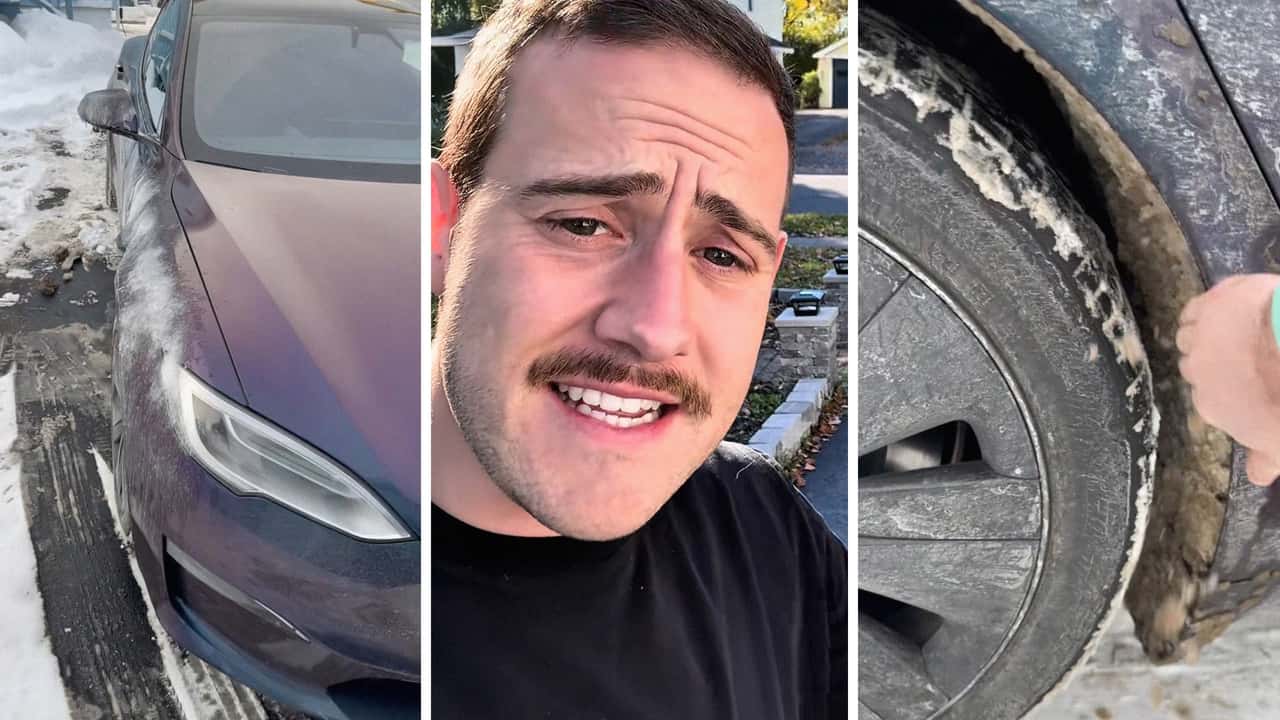

After one Tesla owner posted a video about issues he has with his Tesla, viewers questioned how handy the vehicle is for heavy winters.
On Oct. 27, TikTok user Joe Fay (@jf.okay) posted a video sharing some problems he has with his Tesla, specifically in the winter months. “Some things I don't like about my Tesla,” he said.
Do Teslas Have Mud Flaps?
“The car didn't come with any mud flaps, so all the wheel wells get covered in ice,” said Fay, while pointing to the ice-caked inner-fender liner.
However, some comments argued that there are easy solutions to this issue.
“Bruh park it in the garage and get some mud flaps,” wrote one commenter.
Now Trending
“We bought mud flaps off Amazon,” wrote another.
Some Teslas actually do come equipped with mud flaps, depending on the model, package, country of purchase and various other factors.
The accessory might be important for Tesla owners in colder climates. One Reddit thread has discussed the benefits of adding mud flaps to a Tesla in detail.
FROM THE TRENDING NEWS DESK
Viral bits from across the social media landscape
Our team of experts tracks what's trending so you don't have to—from viral videos to online debates that have everyone talking.
“I installed the Tesla flaps on the two front wheel wells of my Model 3 last October, and have definitely noticed far less mess on the body near the bottom of the front doors,” wrote one user.
Are Teslas Impacted By A Lack Of Heat From An Engine?
Fay also mentioned that the lack of heat from the engine also causes issues. “The car doesn't have an engine, so it doesn't heat up enough to melt all this ice off it,” he added.
“And lastly, just look at how dirty the car gets when I drive it,” said Fay.
While many comments offered solutions, such as parking the vehicle in a garage, many agreed with Fay’s point. “Gas cars have their own defroster,” wrote one commenter.
Electric vehicles like Teslas can indeed face performance challenges in cold weather, mainly because they lack a gas engine that generates waste heat. In freezing temperatures, Teslas must use battery power to heat both the cabin and the battery, which reduces driving range and can slow charging times.
The U.S. Department of Energy found that cold ambient temperatures can decrease electric vehicle range by 20-40%, as lithium-ion batteries become less efficient at low temperatures. AP News also reported that freezing weather can make charging slower and cabin heating more energy-intensive.
Tesla has addressed this by adding heat pumps in newer models like the Model Y and Model 3, which help maintain range in cold climates.

RECOMMENDED FOR YOU

An App Flagged This Tesla Battery As Degraded. The Car Said It Was Worse
BMW iX5 Blows Away The Competition With 460-kW Charging, 435-Mile Range
Teslas Will Now Deploy Their Airbags Before Crashes Happen Thanks To Cameras
Drivers Are Not Happy With Their Cars' Screens
Tesla Is Giving Away Free Supercharging. Here's How To Win.
Lucid Cosmos And Earth: Everything We Know About The Tesla Model Y Rivals
This Ex-Rental Tesla's Battery Was Heavily Degraded. Then The Decline Slowed