
‘It’s More Expensive In SF’: Woman Gets Into A Waymo. Then She Sees What It Costs Compared To A Regular Uber
How can a driverless, luxury EV ride compete with standard rideshare services?
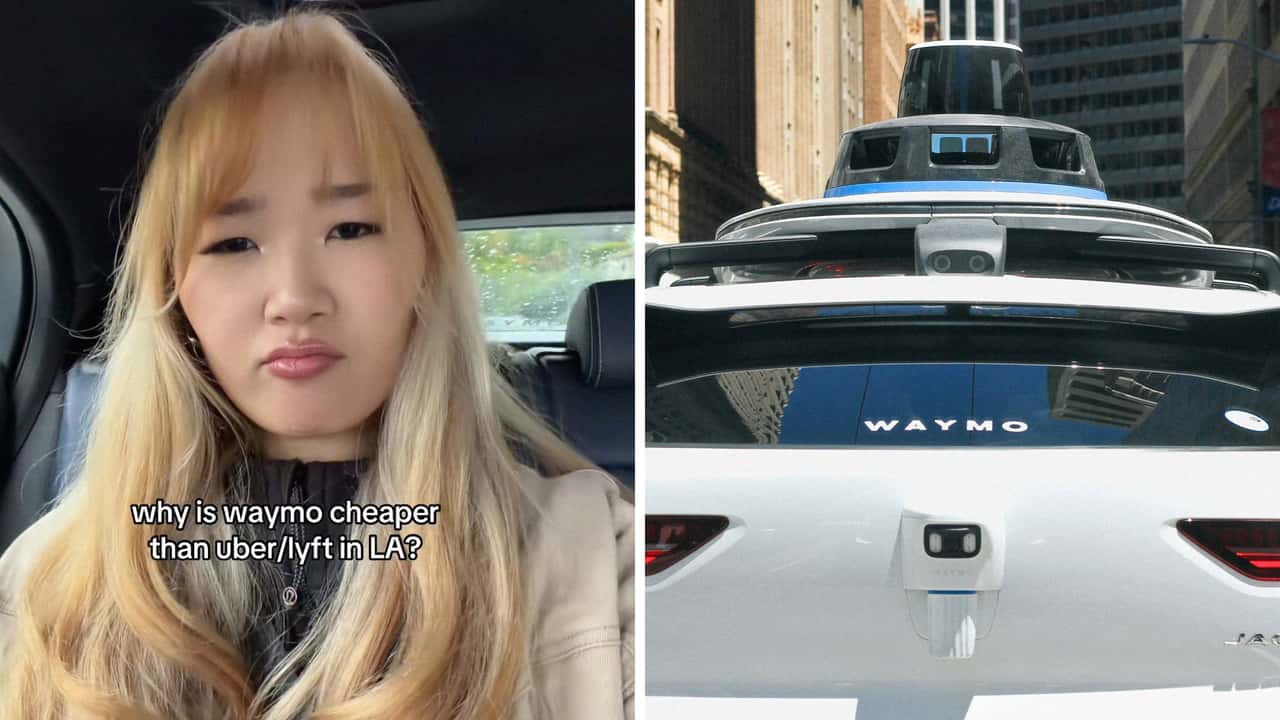

You’d expect a self-driving Jaguar to cost more than an Uber. But a recent Waymo ride in Los Angeles showed the opposite, and a recent TikTok clip raises the question about what’s behind the price difference.
TikToker and at least somewhat frequent San Francisco resident Parpude (@parpude) posed the question in a clip filmed during a recent Waymo ride in Los Angeles. Her caption notes that similar rides cost more in the Bay Area, leaving her curious as to the economics and market forces at play.
Waymo in Los Angeles
Waymo began offering commercial, fully autonomous rides in several U.S. cities through its “Waymo One” program. The company uses the all-electric Jaguar I‑PACE as one of its core robotaxi vehicles, thanks to a strategic partnership with Jaguar Land Rover dating back to 2018.
Now Trending
According to Waymo, it currently has about 1,500 of those I-PACE vehicles operating across San Francisco, Los Angeles, Phoenix, and Austin, with plans to add more than 2,000 additional units by 2026. In Los Angeles, this means a driverless, EV-powered ride is a real option for consumers today.
Parpude’s surprise ride highlights a seeming contradiction: How can a driverless, luxury EV ride cost less than, or at least be competitive with, standard rideshare services from Uber or Lyft? Several factors help explain this.
From an operational standpoint, Waymo’s cost base differs: No human driver wages, fewer tipping and scheduling variables, and an electric platform that eliminates fuel costs. The Jaguar I-PACE is a premium EV, and Waymo’s blog emphasizes its integration of sensors and computing into that platform. Also, promotional and market-entry pricing may influence local fare levels in Los Angeles. Independent tests in LA have found examples where a Waymo ride costs about $20 for 17 minutes, which in one case was roughly $6 cheaper than Uber or Lyft for a similar route.
FROM THE TRENDING NEWS DESK
Viral bits from across the social media landscape
Our team of experts tracks what's trending so you don't have to—from viral videos to online debates that have everyone talking.
There’s also the question of local supply and demand: If Waymo has enough vehicles in the zone and less need to surge, it may set a lower base fare to build ridership and refine its operations.
While Parpude’s TikTok ride suggests Waymo might beat Uber on price in LA, other studies paint a different picture overall. For instance, a sample of roughly 90,000 offers in San Francisco found that the average Waymo ride was about $20.43, compared to $15.58 for Uber and $14.44 for Lyft. That translated into a 31% and 41% premium, respectively. Those same data showed the gap widens during peak hours.
Another analysis specifically of LA found that for certain short distances, UberX averaged around $23.81 for a 6.3-mile ride, whereas Waymo averaged $23.09 for the same distance.
So while local instances like the TikTok ride may show Waymo undercutting, those are likely situational—pricing depends heavily on location, time, route length and vehicle availability.
User Experience And Perception
From the rider’s vantage point, the draw of Waymo is not just cost but novelty, perceived quality and the EV/driverless factor. Reports from riders are mixed, though some highlight the smoothness, quietness, and predictability of a robotaxi, especially one built on an electric platform like the Jaguar I-PACE.
Waymo’s use of the Jaguar I-PACE and driverless technology demonstrates how EVs can become the backbone of new transport services. The real-world fare structure tells us much about how EVs and autonomy might reshape cost structures in the future.
If driverless EVs can offer comparable or lower fares than human-driven services at scale, the economics of mobility will shift. This could accelerate consumer exposure to EVs as riders, not just buyers, influence fleet purchasing decisions and raise questions about how legacy rideshares adapt.
The fact that many studies show Waymo is still more expensive in some markets indicates that driverless EVs don’t always result in the lowest fares. Factors like fleet scale, map coverage, regulatory cost, localization of operations and vehicle amortization all matter.
The TikTok clip captured a moment of surprise from a driverless EV ride in Los Angeles that undercut Uber, but the broader picture is more nuanced. Whether Waymo is always cheaper than Uber depends greatly on the market and the route.
For EV-watchers, the question to keep an eye on is: As Waymo and others scale their fleets and expand into more cities, will those cost advantages become the rule rather than the exception? If so, the next time someone hops into a robotaxi, the price shock may fade, but the technology will have already changed the game.
InsideEVs reached out to Parpude via instant message and a comment on the clip. We’ll be sure to update this if they respond.

RECOMMENDED FOR YOU

Woman Buys Cadillac EV. Then They Offer Her A Deal On EVgo
Someone Keeps Stealing Entire Truckloads Of Tesla Batteries
"The Motor Is Supposed To Last 1 Million Miles": Man Hits 360,000 Miles On His Model 3. Is That The Norm?
Tesla Starts Testing Steering-Wheel-Free Cybercab On Austin Streets. Can It Match Waymo?
Can Waze Still Track The Police?
California's New EV Incentive Is Almost Here—With Special Benefits For Rivian And Lucid
‘Didn’t Know This Was So Common': Truck Hits Subaru In Disneyland Garage And Runs. They Didn’t Expect A Tesla To Get The Footage