
Is It Dangerous To Eat Fast Food Behind The Wheel Of A Tesla?
Tesla’s Full Self-Driving remains a Level 2 driver‐assistance system, not true autonomy.
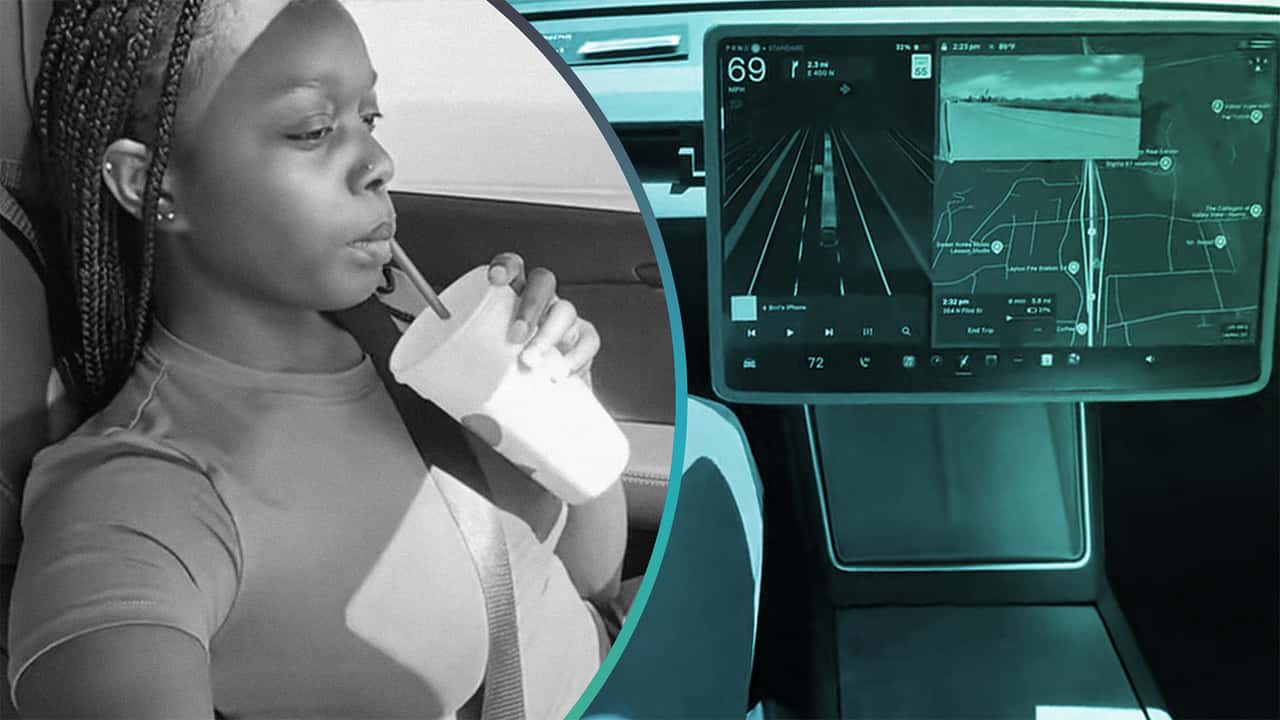

In 2025, dinner and a drive can mean something very different: TikTok is full of Tesla owners eating fries and sipping soda while their cars navigate traffic. But when “Full Self-Driving” turns lunch into leisure, safety experts see more than just a quirky viral clip.
New Tesla owner Bri (@_iambrri) is clearly getting used to the creature comforts of her Model Y, which we see in a viral clip where she’s letting FSD do the driving, “so you can chill and vibe when you don't feel like driving.”
Tesla’s Full Self-Driving (FSD) remains a Level 2 driver‐assistance system, not true autonomy. While it can steer, brake, accelerate, change lanes, and navigate turns, including at intersections, under some conditions, Tesla’s own documentation and safety warnings make clear that the driver must remain alert, hands on the wheel, eyes on the road.
In a study of “(Mis-)use of standard Autopilot and Full Self-Driving (FSD),” researchers specifically cautioned that FSD Beta "may do the wrong thing at the worst time" and that users must be “prepared to act immediately, especially around blind corners, crossing intersections, and in narrow driving situations.”
Legal experts underline that even when FSD or Tesla Autopilot is engaged, responsibility still rests with the human driver. Courts and regulatory bodies have repeatedly emphasized that Tesla’s systems are designed to assist the driver, not replace them.
The Risks Of Distraction
Distraction is a well-known danger behind the wheel. According to the National Highway Traffic Safety Administration (NHTSA), in 2023, there were 3,275 deaths in crashes involving distracted drivers and nearly 325,000 injuries. “Distracted driving” includes activities like eating and drinking, adjusting controls, engaging with devices, or other behaviors that draw attention or hands away from driving.
Eating a fast-food meal can involve all three types of distraction: visual (looking away to unwrap or lift food), manual (hands off the wheel), and cognitive (thinking about the meal rather than driving conditions). Even outside of FSD, studies indicate that such multitasking significantly increases the risk.
FROM THE TRENDING NEWS DESK
Viral bits from across the social media landscape
Our team of experts tracks what's trending so you don't have to—from viral videos to online debates that have everyone talking.
Now Trending
With FSD engaged, the danger may be that drivers misjudge how much “assistance” the system is actually providing. If the car is handling many tasks, a driver might relax too much, assuming the system will correct any error, an assumption that can go wrong in unexpected road conditions.
The push-pull between proponents of FSD and critics centers on how much trust drivers should place in the system and how transparent Tesla is about its limitations. Safety advocates argue that Tesla’s marketing, user interface cues, and even user-shared clips like the “vibe and chill” ones can create a false sense of security that the car is fully autonomous.
Regulatory bodies are watching closely. The NHTSA has opened investigations into how Tesla’s FSD behaves under low visibility conditions such as fog, dust, and glare due to crashes and pedestrian incidents.
Legally, driver liability remains strong. Courts tend to hold the human operator responsible in crashes when Autopilot or FSD was engaged unless there is a clear defect or misuse of the technology. A recent Florida jury verdict ordered Tesla to pay $243 million in damages for a 2019 fatal crash involving Autopilot, though the driver was also considered partly at fault.
What Drivers Should Know
For Tesla owners and prospective FSD users, the clearest takeaway is that assistance doesn’t mean autonomy. Even if Full Self-Driving is active, staying engaged behind the wheel is essential. Drivers should maintain proper posture, keep hands ready, stay alert, and be prepared to intervene instantly.
When considering eating or other distractions, think: Is this something I could stop doing at a moment’s notice? If not, it's better to pull over or delay the meal until you’re parked. Even fast food, with its wrappers, sauces, and spills, can create surprises that draw eyes, hands, and attention away from driving.
Also, be aware of local laws. Some states have specific statutes about distracted driving or hands-free requirements that may apply. Even if FSD is enabled, using it does not override traffic laws or driver responsibility.
The clip of Bri eating while her Tesla drives is more than a viral moment; it reflects a broader cultural shift. As driver-assist tech becomes more capable, many users transition rapidly from fear to comfort. But trust must be earned, not assumed.
Research into “meaningful human control” emphasizes that trust and perceived safety need to align with how systems are designed and what they realistically can do. Users must believe the system works safely in a range of conditions, and that includes knowing when it may fail.
Ultimately, as FSD and similar technologies evolve, regulators, manufacturers, and users will need to define clearer norms. Where is the line between convenience and complacency? How much oversight is sufficient? For now, the safest driver is still behind the wheel, keeping eyes forward, even when fries are tempting.
InsideEVs reached out to Bri via direct message.

RECOMMENDED FOR YOU

Tesla’s Model Y Price Bump Makes The Ioniq 5 And Mustang Mach-E Look Better Than Ever
Mercedes-Benz's Most Advanced EV Yet Has A New Kind Of Motor And 600 kW Charging
The Longest-Range EVs You Can Buy In 2026
The Skoda Epiq Is Europe’s Big Small Electric SUV
Think Fast-Charging Ruins EV Batteries? Look At This 111,000-Mile Tesla Model Y
ChargePoint Wants To Fix The Condo EV Charging Problem With 2,500 New Ports
7 Great Used Electric SUVs: Get New EV Tech Without New Car Prices