
Is It Safe To Apply Makeup While Your Tesla Is In Self-Driving Mode?
“They kept giving me warnings to keep my hands on the wheel and I ignored”
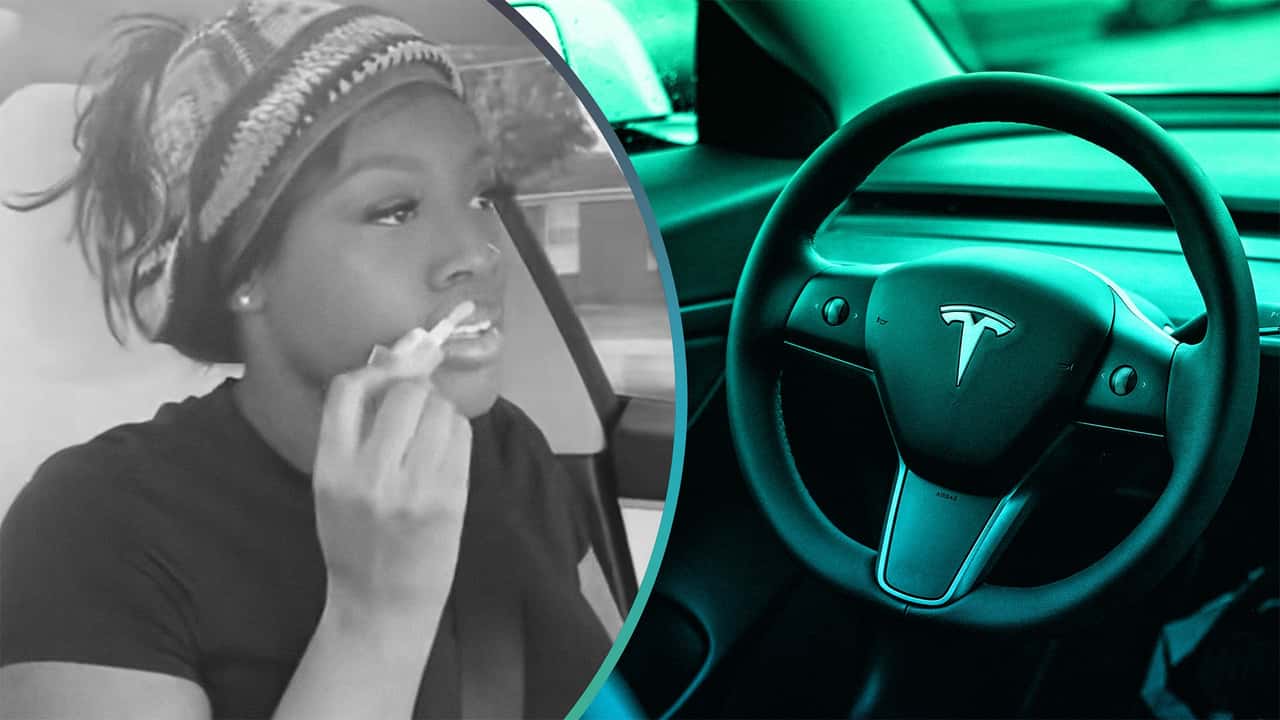

A viral TikTok glamor video shot inside a Tesla has everything: lipstick, eyeliner, and lane changes, all handled hands-free.
That’s the setup of a video where creator @she.sovay calmly applies a full face of makeup while cruising in her Tesla on what appears to be Full Self-Driving mode. The question this raises for the audience is pretty obvious: Is it safe to apply makeup while your Tesla is in self-driving mode?
The clip, which is part glam tutorial, part social experiment, kicked off a lively comment thread full of admiration, trepidation, and a few cautionary tales. One viewer admitted, “This just gave me anxiety,” while another joked, “If I had self-driving I’d forget how to drive.”
Several Tesla owners chimed in with their own experiences skirting or getting slapped by the system’s limits. “They kept giving me warnings to keep my hands on the wheel and I ignored,” wrote one commenter who says they were suspended from FSD access for a week. The creator herself, riding in a Model 3, teased that she knew how to “finesse” the interior camera to avoid detection, promising followers a follow-up video to “spill the tea.”
Now Trending
The car appears to be operating in Full Self-Driving mode, a suite of advanced driver assistance features that Tesla markets separately from its standard Autopilot system. While the exact software version isn’t confirmed in the clip, the vehicle is clearly navigating on its own, prompting questions in the comments about whether it’s Autopilot or the more advanced FSD Beta.
When one viewer asked if she was using a subscription plan, @she.sovay clarified that she wasn’t even on the paid version, suggesting she may be using base-level Autopilot or legacy FSD hardware. Still, the ability of the car to remain centered in the lane while she remained hands-free and fully distracted was enough to make more than a few commenters uneasy.
FROM THE TRENDING NEWS DESK
Viral bits from across the social media landscape
Our team of experts tracks what's trending so you don't have to—from viral videos to online debates that have everyone talking.
What Tesla And The Law Say About Self-Driving
Despite the branding, neither Autopilot nor Full Self-Driving make a Tesla autonomous. Tesla’s website explicitly states that “Autopilot, Enhanced Autopilot and Full Self-Driving Capability are intended for use with a fully attentive driver who has their hands on the wheel and is prepared to take over at any moment.” The company has long faced criticism and legal blowback for using terminology that overstates the car’s capabilities, especially given that its vehicles are currently classified as Level 2 driver-assistance systems under SAE International’s autonomy standards. That means the driver must remain engaged at all times, even if the vehicle handles steering, acceleration, and braking in certain conditions.
Regulators have taken notice. The National Highway Traffic Safety Administration has opened multiple investigations into crashes involving Tesla vehicles that occurred while Autopilot or FSD was active. In a report published in 2023, the agency warned that “the system’s design can lead to foreseeable misuse.” This misuse includes drivers failing to maintain attention, taking their hands off the wheel for extended periods or, as in the TikTok video, engaging in activities that make them physically unable to intervene.
Safety First
To safety researchers and automotive engineers, the video illustrates a growing concern about overreliance on driver-assist systems. According to the Insurance Institute for Highway Safety, features like Tesla’s Autopilot can “lull drivers into a false sense of security,” especially when performance is smooth and uneventful. Studies have shown that drivers using such systems can become inattentive within minutes, with eye-tracking data revealing reduced attention to the road ahead.
Consumer Reports has repeatedly cautioned against Tesla’s marketing of FSD and Autopilot, arguing that the names create dangerous misconceptions. The organization, like many others, urges clearer language and stronger enforcement to prevent misuse.
Distracted driving remains one of the leading causes of fatal crashes in the U.S., with over 3,300 deaths attributed to it in 2022 alone, according to NHTSA data. While applying makeup behind the wheel isn’t new, doing so while relying on a self-driving system adds a new layer of complexity and controversy.
A scroll through the #TeslaFSD tag on TikTok and Instagram reveals plenty of clips of drivers lounging, eating, napping, or letting pets roam freely while their vehicles steer themselves. Some are humorous or staged for views, but others highlight how drivers routinely push the boundaries of what the tech is meant to do.
This behavior underscores what human-factors researchers call “automation complacency.” When systems perform smoothly for long periods, users may overestimate their capabilities and become less vigilant. A study published in PLoS One in 2021 found that even trained users quickly adapted to trust automation more than they should, especially when bored or distracted. In the Tesla community, this has led to a kind of subculture of “finessing” the system, from weights on the steering wheel to camera workarounds, as hinted at in @she.sovay’s clip.
InsideEVs reached out to the creator via direct message.

RECOMMENDED FOR YOU

This 380,000-Mile Tesla Model 3 Has Its Original Battery. Range Loss Is Huge
Xiaomi Has Conquered China. It’s About To Put the Screws To Europe
The Best Cheap Used EVs In 2026: Top Budget-Friendly EV Deals
China's Plug-In Hybrid SUVs Can Now Double As Boats, Apparently
The 17 Cheapest Electric Cars In 2026
Rivian Hits 100 Service Centers Ahead Of R2 Rollout
The Battery In This 2019 Model 3 Looks Heavily Degraded. But It's Not That Simple