
Man Shows How To Charge Tesla With Regular Outlet. Here’s When That Works Best
“Granted, this is the slowest way to actually charge a Tesla.”
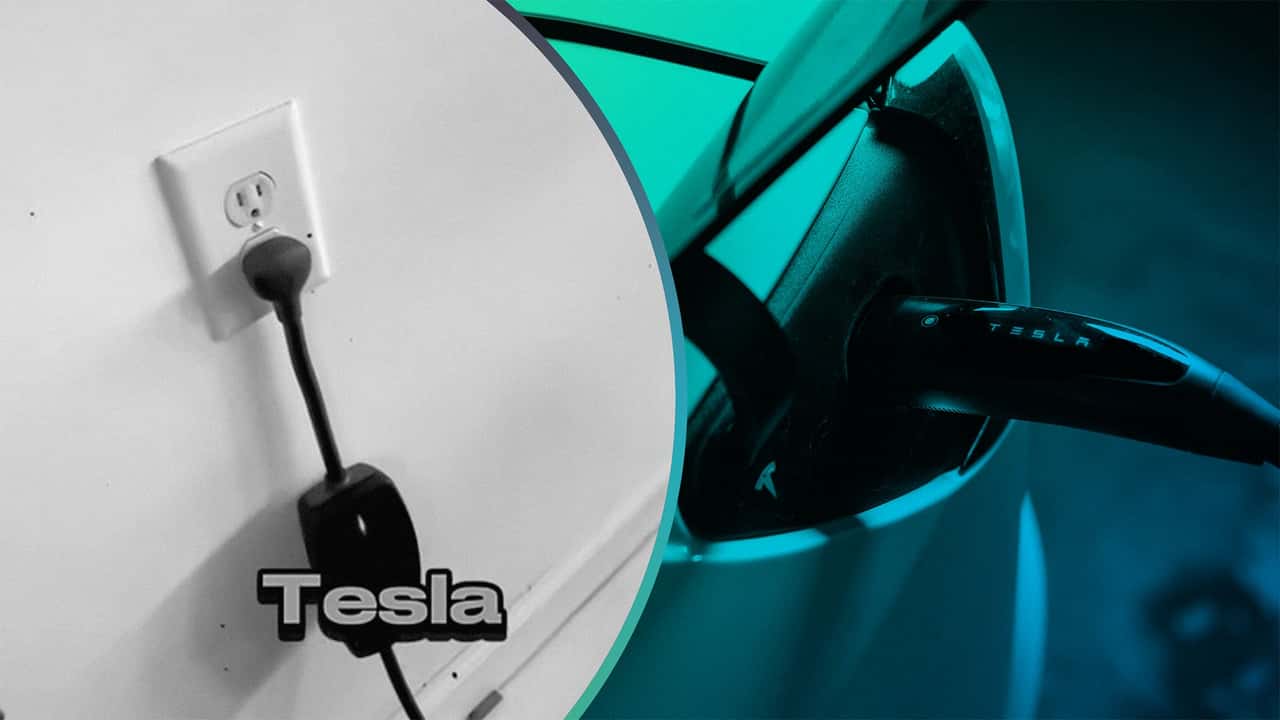

Ever wondered what it’s like charging a Tesla at home on a regular wall plug? This Tesla influencer brings you behind the curtain.
TikTok user Ryan (@ryans_ev) posted a video with his EV charging tip earlier this week. To start the video, he says, “Did you know you could actually charge a Tesla off of a normal wall plug?”
Ryan shows that his charging cord is plugged into a traditional 120-volt socket. “As you can see here, it’s plugged in right there,” Ryan says. “And if I just open up the charge port and open up my car, it’s gonna start charging.”
Now Trending
The indicator light on his Tesla turns green. “Granted, this is the slowest way to actually charge a Tesla,” Ryan says. “To get up to 70%, which is my charge limit, it’s gonna take about 2 hours and 40 minutes. So if you’re just a work-from-home or around-town commuter, it’s actually not too bad to just charge it off a regular outlet.”
Using A Household Outlet To Charge A Tesla
This is not an uncommon question among new EV owners. According to Cyber Switching, charging using a household standard 120-volt outlet is an option for the demographic Ryan referenced in his videos: drivers who don’t drive very much.
That’s because a standard outlet is going to give you 3-5 miles of range per hour. A 240-volt outlet adds 20-30 miles of range per hour. If you’re driving a lot and can’t wait for your vehicle to charge overnight, the 240-volt outlet is an option, but you’ll have to get one installed in your home if it doesn’t already have one.
FROM THE TRENDING NEWS DESK
Viral bits from across the social media landscape
Our team of experts tracks what's trending so you don't have to—from viral videos to online debates that have everyone talking.
However, Cyber Switching notes that charge time is not the only factor to consider when using standard outlets to charge an EV. Some homes, particularly older ones, might not have the electrical system required to sustain EV charging indefinitely. That could result in overheating and electrical surges. That’s why it’s a good idea to consult a professional before making this a habit.
Then there’s Tesla’s wall connector and universal wall connector options, which add another 44 miles of range per hour. The key difference between the two is that the universal wall connector is compatible with other EVs in addition to Tesla vehicles. Of course, you’ve got to buy the devices ($450 and $650 respectively) and pay an electrician to install them.
Viewers React To The Tesla Home Charging Tip
In the comments section, viewers reacted to Ryan’s Tesla home charging demonstration.
One user said, “That will take 100 years.”
A second user joked, “Yes, plug in on Labor Day and it’ll be ready by Halloween.”
A third user said, “Electrician here. Don’t do that.”
Someone else said, “I drive 40-50 miles a day and charge my Tesla with a normal outlet for 10 hours usually every night and it fully charges back up.”
In a message to InsideEVs, Ryan wrote, "Just based off the comments, it seems like there's a lack of knowledge with home charging since most people focus on public charging infrastructure. Most people aren't aware of the cost, speed, and reliability of charging at home, which is something manufacturers should talk about more. Home charging is one of the biggest benefits of an electric car."

RECOMMENDED FOR YOU

Teslas Will Now Deploy Their Airbags Before Crashes Happen Thanks To Cameras
This Chinese SUV Sold 100,000 Units In Seven Months For A Good Reason
Tesla Is Giving Away Free Supercharging. Here's How To Win.
VIDEO: The New Xiaomi SU7 Is Very Much Ready For Europe
This Ex-Rental Tesla's Battery Was Heavily Degraded. Then The Decline Slowed
Is The $25K Slate Truck Just Too Basic? I Rode In One To Find Out.
Tesla FSD Finally Reached Europe. Now Speed Limits May Slow Its Expansion