
‘Better Than Most’: Toyota Mechanic Says Brakes Last ‘Forever’ on Hybrid Cars. Is That True?
A Toyota service tech claims that Hybrid vehicles don’t just drive longer on the same tank of gas, but on the same brakes, too. Is he right?
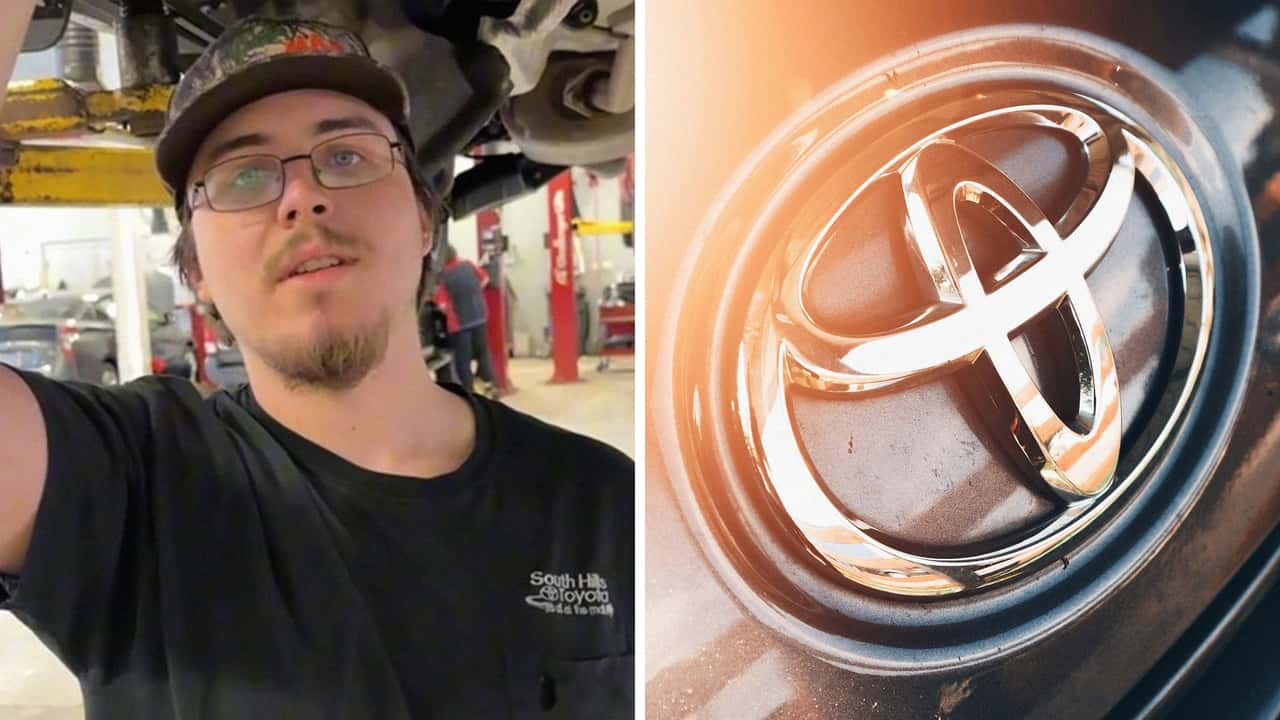

Hybrid vehicles don’t just drive longer on the same tank of gas than their internal combustion counterparts, but on the same brakes, too. That’s what a service tech of South Hills Toyota in Pennsylvania (@south.hills.toyot) claims in a viral TikTok on the company’s social media page. Other users on the popular video-sharing application stated that they, too, have enjoyed longer-than-expected brake durations with their own cars.
But is that really the case?
The dealership’s TikTok begins with a recording of a service tech working underneath a vehicle. He’s asked by someone off-camera why hybrid vehicles typically don’t need brake service as much as traditional internal combustion engine (ICE) vehicles.
“Hey, Tyler, so the hybrid system uses what’s called regenerative braking,” he says. “So the transmission and the motor will actually slow down the car better than most conventional cars.”
Thus, according to this technician, a driver doesn't have to use the brake pedal as often as they would on a purely gas car. That should mean less brake pad and rotor wear over time. Furthermore, regenerative braking has another positive outcome for hybrid commuters: better gas mileage because the hybrid battery gets some extra juice this way.
“It is actually using it to slow down [and] actually recharge the hybrid battery,” he said.
As a result, the mechanic says, this means there’s also less work for the car’s motor to engage in as well. “So you don’t have to run the engine as long to charge the hybrid battery itself. So if the vehicle is slowing itself down, there’s no reason to use the brakes. Compared to your normal gasoline or diesel vehicles,” he adds.
Regenerative Braking When in Drive
This braking disparity is even more pronounced if you’ve ever transitioned from driving a fully ICE vehicle to an EV.
For instance, take driving down a steep hill. After gaining momentum, drivers in ICE vehicles will typically have to ride their brakes to control their vehicle’s speed while traveling down said hill. That’s because when an ICE vehicle is placed in drive, it naturally lurches forward.
But in many EVs—provided they allow "one-pedal driving" or full regenerative braking—a car will not move ahead if it’s placed in drive unless the acceleration pedal is engaged. Commuters will also notice this is the case for hybrid vehicles that are accelerating. That’s because the vehicle’s drivetrain is calibrated to return energy back into its large battery pack.
FROM THE TRENDING NEWS DESK
Viral bits from across the social media landscape
Our team of experts tracks what's trending so you don't have to—from viral videos to online debates that have everyone talking.
Furthermore, many EVs and hybrid vehicles feature an energy consumption monitoring bar in their dash cluster. Tesla, for example, implements its ubiquitous regen braking bar on its vehicle’s infotainment screen. Depicting a battle between green and grey color disparities in a shared horizontal bar, it shows drivers how energy is being expended and placed back into its battery.
Utilizing the hill scenario again, Tesla drivers can sometimes see their battery capacity replenished in real time with sustained regenerative braking power.
Regenerative Braking in Hybrids
Hybrid vehicles are outfitted with smaller batteries than their strictly-EV counterparts. Furthermore, plug-in hybrids also install larger batteries than regular hybrids. Take the 2025 Toyota Prius Plug-In, for instance.
The 2025 plug-in hybrid allows drivers to travel 44 miles (SE trim) or 40 miles (XSE, Premium trims) on battery only. That’s thanks to its 13.6 kilowatt-hour battery. Conversely, the standard, non-plug-in variant Prius LE features a 1.3 kilowatt-hour nickel-metal hydride battery to help shoulder the burden of powering its drivetrain.
Despite these significant differences in hardware, the concept of regenerative braking is nearly identical in both of these models. Kelley Blue Book explains why less strain is placed on a car’s disc brakes due to the implementation of regen braking systems. That’s because the electric motors incorporated in these systems aren’t just used for propelling the car forward. They’re also utilized to help slow the car down.
When a car brakes, kinetic energy is created from slowing the vehicle down. Instead of this energy going nowhere, the electric motors take these motions and convert it to useful energy that powers its batteries. The bigger the battery capacity, the more energy it can store.
As KBB puts it: “With regenerative brakes, the braking system captures kinetic energy and transfers it into the car’s batteries. The system wastes less energy than it would with friction braking. Using regenerative brakes helps preserve and replenish range in an electric or plug-in hybrid vehicle.”
Moreover, if you add EVs and hybrids together, you account for a massive number of vehicles on the road. In another Kelley Blue Book article, the automotive research group writes that as of 2024, 19% of all new cars sold in America either had hybrid drivetrains or were fully electric. Between 1999 and 2020, around 5.8 million hybrid sedans and sports utility vehicles were sold in the U.S.
How Long Do Brakes Last on Hybrid Cars?
Workers at South Hills Toyota aren’t the only ones discussing the longevity of hybrid vehicles’ brake pads. Redditors on the r/cartalk sub also extolled the benefits of driving a hybrid car in this post aptly titled “Hybrid brakes last forever.”
One commenter who replied to the post stated that the lifespan of brakes largely depends on a driver’s habits. If they’re constantly smashing their brake pedal or accelerating to red lights and slowing down, then their brakes will give out sooner. However, by anticipating their stops and easing on brakes, or allowing the electric motors to help slow down their cars, they can push back the need for a brake swap.
And according to the car-stopping-centric outlet The BRAKE Report, a Toyota hybrid vehicle “can go 100k [miles] before needing brakes.”
Commenters sound off
And according to testimonials from some TikTok users, it would seem that these increased hybrid brake lifespan claims are legit. One user on the application wrote: “did my front and rear brakes for the first time on my 07 prius at 280k.”
Someone else on the application stated that they, too, have enjoyed a long brake life on their Prius. “110,000 miles on my Prius, using the original brakes still,” they wrote.
This hybrid driver penned, “I replaced [mine] after 12 years.”
Another TikTok user echoed the Reddit user’s remark about driving habits and brake longevity. “It’s about driving style also, done over 120K miles on original pads and rotors on a Subaru Outback,” they said.
However, there was another person in the comments section who stated that they’ve used the same brakes for a long time on a strictly ICE vehicle. “I do not have a hybrid car. Over 100k and brakes are still at 7mm. I bought the vehicle new.”
Also, one person said that while brakes on hybrids last longer, the stricter regenerative braking stopping power necessitates more frequent tire replacements, “Saves brakes but wears tires out faster,” they penned.
However, auto seller The Key Car writes that this isn’t the case. Also, it appears that the above-referenced TikToker’s comment pertains to electric vehicles. But that doesn’t have to do with regenerative braking. But rather, as Cars.com notes, the added weight of electric vehicles than their standard ICE counterparts. Because of the large batteries these cars are outfitted with, more stress is placed on the tires. Thus, contributing to their apparent, accelerated degradation. In other words, you may save on brakes (and other maintenance), but you may also go through tires more quickly.
InsideEVs has reached out to South Hills Toyota via email for further information.

RECOMMENDED FOR YOU

The Best EV Lease And Finance Deals In February 2026
Here’s What The Biggest EV Skeptics Want In An Electric Car
Here Are The Affordable Plug-In Hybrids With The Most Electric Range
Absurdly Fast EV Chargers Are Coming To America, But Cars Aren't Ready
‘You Can Get These Cells On eBay For $30’: Toyota Prius Driver Quoted $2,700 For Battery. Then He Fixes It For Under $100
CEO Interview: How Ionna Is Taking On The Tesla Supercharger Network
Toyota Prius Prime And Prius Plug-In Hybrid: The Used Buyer's Guide