
Here’s How Tesla’s Latest FSD Version Works In The Real World
The so-called “Full Self-Driving” version 12.4.1 does a lot of things right, but it’s still far from perfect.
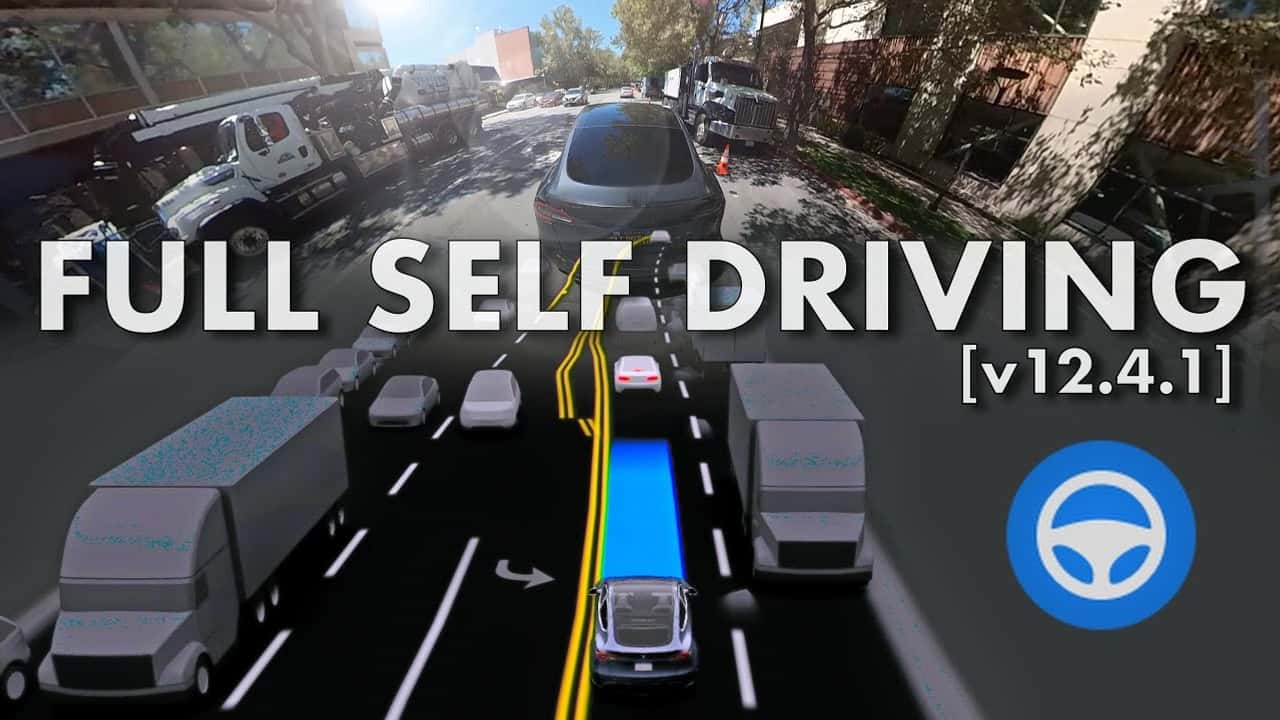

There’s been a lot of talk recently about Tesla transitioning from a car company (albeit a tech-focused one) to an AI company. A big part of that discussion is the supposed launch of a so-called Cybercab that will use basically the same tech as the current “Full Self-Driving” advanced driving assistance suite that’s available on series production Tesla EVs.
The company’s head honcho, Elon Musk, alluded several times that the modern cars in the Tesla fleet will one day be capable of driving themselves around and even make a profit for their owners by acting as robotaxis in their downtime. But how well does today’s FSD system work? Well, let’s see.
Get Fully Charged
FSD is 8 years old
Tesla's "Full Self-Driving" feature was introduced back in 2016 as an upgrade to the so-called "Autopilot," promising a world where the car would ferry its driver and passengers pretty much anywhere without human intervention. That still hasn't happened yet.
A video posted late last week on YouTube by prominent FSD tester AI DRIVR shows the good and the bad with Tesla’s latest attempt at making its cars potentially capable of self-driving. However, while version 12.4.1 is better in some respects compared to the 12.3 branch, it also needed more interventions from the driver–at least in the case of the Model 3 that was used to test the software.
More Stories Like This
For starters, the latest version of Tesla’s supervised setup seems incapable of dealing with rare instances where other human drivers cut in front of the vehicle. It also “lacks confidence,” as the tester put it in the video embedded at the top of this page, hesitating to change lanes even though there was more than enough room.
In one instance, the car missed a turn and then tried to make the turn anyway, leading to a disengagement of the system. In several other cases, FSD needed human intervention to pass cars that were partially blocking the lane or to proceed into an intersection because it misinterpreted the traffic lights.
The reviewer goes on to say that the previous version, 12.3, was much more human-like in its reactions, whereas 12.4 seems much more hesitant. Things could improve as software developers find clever ways to deal with more and more situations, but as it stands now, it’s unlikely that a driverless robotaxi would be deployed on the road using the current software.
Also, it’s worth noting that Tesla’s so-called “Full Self-Driving” still needs to be constantly supervised by the person behind the steering wheel and that it’s considered a Level 2 system on the SAE chart, meaning that the driver is responsible for what the car does on the road.

RECOMMENDED FOR YOU

Elon Musk Hurts Tesla More Than China Ties Hurt BYD, Survey Finds
Ford Fathom: Everything We Know About The Sub-$30,000 Affordable EV Truck
EVs Don’t Need This Gas Car Feature. So Why Do So Many Still Have It?
What To Know About California's $3,500 EV Rebate—And Which Teslas Qualify
Tesla Breaking Off Its China Business? Musk Calls It 'Absurdly Fake News'
Clemson's Solar-Powered EV Project Looks Like A Cardboard Shoe. But It's A Lot More Clever Than It Looks
Tesla Reaches Its Biggest Manufacturing Milestone Yet With 10 Million EVs