Home
News
Pricing
Why Car Companies May Lose $6,000 On Each EV Sold For $50,000
A new Boston Consulting Group report outlines the challenges automakers face as they scale up EV production.
Patrick George 
By: Patrick George
Mar 25, 2024 at 1:59pm ET
Add InsideEVs as a preferred source in Google
- (https://twitter.com/intent/tweet?url=https%3A%2F%2Finsideevs.com%2Fnews%2F713577%2Fev-50k-losses-bcg-study%2F&text=Why%20Car%20Companies%20May%20Lose%20%246%2C000%20On%20Each%20EV%20Sold%20For%20%2450%2C000&via=InsideEVs)
- copy
Share
Comment
For automakers small and large, old and new, transitioning to a mostly electric future has not been an easy endeavor. Or a cheap one.
With the established "legacy" car companies, this has meant ramping up battery and software operations—and learning to make EVs correctly—while keeping profits up by selling gas-powered cars. For the startups, it has meant scaling up production systems for years, typically by selling more expensive EVs first, while trying to survive long enough to even become profitable.
Get Fully Charged
Regulations, Climate And Profits Make A Complicated Mix
Automakers are being pushed toward a mostly zero-emission future by tough new climate regulations across the world. But pivoting their businesses to EVs is tough while being under pressure from investors to keep profits up.
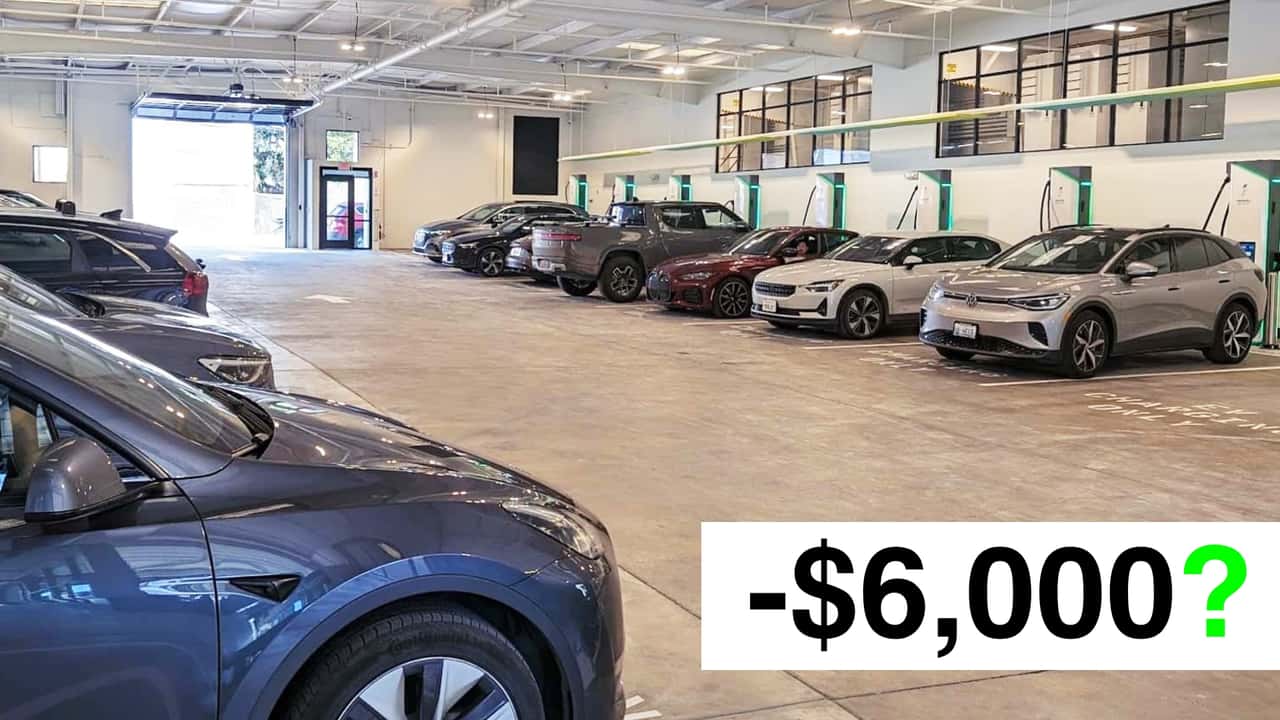
So just how much money are car companies losing on EVs right now? According to one estimate from Boston Consulting Group, as much as $6,000 per EV sold around $50,000.
That data comes to us from BCG's new study, "Can OEMs Catch the Next Wave of EV Adopters?" which we also covered here.
"We estimate that most [automakers] currently lose around $6,000 on each EV they effectively sell for $50,000, after accounting for customer tax credits," the study said. "We also estimate that [automakers] will only be able to close half of this cost gap by making the right technology choices; economies of scale as automakers ramp up production will help, too, but they won’t make up the difference."
I was struck by the specificity of that figure, so I reached out to Andrew Loh, Managing Director and Senior Partner at BCG and an author of the study, to learn more.
Here's how they landed on that $6,000 number.

"Take a $60,000 ICE vehicle," Loh said. "A reasonable level of profitability that we've seen historically from ICE vehicles is about 10%," he said, stressing that vehicle profit margins exist over a broad range but that number is generally true of mass-market automakers with a strong presence in the U.S.
"Creating the bridge from ICE to EV, you need to add the cost of the battery, which is about $10,000," Loh said. "You add the e-powertrain and incremental electronics, which is about another $5,000. And then you need to add the incremental investment and labor and overhead," which tends to be higher because few EV operations exist at scale right now.
Add about another $1,500 per vehicle for plant investments, engineering and other capital costs. Now subtract the ICE powertrain, which Loh said is around $4,000 per vehicle. "That's what gets you to minus 10% [profits], or minus $6,000, as opposed to plus $6,000 profitability."
In other words, it just comes down to high capital costs right now in the early stages of EV development, being built at operations that aren't yet fully at scale.
There are obvious exceptions to this, of course. Tesla has been solidly profitable for years, again owing to its manufacturing scale; stable profits were regular especially once it got its Chinese factory rolling. China's BYD is also profitable from making EVs. And luxury automakers in the U.S. are profitable with them too, because they can be sold at much higher prices; BMW, Porsche and Audi are just a few examples.
Again, the startups have this problem too, but in a different way. New operations like Lucid, Fisker and Rivian are believed to lose money on each car until they can cross the so-called "Valley of Death" and reach mainstream, volume sales.
So BCG's $6,000 number isn't a hard and fast rule for every brand or price point, but a general example of what's at stake for cars sold for around $50,000—still close to the average new car price in America.
But Loh and the other study authors note that unless automakers make a bigger retreat from EVs, this is a sort of temporary situation. New battery and carmaking plants are being built all of the time in the U.S. alone; new manufacturing techniques and battery chemistries are being developed to raise range while lowering costs; and nearly every automaker is finding ways to get into the cheaper $25,000 range, while still being profitable with them.
He just warned that the ultimate goal of "profitable, at scale, EV production" may be further off than some experts think.
What do you think?
View
Comments
"A lot of people have focused in on the cautionary tone of the [report,] and we certainly want to be balanced," Loh said. "We, as a firm, continue to be optimistic about EVs over the long run. The word of caution was more around, if you expect [this new generation of EVs], to all of a sudden, reverse the fortunes, we're not sure that's going to happen completely."
Contact the author: patrick.george@insideevs.com
More EV News
Cybertruck Wholesale Prices Are Dropping Pretty Quickly
You Could Get A New Chevy Bolt For $8,000 In California
How The Cheapest Tesla Model 3 Compares To A $50,000 New One
Tesla Cybertruck Has Hidden Hardware For Wireless Charging
Tesla V4 Superchargers Are Now Being Deployed By Other Charging Networks
America's EV Drive Will Go Beyond The 2024 Election, Federal Highway Chief Says
We want your opinion!
What would you like to see on Insideevs.com?
Take our 3 minute survey.
- The InsideEVs team
Share this Story
- (https://twitter.com/intent/tweet?url=https%3A%2F%2Finsideevs.com%2Fnews%2F713577%2Fev-50k-losses-bcg-study%2F&text=Why%20Car%20Companies%20May%20Lose%20%246%2C000%20On%20Each%20EV%20Sold%20For%20%2450%2C000&via=InsideEVs)
- copy
GO TO COMMENTS
(
)
Got a tip for us? Email: tips@insideevs.com
View all comments ( )
Trending
Lucid's $50,000 Tesla Model Y Rival Is Getting Closer To Production. Here's The Latest
Mercedes' Answer To Tesla FSD Requires Hands On The Wheel. Does That Make It Better Or Worse?
This Mercedes Went 539 Miles On A Charge. Is Range Anxiety Finally Dead?
Lucid's CEO Said The EV Startup 'Underinvested In Service.' Here's How It's Fixing That
latest articles
- Rivian's New Robots Will Initially Handle 20% Of Factory Tasks. The Goal Is 80%, CEO Says Nov 11 - Manufacturing / Production -
- This New Electric Paver Can Lay Down 1,200 Tonnes Of Asphalt A Day Nov 11 - News -
- The Best EV Lease And Finance Deals In November 2026 Nov 11 - Deals -
- The AI Boom Is Creating A New Supply Chain Headache For Automakers Nov 10 - News -
- This Mercedes Went 539 Miles On A Charge. Is Range Anxiety Finally Dead? Nov 10 - Range / Efficiency -
- Lucid's $50,000 Tesla Model Y Rival Is Getting Closer To Production. Here's The Latest Nov 10 - Manufacturing / Production -
- Mercedes’ EV Charging Network Hit 100 Locations After 3 Years In The U.S. Nov 10 - Charging -
RECOMMENDED FOR YOU
The 2027 Kia EV9 Gets Some Standard Features That Used To Be Optional
The Best EV Lease And Finance Deals In November 2026
Kia EV3 Lease Deals Are Here, And It’s Cheaper Than The Chevy Bolt And Nissan Leaf
The AI Boom Is Creating A New Supply Chain Headache For Automakers
The Volkswagen ID.4 Just Got Up to $12,500 Cheaper in America
This Mercedes Went 539 Miles On A Charge. Is Range Anxiety Finally Dead?
‘The Trend Is Clear’: How EVs Are Closing In On Gas Car Prices