Home
Nissan
News
Nissan Acquires Shares In Vehicle Energy Japan
The move is expected to strengthen Nissan's lithium-ion battery competence.

Mark Kane 
By: Mark Kane
Sep 14, 2022 at 8:54am ET
Add InsideEVs as a preferred source in Google
- (https://twitter.com/intent/tweet?url=https%3A%2F%2Finsideevs.com%2Fnews%2F610229%2Fnissan-acquires-shares-vehicle-energy-japan%2F&text=Nissan%20Acquires%20Shares%20In%20Vehicle%20Energy%20Japan&via=InsideEVs)
- copy
Share
Comment
With a goal to place electrification at the core of its business strategy, Nissan has entered into a definitive agreement to acquire shares in Vehicle Energy Japan Inc. (VE-J), a company engaged in the automotive lithium-ion batteries business.
VE-J is quite a comprehensive company, which develops, manufactures, and sells lithium-ion batteries, battery modules, and battery management systems. However, its focus is on hybrids.
Considering that Vehicle Energy Japan already supplies batteries for the Nissan Kicks e-Power and Nissan Note e-Power models (series, non-rechargeable hybrids), it might suggest that Nissan will continue to expand this branch of electrification (hopefully, not at the expense of BEVs).

According to the press release, Nissan will acquire a stake in VE-J from INCJ (the amount has not been disclosed) and participate in the upcoming capital increase round, ultimately turning the company into its subsidiary. The other existing shareholders - Maxell Ltd. (formerly, Maxell Holdings, Ltd.,) and Hitachi Astemo, Ltd. (formerly, Hitachi Automotive Systems, Ltd.) will remain on board.
"Nissan will acquire all the common shares of Vehicle Energy Japan held by INCJ, Ltd. and subscribe to common shares issued by Vehicle Energy Japan. Following the transaction, Vehicle Energy Japan will become a consolidated subsidiary of Nissan, in which it will hold shares alongside existing shareholders Maxell, Ltd. and Hitachi Astemo, Ltd."
Nissan explains that the investment will secure a stable battery supply (for Nissan and other customers) as well as contribute to the development of next-generation batteries.
What do you think?
View
Comments
If we check Vehicle Energy Japan's website, it turns out that the company offers high-power lithium-ion cells, which can deliver up to 6.3-7 kW of power per kg. Unfortunately, the high-power cells for hybrids usually do not shine in the energy density category. In this case, it's just around 100 Wh/kg (114 Wh/kg for the 8 Ah cells).
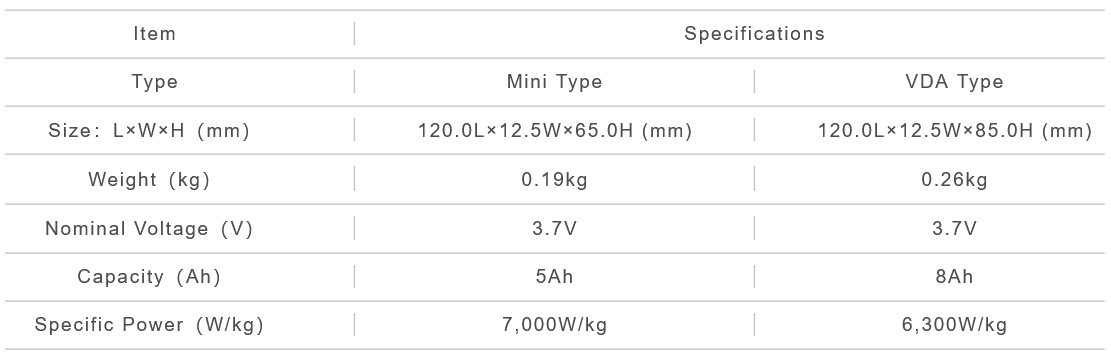
On the pack level, it's even less. A 9.5 kg battery with 38 cells stores some 0.7 kWh (over 73 Wh/kg), but for a short period can deliver 24 kW of power.

See also
 See What's Inside A Tesla 4680 Battery
Official: BMW To Use Round Battery Cells, 6 Gigafactories Confirmed
We want your opinion!
What would you like to see on Insideevs.com?
Take our 3 minute survey.
- The InsideEVs team
Share this Story
- (https://twitter.com/intent/tweet?url=https%3A%2F%2Finsideevs.com%2Fnews%2F610229%2Fnissan-acquires-shares-vehicle-energy-japan%2F&text=Nissan%20Acquires%20Shares%20In%20Vehicle%20Energy%20Japan&via=InsideEVs)
- copy
GO TO COMMENTS
(
)
Got a tip for us? Email: tips@insideevs.com
View all comments ( )
Trending
I Drove Volvo’s Long-Range Plug-In Hybrid XC60. It’s A Great Stepping Stone To An EV.
I’m Thankful For My Electric Car
Here’s How To Make Your Holiday EV Road Trip Easier
These Are The Top 10 Black Friday EV Deals. Some Are $25,000 Off
Latest Stories
- EVs Outsold Gas And Diesel Cars Combined In The EU In October Nov 27 - News -
- This Audi E-Tron EV Has 125,000 Miles. Replacing Its Battery Was A Huge Pain Nov 27 - Repair / Maintenance -
- Rivian's Winter Sale Is Live: Save on Chargers, Accessories, And More Nov 27 - Pricing -
- I Drove Volvo’s Long-Range Plug-In Hybrid XC60. It’s A Great Stepping Stone To An EV. Nov 27 - First Drives -
- A Used Cybertruck Is Selling A Month Faster Than A Ford F-150 Nov 26 - News -
- I’m Thankful For My Electric Car Nov 26 - Opinion -
- Volvo Is Bringing Humanoid Robots Into Its Factories. Here's When They'll Start Working Nov 26 - Manufacturing / Production -
RECOMMENDED FOR YOU
The Best EV Lease And Finance Deals In November 2026
This Audi E-Tron EV Has 125,000 Miles. Replacing Its Battery Was A Huge Pain
I Drove A New Kind Of Hybrid From Nissan. Here's How It Beats The Toyota RAV4
Rivian's Winter Sale Is Live: Save on Chargers, Accessories, And More
Ford Has A Dedicated Battery Abuse Team. It Obsesses Over How Cells Fail
I Drove Volvo’s Long-Range Plug-In Hybrid XC60. It’s A Great Stepping Stone To An EV.
Ford Just Started Fathom LFP Battery Production In Michigan. It's A Big Deal