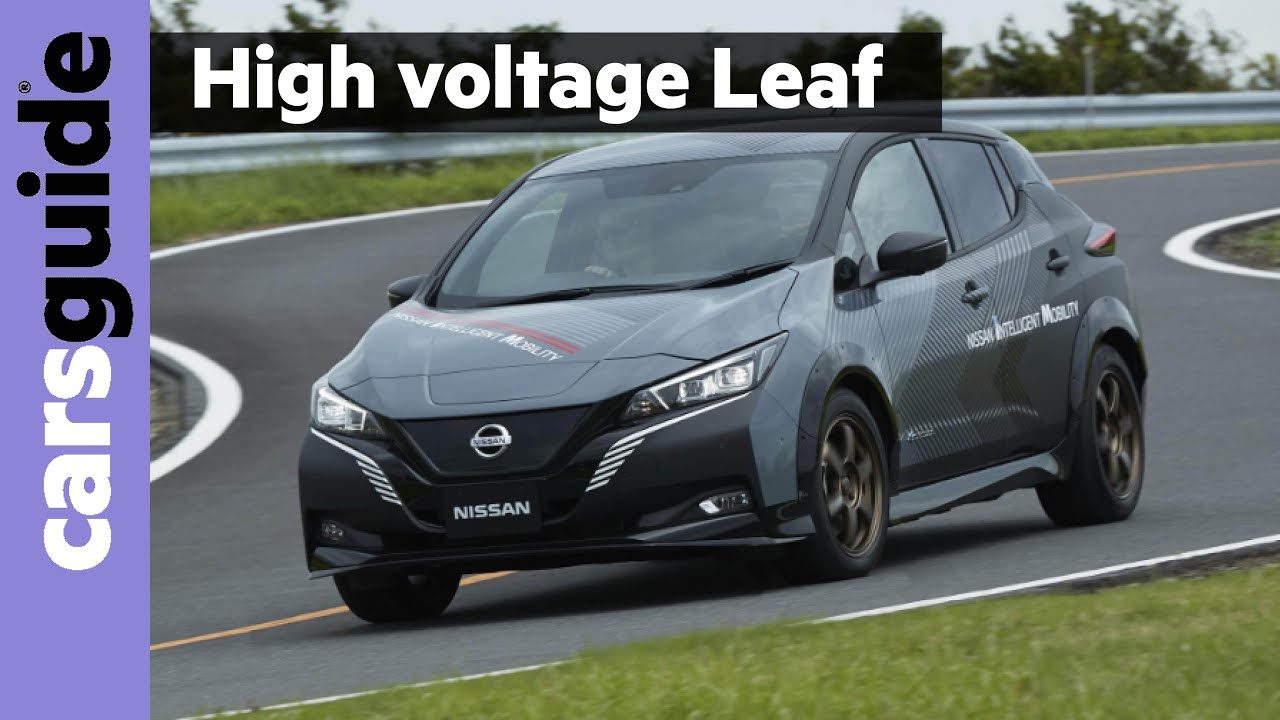
A few weeks ago, Nissan revealed and demonstrated its new all-electric prototype, used as a testbed for a twin-motor all-wheel control technology.
It's actually a Nissan LEAF e+ (with 62 kWh battery), but there are no signs that the LEAF will be offered in an all-wheel-drive version in the near future.
Nissan is simply teasing the upcoming BEV platform for new models from Nissan and Infiniti brands, probably as well as the broader Renault-Nissan-Mitsubishi Alliance. In the case of Nissan, the first candidate for the dual-motor all-wheel-drive setup is the crossover/SUV, hinted by the Ariya concept at the Tokyo Motor Show.
A side topic is whether there would be a market for an all-wheel-drive LEAF with more power, better acceleration and other benefits of AWD, for a few grand more?
Nissan's prototype uses two EM57 electric motors - one per axle, with a total system output of 227 kW and 680 Nm.
For comparison, the single EM57 motor in the 40 kWh LEAF is rated for 110 kW, while the e+ is equipped with 160 kW electric motor - good enough for sub-7-second 0-60 mph acceleration.
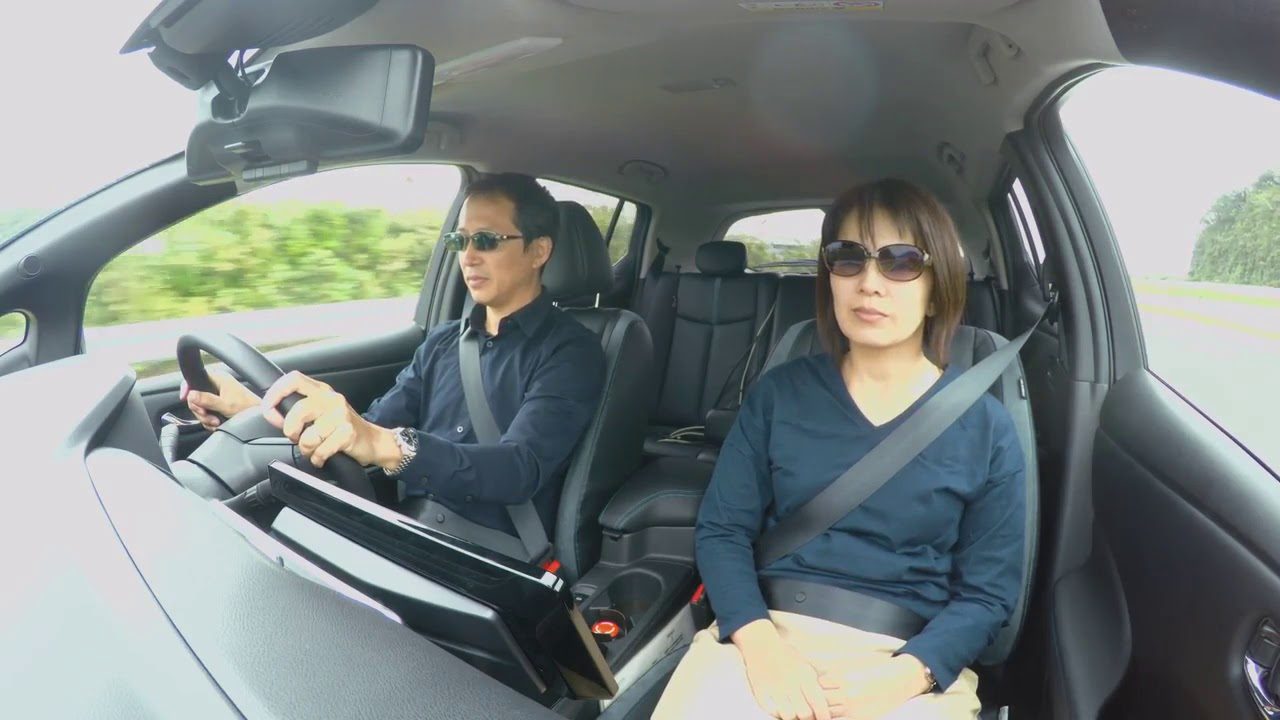
The Japanese manufacturer underlines that two motors enhance driving dynamics, ride comfort, regenerative braking, performances and very important - also safety (see a video demonstration on a wet road below).
Takao Asami, senior vice president for research and advanced engineering at Nissan said:
"Soon, Nissan will launch a next-generation EV that will be a true breakthrough. The new electric-drive four-wheel-control technology now being developed integrates Nissan's electric propulsion and 4WD control technologies with our chassis control technology to achieve a huge leap in acceleration, cornering and braking performance, on par with the latest sports cars."
Nissan LEAF e+ AWD prototype specs:
dual motor all-wheel-drive system with two EM57 electric motors (front and rear)
Gallery: Nissan Leaf e+ with dual electric motors and all-wheel drive
10
Nissan LEAF e+ AWD prototype is not the first all-electric AWD Nissan. Just a year ago, the company showed a second model evolution of its racing prototype Nissan LEAF NISMO RC.
What do you think?
View
Comments
The specs of this one in terms of power/torque were quite similar.
Nissan LEAF NISMO RC specs:
0-100 km/h (62 mph) in 3.4 seconds
battery capacity: undisclosed
dual motor all-wheel drive
system output: 240 kW (2x 120 kW) and 640 Nm of torque
Nissan builds EV test car with twin-motor all-wheel control technology
Electric vehicle performance takes a leap with new technologies to be featured in next generation of Nissan EVs
October 24, 2019
The vehicle, based on the 100% electric Nissan LEAF e+, features an enhanced all-wheel drive system powered by front and rear high-power motors integrated with Nissan-developed chassis control technology. The result is an electric-drive all-wheel-control system that will take the performance of Nissan’s electric cars to a new level.
“Soon, Nissan will launch a next-generation EV that will be a true breakthrough,” said Takao Asami, senior vice president for research and advanced engineering at Nissan. “The new electric-drive four-wheel-control technology now being developed integrates Nissan’s electric propulsion and 4WD control technologies with our chassis control technology to achieve a huge leap in acceleration, cornering and braking performance, on par with the latest sports cars.”
This exciting EV technology is a key component of Nissan Intelligent Mobility, the company’s vision of how vehicles are driven, powered and integrated into society.
Powerful, smooth high-output twin-motor drive
Using separate front and rear electric motors, the powertrain generates 227 kilowatts of maximum output and 680 Nm of maximum torque. This output is complemented by the ultra-high-precision motor control provided by Nissan’s advanced EV technology which offers highly responsive, yet uncommonly smooth, acceleration.
Drivers can benefit from the all-wheel-control system on nearly any road condition, heightening driving performance and confidence.
Ride comfort for all
The test car’s precision control of both motors provides unparalleled ride comfort. Vehicle pitch and dive are minimized by adding regenerative rear motor braking to the usual front motor regenerative braking. When slowing down on city streets, for example, this helps keep passengers from being shaken back and forth. This reduces the potential for motion sickness and related discomfort. Similarly, on rough, bumpy roads and when accelerating, motor control is optimized to maintain ride comfort by minimizing irregular movement.
Independent brake control for top-level handling
In addition to optimizing front and rear torque allocation, the system applies independent brake control at each of the four wheels to maximize the cornering force generated by each tire. This lets drivers enjoy cornering that faithfully follows their intentions with minimal steering.