
‘That’s On Living In A Small Town’: Woman Gets A Tesla. Then She Realizes There Are No Fast Charging Stations
Hmmmm...
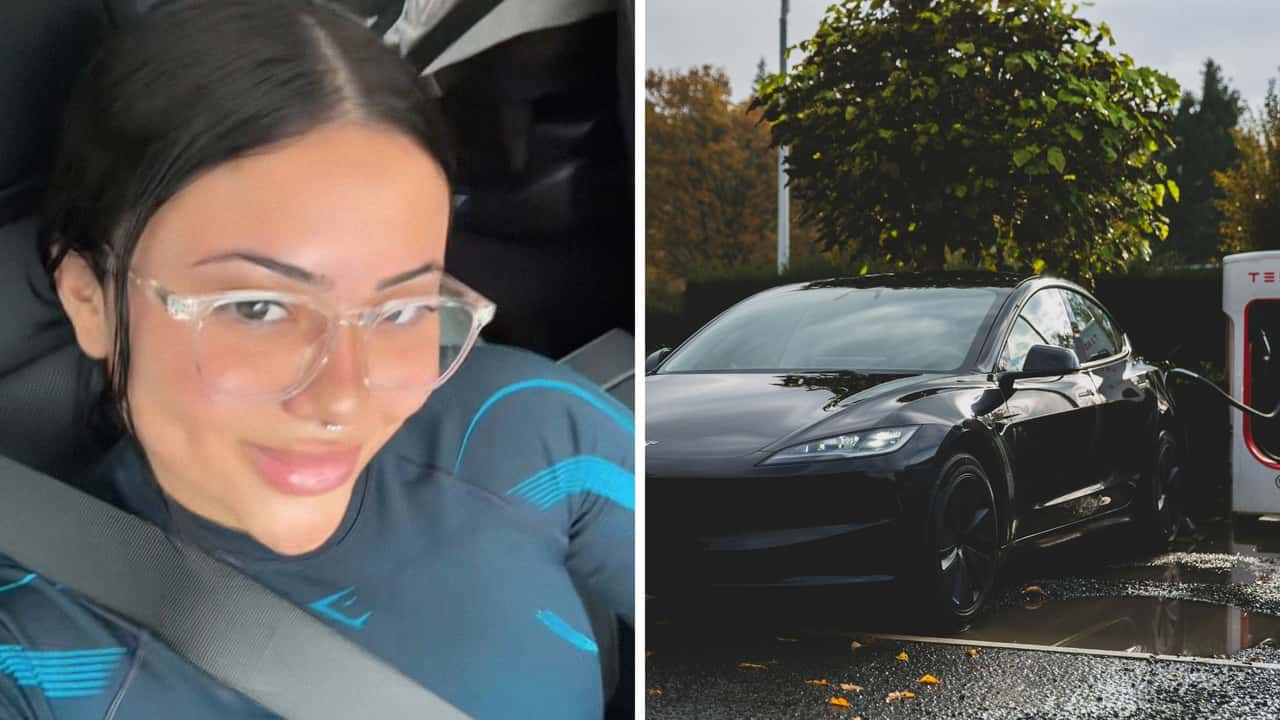

A woman says that it’s difficult to own an EV in a small town. But notes that there are some upsides.
Ruby (@rubytopete) writes at the top of the clip: “Pros + cons of owning a Tesla.” The first negative to owning the car, she writes, are its charging wait times.
It’s an ordeal further exacerbated by the fact that Ruby lives “in a small town with no fast charging stations,” she says. But the upside, she continues, is that while her vehicle is juicing, she gets to go shopping.
“Pro: shopping spree,” she writes in another on-screen message superimposed over footage of her walking with a plastic TJ Maxx bag.
One person who replied to her video shared a picture of his white Model 3 parked outside of a mall. The photograph shows three supercharging stations. To the left are what appears to be level 2 chargers, which he writes that EV owners can plug in at no cost. “They got fast chargers and free slow chargers downtown at this food hall. I just eat, go 10-15 minutes and I’m good to go,” he said.
Can You Have a Tesla in a Small Town?
There’s no shortage of EV owners who’ve been candid about what it’s like using them as a daily driver in various locations. InsideEVs previously reported on a Tesla driver who shared some of the things he wished he knew before buying. He, like others, stressed the importance of having a home charging solution.
Doing so will ensure that whenever your car is parked at home, you’re able to replenish its battery with a dedicated Level 2 charger. One of the primary benefits of this is not only convenience, but cost.
Fast charging sessions can rack up high bills rather quickly, and in some instances, cost as much as or even more than filling up an ICE vehicle with gas. But home charging in the United States, on average, costs a bit more than one third of the price of a tank of gasoline.
FROM THE TRENDING NEWS DESK
Viral bits from across the social media landscape
Our team of experts tracks what's trending so you don't have to—from viral videos to online debates that have everyone talking.
However, not every home comes with the electrical infrastructure needed to use a level 2 charger. In this situation, homeowners can install a NEMA 14-50 outlet and ensure there’s enough amperage in the home to accommodate for the level 2 charger.
Other Charging Considerations
If your living situation prevents you from installing a level 2 charging setup yourself, i.e. you live in an apartment or other dwelling where it isn’t possible, you still have options. You can contact building management or your landlord about getting one added. Depending on where you live, some areas can apply for government grants to help either cover the entire cost of installation or a portion of it. The US Department of Transportation, for instance, has appropriated $1.3 billion for an EV charging plan. Others have pointed out that EV charger installations can increase property value.
If installing a charging unit isn’t an option, there may be other local resources. Local governments can request state and federal grants to have EV charging stations installed outside public buildings. While it doesn’t beat the convenience of home, you can still have a place to get juice for your battery, usually for free, close to your house.
It’s also worth mentioning that level 1 charging solutions using a standard 3-prong wall outlet can be useful, too. EV owners report getting around 4.5 to 5 miles of driving per hour of level 1 charging. So if your car is parked overnight for 10 hours, having a range of at least 40 miles may be suitable for your daily driving needs. Or, at the very least, it may minimize the amount of time and money you spend at a fast charger.
Can Small Towns Benefit From EV Charging Infrastructure?
Charli Charging argues that smaller communities can benefit from having level 2 and 3 charging stations available. Electric car owners on longer drives looking for a place to power up will inevitably be drawn to these locations, the blog argues. And, like Ruby showcased in her video, they may also be more incentivized to get out of their car and spend some cash.
So not only could these smaller towns help in “closing the gaps in the grid,” as Charli Charging puts it, they’ll also potentially improve their local economy by bringing outside tourists who may’ve otherwise never dropped in had an EV charger not been present.
InsideEVs has reached out to Ruby via TikTok. We’ll update this if she responds.
RECOMMENDED FOR YOU

Woman Buys Cadillac EV. Then They Offer Her A Deal On EVgo
The Volvo EX60 And EX90 Get An Important EV Fast-Charging Upgrade
"The Motor Is Supposed To Last 1 Million Miles": Man Hits 360,000 Miles On His Model 3. Is That The Norm?
A Tesla Model Y Battery Test Looked Bad. Then The Degradation Almost Stopped
"Dealerships Are Shady": Man Says Texas Toyota Dealership Agreed To Sell Highlander Hybrid For $26,900, Then Jacked Up The Price
License Plate Cameras Are About To Start Tracking A Lot More Than Just Your Car
Can Waze Still Track The Police?