
Woman Gets A Tesla. Then She Learns How To Get The Fastest Charge Out Of Her Garage Port
"What they don't tell you about owning a Tesla."
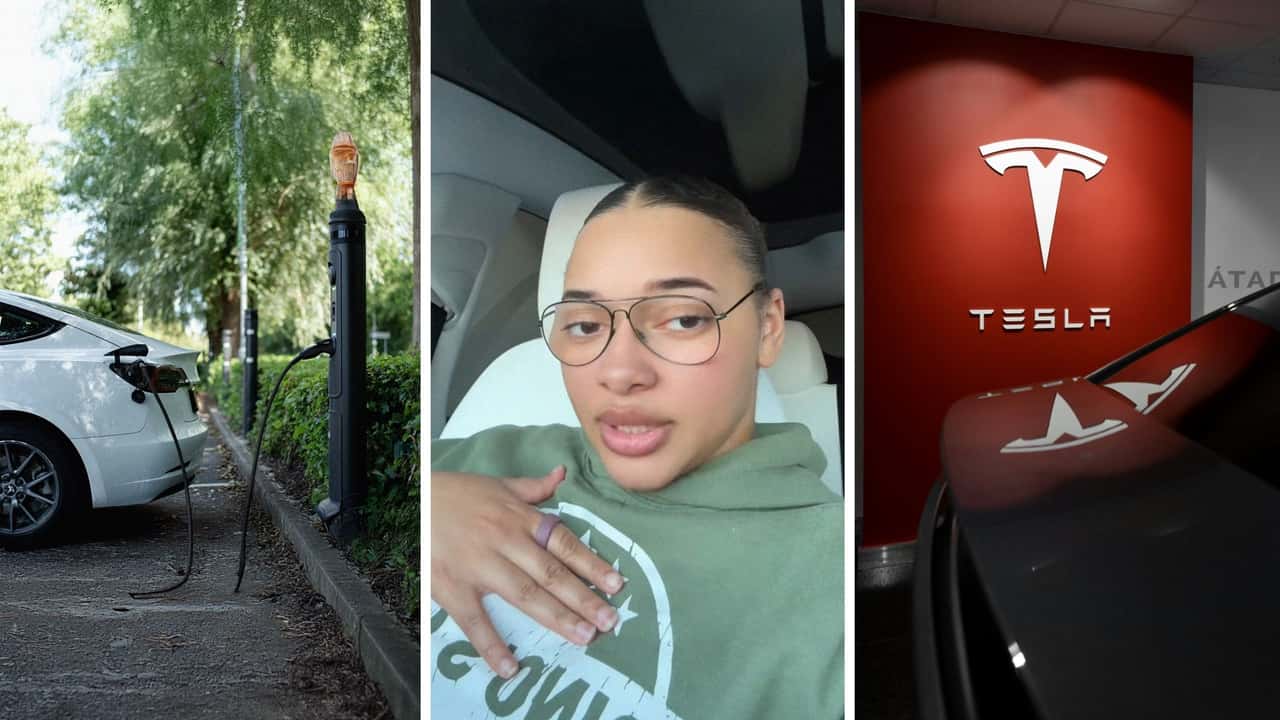

Tesla ownership comes with plenty of promises: no oil changes, instant torque, and the ability to charge at home while you sleep. But according to one new owner, there are a few important details that don’t always come up until after you’ve signed the paperwork, starting with how fast your car really charges in the garage.
The viral TikTok clip from creator BK (@bklynnatl) serves as a kind of real-person secret FAQ guide for prospective Tesla buyers. That means there’s a mix of pros, like the ease of scheduling service, and cons, including the need to be strategic about how and where to charge the battery.
“I've had my Tesla for six months now. So, I'm gonna tell you everything that I feel like you should know about a Tesla that they don't tell you about,” she says in the clip that’s been viewed more than 13,000 times. “On charging, you should only charge your car to 100% if you're taking a long drive. And it takes longer to charge your car from 80% to 100% than it does charging from 20% to 80%.”
Much of the debate around BK’s video centers on what “charging at home” actually looks like day to day. In her case, the charging setup uses Tesla’s mobile connector plugged into a 240-volt outlet, referred to as a "dryer outlet" rather than a dedicated wall-mounted charger.
Tesla itself notes that charging speed depends less on the vehicle and more on the power source supplying it. A mobile connector on a 240-volt outlet typically adds around 25 to 30 miles of range per hour, according to Tesla’s own charging documentation, while a hardwired Tesla Wall Connector can roughly double that rate depending on amperage and installation.
That difference explains why BK describes an overnight charge that ranges from 20% to 80%, taking most of the night, a figure that some commenters found shocking and others entirely normal.
The confusion is common among first-time EV owners, especially those transitioning from gasoline vehicles, where refueling time is measured in minutes rather than hours. The U.S. Department of Energy has long emphasized that home charging is best understood as a background task rather than a pit stop, something that happens while drivers sleep rather than something they actively wait on.
FROM THE TRENDING NEWS DESK
Viral bits from across the social media landscape
Our team of experts tracks what's trending so you don't have to—from viral videos to online debates that have everyone talking.
Is Faster Cheaper?
Several commenters were quick to suggest installing a Tesla Wall Connector would solve the problem, noting that faster charging at home reduces reliance on public fast chargers. Tesla sells its wall-mounted charger for roughly $400 before installation, a cost that some owners view as an investment and others see as an unnecessary upgrade.
BK pushed back on that idea in the comments, noting that she avoids Superchargers unless she’s traveling and prefers to charge overnight at home. Her approach aligns with broader EV cost data. According to analyses from the Department of Energy’s Alternative Fuels Data Center, home charging is typically the least expensive way to power an electric vehicle, even if it takes longer. Public DC fast charging, including Tesla Superchargers, can cost significantly more per kilowatt-hour, especially during peak pricing periods.
That trade-off of speed versus cost is one of the first real-world decisions new EV owners encounter, and it’s rarely addressed clearly during the sales process. As several commenters pointed out, the “right” setup often depends on a driver's housing situation, commute length, and the amount of overnight flexibility.
The 80% Rule—and Why It Exists
One of the most widely discussed moments in BK’s video is her advice to avoid charging to 100% unless heading out on a long trip. That guidance reflects long-standing best practices for lithium-ion batteries, which degrade more slowly when kept within a mid-range state of charge.
Tesla explains in its owner documentation that charging speed slows dramatically above 80% because the battery management system reduces power to protect battery health. Media reports have previously detailed this phenomenon in explainers on charging curves, noting that the final 20% of a charge can take nearly as long as the first 60% on many EVs.
The nuance, as several commenters noted, is that charging recommendations vary by battery chemistry and drivetrain. Some newer rear-wheel-drive Teslas use lithium-iron-phosphate batteries, which Tesla allows and in some cases recommends charging to 100% regularly. Other trims advise lower daily limits. That model-specific guidance is buried in the vehicle’s on-screen manual, which helps explain why owners often rely on TikTok and Reddit threads to fill in the gaps.
Cold weather adds another layer of complexity. BK mentions needing to charge more frequently in winter, a point backed by extensive EV range data. The DOE and AAA have both documented cold-weather efficiency losses due to battery chemistry, cabin heating demands, and increased drivetrain resistance.
She also touches on less obvious winter issues, such as frozen door handles and squeaky brakes. Tesla and other EV manufacturers acknowledge that regenerative braking reduces friction brake use, which can allow surface rust to form in damp or cold conditions. Tesla’s service documentation even recommends periodic firm braking to keep brake components clean.
These are small details, but together they help explain why many first-time EV owners feel caught off guard by seasonal changes that gasoline drivers rarely think about.
What makes BK’s video resonate isn’t that the information is secret or proprietary. Much of it appears, in one form or another, in Tesla’s documentation and in years of EV coverage. The difference is delivery. A firsthand account from someone still learning that the vehicle carries more weight for prospective buyers than a spec sheet or marketing page.
For drivers considering vehicles like the Tesla Model Y, the takeaway isn’t that charging is difficult. It’s that charging is contextual. The experience depends on your garage, your climate, your budget, and how much patience you have during the learning curve.
InsideEVs reached out to BK via email and direct message. We’ll update this if they respond.
RECOMMENDED FOR YOU

Woman Buys Cadillac EV. Then They Offer Her A Deal On EVgo
Drivers Are Not Happy With Their Cars' Screens
"The Motor Is Supposed To Last 1 Million Miles": Man Hits 360,000 Miles On His Model 3. Is That The Norm?
Lucid Cosmos And Earth: Everything We Know About The Tesla Model Y Rivals
"Dealerships Are Shady": Man Says Texas Toyota Dealership Agreed To Sell Highlander Hybrid For $26,900, Then Jacked Up The Price
This Chinese SUV Sold 100,000 Units In Seven Months For A Good Reason
Can Waze Still Track The Police?