
Man Goes On Road Trip In Tesla. Then He Gets In The Front Seat And Takes A Nap
“POV: You took the autopilot feature too serious.”
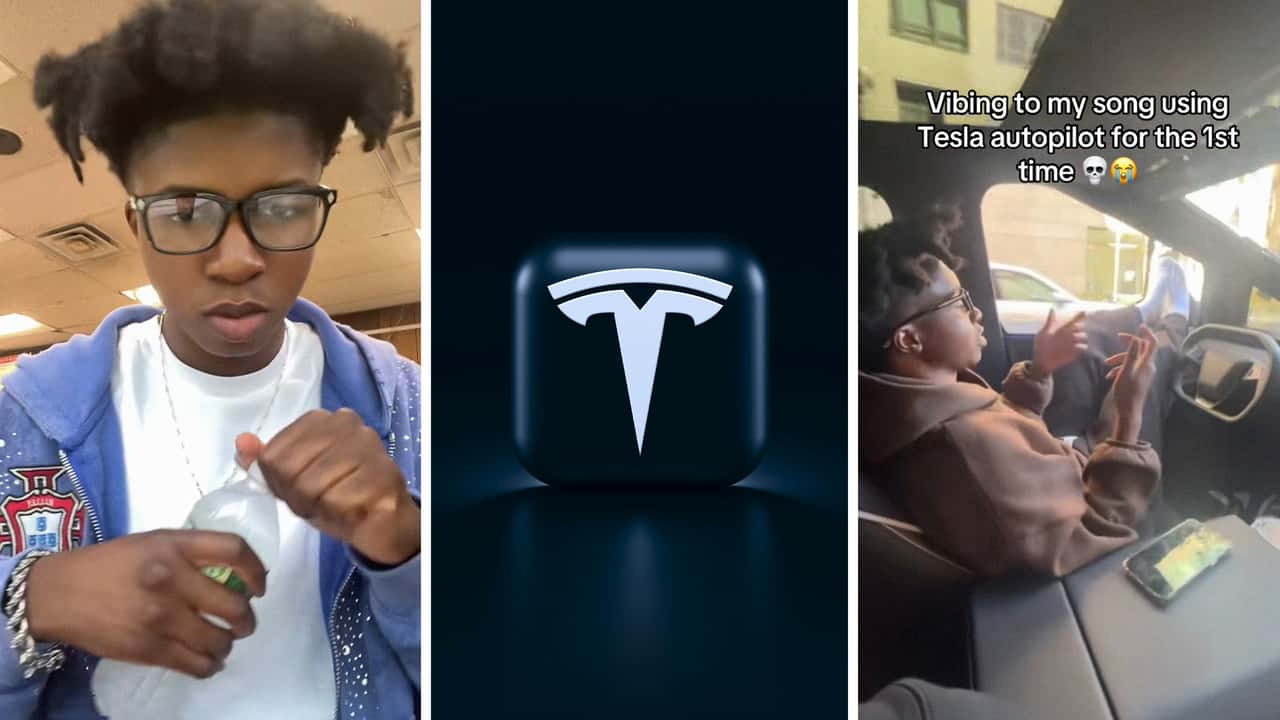

Most road trips start with a playlist and a cup of coffee. This one started with a nap.
A TikTok video of a Tesla driver dozing off behind the wheel while the car’s driver-assist features handled the highway reignites a familiar debate about where human oversight ends and automation begins.
The clip from TikToker Kid Fob (@kid_fob) captures the driver taking his shoes off with his feet on the left side of the dash and catching some sleep while the Tesla’s Full Self-Driving mode handles keeping the car on the road. The video, presumably captured by a passenger who wasn’t playing sleepyhead, notes in a caption, “POV: You took the autopilot feature too serious.”
From Viral Stunt To Safety Warning
The video, which has been viewed more than 1,100 times, plays partly like a stunt and partly like a warning. It also spotlights the recurring gap between what many drivers think “self-driving” means and what Tesla’s features actually are. Tesla’s Autopilot and optional Full Self-Driving (Supervised) are classified as SAE Level 2 driver-assistance systems, which can steer, brake and accelerate but still require a fully attentive human driver ready to take over at any moment. In other words, these cars are not autonomous, and responsibility remains with the person in the driver’s seat.
Now Trending
Tesla’s own owner documentation underscores that point. In the Model Y manual, Tesla says FSD (Supervised) will attempt tasks like navigating intersections, making turns and entering/exiting highways but repeatedly stresses that the visualization isn’t a full picture of what the system “sees” and that the driver must supervise at all times. The company’s public-facing support page puts it even more plainly: “Under your supervision, Full Self-Driving (Supervised) can drive your Tesla vehicle almost anywhere.”
Regulators have been increasingly focused on that “supervision” promise. After a two-year investigation into Autopilot’s driver-monitoring, the National Highway Traffic Safety Administration pushed a December 2023 recall affecting more than 2 million Teslas, aiming to increase alerts and better prevent misuse. The NHTSA then followed up in April 2024 with an analysis noting crashes where drivers met Tesla’s pre-recall engagement checks but still weren’t sufficiently attentive. The agency said evidence showed the original design didn’t adequately ensure driver attention. Federal monitoring of the software changes has continued into 2025.
FROM THE TRENDING NEWS DESK
Viral bits from across the social media landscape
Our team of experts tracks what's trending so you don't have to—from viral videos to online debates that have everyone talking.
Safety researchers say the human-factor challenge is real: Partial automation can lull people into “out-of-the-loop” complacency, slowing reactions just when quick human intervention is needed. The IIHS has found that many drivers overestimate what Level 2 systems can do, and AAA’s recent work suggests that drivers still have to step in regularly in real-world traffic. That underlying human behavior is why a video of a napping driver triggers so much alarm among experts.
Not Quite ‘Full’ Self-Driving
Legally, there’s no blanket U.S. permission to sleep behind the wheel while a Level 2 system is active; states handle inattentive or reckless driving under their own statutes. In prior incidents, drivers who were allegedly sleeping with Autopilot engaged have been stopped and cited by police, illustrating that, at least today, “the car was driving” doesn’t relieve a driver of responsibility.
For those trying to make sense of the rapidly shifting autonomy landscape, two clarifications help. First, “Level 2” (which includes Tesla FSD/Supervised, GM Super Cruise, Ford BlueCruise, and others) can assist with steering and speed but keeps accountability with the driver. Second, once a vehicle crosses to Level 3 and above (not what’s on most U.S. roads today), the system, instead of a human, assumes the driving task in specific conditions; until then, eyes-on-road is non-negotiable. Misunderstanding that boundary is how a road-trip nap becomes a viral moment.
If you watch the clip as entertainment, it’s easy to shrug. If you watch it as a case study, the friction lines are sharper. NHTSA’s recall documentation explicitly stated that Autopilot’s pre-recall design didn’t sufficiently maintain driver engagement. Independent crash reviews, compared with other Level 2 systems, have labeled Tesla an “outlier” for pairing permissive operation with weaker engagement checks. Even as Tesla has added camera-based attention monitoring and a “strike” system across various software releases, critics warn that any messaging implying the system can prevent a drowsy driver from crashing risks sending the wrong signal at the worst moment.
None of this is to say driver-assist is useless. In ideal conditions and with an attentive operator, today’s Level 2 features can reduce workload and help avoid errors. But the benefits assume the human remains firmly in the loop. That’s why Tesla’s manuals, SAE definitions, and state-level enforcement all converge on the same point: the person up front is still “the driver.” A TikTok of someone curled up for a quick nap may rack up views, but it also highlights exactly why regulators, safety groups, and even Tesla’s fine print repeatedly issue the same warning.
Bottom line for EV shoppers: Features branded as “Autopilot,” “Full Self-Driving (Supervised)” or similar still demand vigilance. If you’re considering these options, read the manual, know the limitations, and treat the system as an assistant, not a chauffeur. The technology is improving rapidly, but on today’s roads, the safest failsafe is still an attentive driver.
InsideEVs reached out to the creator via direct message and comment on the post. We’ll be sure to update this if they respond.

RECOMMENDED FOR YOU

A Tesla Model Y Battery Test Looked Bad. Then The Degradation Almost Stopped
The Volvo EX60 And EX90 Get An Important EV Fast-Charging Upgrade
Who's Winning The Robotaxi Race? It's... Complicated
License Plate Cameras Are About To Start Tracking A Lot More Than Just Your Car
The Rivian R2 Is Just As Efficient As A Tesla Model Y, Despite Weighing More
The New Chevy Bolt Was Driven Until It Died. Here’s What Its Battery Buffer Looks Like
Tesla Owners Are Using Doll Heads To Fool Full Self-Driving