
‘There’s Actually Not As Much Damage As You Would Think’: This New Kia EV3 Only Has 114 Miles. So Why’s It Totaled?
'For something to be written off like this...'
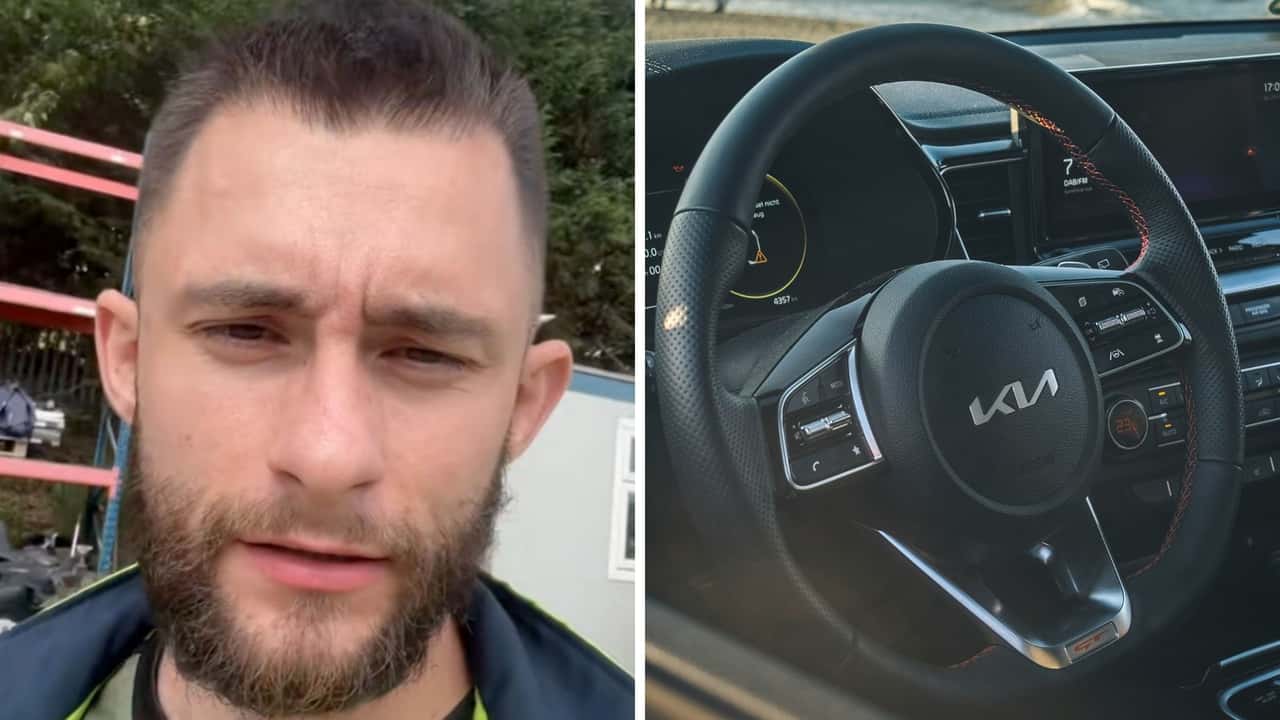



It hadn’t even reached its first charging cycle before its fate was sealed. A nearly new Kia EV3 featured in a viral TikTok clip will never see the open road again, not because of catastrophic damage, but because fixing it would cost more than writing it off.
In a post from U.K. electric vehicle specialists EV Breakers (@evbreakers) we see a clearly damaged but by all looks fixable Kia EV3 with only 114 miles driven that’s been declared a total loss.
“There's actually not as much damage as you would think for something to be written off like this,” digital marketing manager Ciaran Murphy observes as he looks over the vehicle. “But with something this new, due to the cost of parts… [and] how long it takes to get them.”
In any case, this new car is cooked.
What’s a Category B Write-Off?
Kia’s EV3 is currently not available in the U.S., and under U.K. regulations, a Category B designation is a definitive decision on a vehicle’s future, regardless of how minor the visible damage might be. As the government’s official guidance makes clear, a vehicle labeled Category B “cannot be repaired,” its body shell must be crushed, though usable components can be stripped and repurposed. This is distinct from Categories S and N, which denote cars that can return to the road after proper repairs.
That means even in a case like the still-operational EV3, the law offers no path back. The legal and safety framework prioritizes whether a car is allowed to resume driving, not just whether it could be fixed cheaply.
At first glance, it’s hard to believe that superficial damage should doom a nearly-new EV. But insurers apply strict economic thresholds, typically writing off cars when repair costs exceed 60–70% of the vehicle’s current value. Even a minor fender, headlight, or hood replacement can escalate quickly once airbags deploy or multiple parts are needed.
Electric vehicles, in particular, come with inherently higher repair costs. Recent U.K. industry data shows that EV warranty claims run 30–50% higher than those for comparable internal combustion engine (ICE) vehicles. Another study reports that EV repairs cost 25–30% more, on average. These higher estimates are driven by the need for specialized labor, diagnostics for high-voltage systems, and parts that are often only available from the manufacturer.
FROM THE TRENDING NEWS DESK
Viral bits from across the social media landscape
Our team of experts tracks what's trending so you don't have to—from viral videos to online debates that have everyone talking.
Moreover, the video highlights a case in point: While the EV3’s high-voltage cables remain untouched, replacing the hood, crash bar, wings, windscreen, airbags, and possibly the radiator pack still adds up in parts and lead time, during which the vehicle occupies valuable yard space.
Are EVs More Likely To Be Totaled?
Electric vehicles introduce unique dynamics that push insurers toward total-loss decisions more often than would be theoretically expected, even when the damage seems minor.
Battery-related caution is a key factor. Even a light scratch on a battery casing can trigger rules requiring full replacement, since insurers and repairers err on the side of safety. The scarcity of trained EV repair technicians only amplifies that effect: Many garages lack the tools, manuals, or certification to assess battery health with enough confidence to attempt limited repairs.
Even routine system checks like assessing whether high-voltage components remain safe cost time and money. When insurers combine parts and diagnostics expenses with inflated labor rates and insurance premium pressure in the U.K. market, writing off a nearly new EV becomes a cleaner fiscal outcome.
Could This Happen In the U.S.?
In the United States, the same Kia EV3, had it been available here, might not be headed for the shredder. Instead, many states allow vehicles deemed uneconomical to repair to be sold at salvage auctions, where they can be rebuilt, inspected, and issued a “rebuilt” or “reconstructed” title. That process often allows cars with damage similar to the EV3’s to return to the road, albeit with a branded title that can affect resale value.
That’s not to say repair would be easy. Airbag replacements, structural assessments, and any work involving high-voltage systems would still require specialized expertise and equipment. But the U.S. has a large network of independent rebuilders and a robust aftermarket salvage economy, which can make repairs more cost-effective than in the U.K.’s tightly regulated system.
Now Trending
Still, there are signs that the U.S. may tighten rules for electric vehicles. Some insurers are already imposing stricter policies on EV battery repairs, and certain states have started crafting guidelines for assessing battery damage after collisions. Those measures could make EV-specific write-offs more common in the years ahead, even on models that remain otherwise drivable.
For prospective EV buyers, especially those looking at new-to-market models like the EV3, this story is a reminder that repairability isn’t just about how easy it is to swap a bumper or fender. Insurance rules, the availability of certified repair centers, and parts supply chains all shape whether a vehicle is fixed or scrapped after an accident.
Experts recommend asking insurers specific questions before signing a policy: How is battery damage assessed? What thresholds trigger a total loss? Will OEM-only parts policies be enforced, or can aftermarket components be used? These details can vary not just between insurers, but across countries and states.
Owners can also take proactive steps to reduce risk. Parking sensors, cameras, and radar units are costly to replace and can tip the balance toward a write-off if damaged, so avoiding low-speed impacts in tight spaces can be more valuable than it sounds. And for those planning to keep an EV for many years, choosing a model with a strong parts and service network may matter more than shaving a few thousand off the purchase price.
InsideEVs contacted EV Breakers via email. They declined to comment further.

RECOMMENDED FOR YOU

How The Kia EV3 Delivers 320 Miles Of Range Without Looking Like A Bar Of Soap
Honda’s $11B EV Factory In Canada Is Dead: Report
Kia's Cheapest EV Is An Unexpected Range Monster. But Will It Still Cost $35,000?
Even Lucid Doesn’t Know How Many EVs It Will Make In 2026
Over 30 New EVs Are Launching In 2026. Here's What You Need To Know About Them
Rivian May Build Its Own Lidar Sensor For The R2 In The U.S.
Kia Just Gave Its Affordable EVs More Power And Pretend Gears