
What Is Tesla Nausea? How Can You Prevent It?
A woman knew her Uber would make her sick the moment she saw a Tesla pull up. It's not just her.
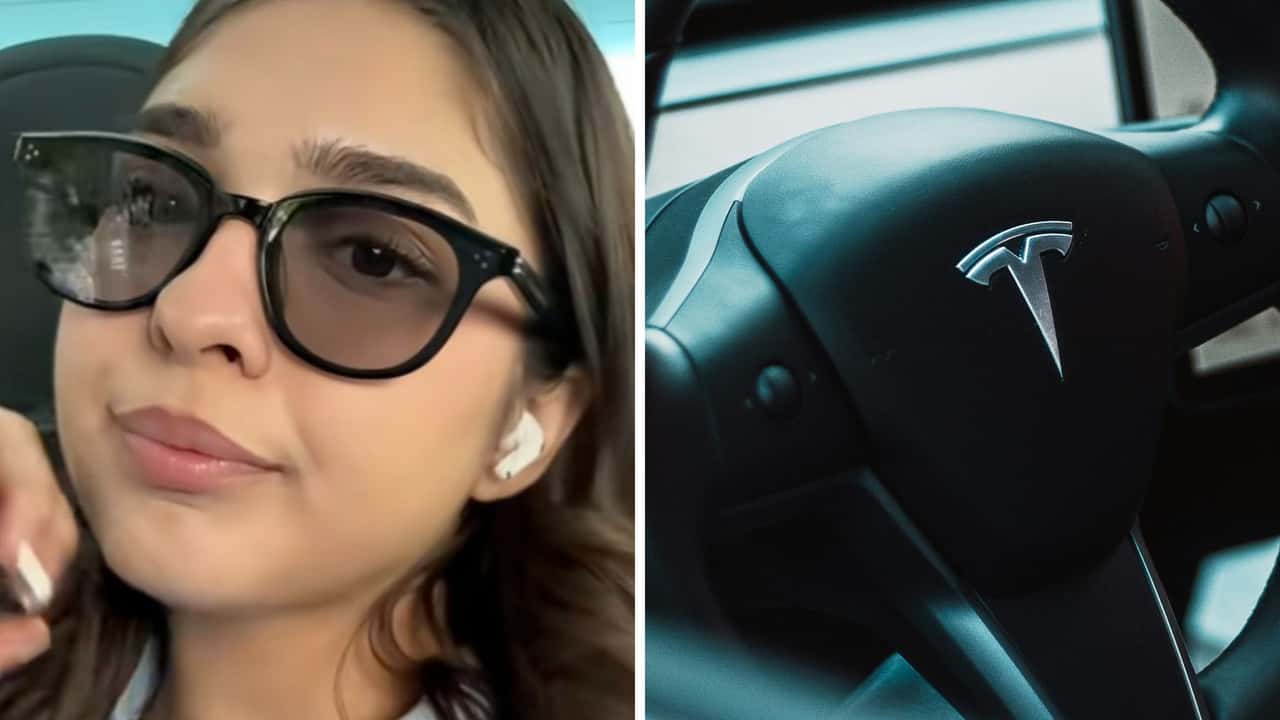

Your brain expects a certain soundtrack when you’re in motion: The low rumble of an engine, the hum of tires. Electric cars erase those cues, and for some riders, that sensory silence is enough to trigger motion sickness before the first stoplight.
In a recent TikTok clip, creator Saniya (@sunyatoo) is clearly not enthused about her Uber ride coming from a Tesla. The caption suggests the experience of riding in a quiet EV makes her feel queasy and off-balance.
It’s not just her.
'Tesla Nausea,' Explained
In many ways, the feeling of queasiness while riding in a Tesla, or any EV, is rooted in a disconnect between what our senses expect and what they actually experience. Motion sickness occurs when there’s a mismatch between the inputs our brain receives from the eyes, the inner ear, and the body’s sense of movement. When these signals don’t align, the brain can interpret the conflict as a potential threat, triggering symptoms like dizziness, cold sweats, and nausea.
Electric cars amplify that sensory mismatch in subtle but significant ways. For starters, they strip away the auditory cues most people unconsciously rely on. The rise and fall of an engine’s pitch, the vibration through the floorboard, even the faint hum of a gearbox in motion. These sound and vibration patterns help the brain anticipate acceleration, deceleration, and turns. In a whisper-quiet EV cabin, those advance warnings are gone.
Then there’s the way EVs move. Electric motors deliver full torque instantly, creating sharp bursts of acceleration that can catch passengers off guard. Coupled with a low center of gravity from heavy battery packs, those accelerations and turns feel more abrupt than in many gas-powered cars.
Regenerative braking adds another layer, producing sudden deceleration when the driver lifts off the accelerator. Some riders describe the sensation as being pulled forward into quicksand—a jolt that the body doesn’t always predict. And paradoxically, the EV’s smooth ride can make things worse. Without the small bumps and vibrations of a combustion vehicle, the brain loses another set of orientation cues.
Though “Tesla nausea” might sound like a social media exaggeration, research suggests the effect is real. A 2024 study at Hong Kong University found that passengers predisposed to motion sickness reported more severe symptoms when a vehicle’s regenerative braking was set to its strongest mode. Other work at Vrije Universiteit has shown that auditory and tactile feedback—engine noise and vibration—significantly reduce motion sickness in passengers, lending weight to the idea that EV silence can be disorienting.
FROM THE TRENDING NEWS DESK
Viral bits from across the social media landscape
Our team of experts tracks what's trending so you don't have to—from viral videos to online debates that have everyone talking.
Now Trending
A 2025 survey, covering more than 600 respondents, offered a nuanced picture. While traditional fuel vehicles were linked to more frequent episodes of motion sickness overall, EVs tended to produce more severe symptoms when those episodes occurred. The survey also found that factors like individual susceptibility, recent sleep quality, and in-car activities such as reading all played a role.
Researchers are also exploring potential fixes. In autonomous and ride-share-focused EV design, engineers have experimented with visual cues, ambient lighting, and display prompts to help passengers anticipate movement. While these interventions are still in early testing, they could be an important tool in making EV travel more comfortable.
Coping Strategies for EV Riders
For now, the simplest solutions rely on adapting how and where you ride. Sitting in the front passenger seat can reduce the gap between what your eyes see and what your inner ear feels, especially if you focus on the horizon rather than a phone or book. In curves, tilting your head in the opposite direction of the centrifugal force has been shown to reduce symptoms.
Small physical adjustments can help, too. Fresh air from an open window or a short break can ease symptoms. Ginger candy and proper hydration are simple remedies that have some research support. For those especially prone to motion sickness, over-the-counter medications like meclizine or scopolamine patches may be effective, though drowsiness is a common side effect. Some riders also swear by acupressure wristbands, which target the P-6 point on the inner wrist.
Longer term, experts say the brain can adapt. Frequent exposure to the same motion patterns can reduce susceptibility over time, as the body learns to anticipate the forces involved. Some researchers are even testing visuospatial training programs, which have shown promise in cutting motion sickness symptoms by more than half. For now, that means “Tesla nausea” may not be permanent, and it’s just another adjustment to life in the EV age.
InsideEVs reached out to Saniya via direct message.

RECOMMENDED FOR YOU

Tesla Burned Through Its California EV Rebate Funds In Just Five Days
The Ford Fathom Will Get a $25,000 Hybrid Crossover Sibling: Report
How Much Quicker Is The Newest Version Of Tesla FSD? This Test Put It Against Old Software To Find Out
Ford’s New AI Assistant Can Read Your Car’s Manual And Diagnostics
Tesla Never Made An Electric Jet Boat, So This YouTuber Built One Himself
This Kit Turns The Volkswagen ID. Buzz Into A More Capable Off-Road Van
Elon Musk Hurts Tesla More Than China Ties Hurt BYD, Survey Finds