Home
News
China
Why Rivian Bought China's 'Apple Car'
The Xiaomi SU7, sometimes called China's "Apple Car," is making waves. And now it's a benchmark vehicle for Rivian.

Photo by: InsideEVs
Patrick George 
By: Patrick George
Sep 12, 2024 at 7:14pm ET
Add InsideEVs as a preferred source in Google
- (https://twitter.com/intent/tweet?url=https%3A%2F%2Finsideevs.com%2Fnews%2F733582%2Frivian-xiaomi-su7-rj-scaringe%2F&text=Why%20Rivian%20Bought%20China%27s%20%27Apple%20Car%27&via=InsideEVs)
- copy
Share
Comment
Until a few months ago, I think it's fair to say that not many people thought of Rivian as a software company. A maker of cool-looking, high-range electric SUVs and trucks, sure, but not necessarily as a groundbreaking tech operation. That certainly changed when Volkswagen admitted it needed outside help to deal with its endless software woes and inked a $5 billion deal with Rivian to co-develop software and electrical architectures. That was a huge coup for the American startup and a much-needed financial lifeline as it seeks to cross the "valley of death."
But as Rivian seeks to establish itself as a leading player in the EV tech race, we know that it's now looking to one of China's very best as an example of what can be done.

Get the best news, reviews, columns, and more delivered straight to your inbox.
back
Subscribe For more info, read our Privacy Policy & Terms of Use.
Speaking at Morgan Stanley's 12th Annual Laguna Conference this week, Rivian CEO RJ Scaringe confirmed a question posed by analyst Adam Jonas: that the EV startup has indeed acquired a Xiaomi SU7 for benchmarking purposes.
That's not entirely surprising for several reasons. China's EVs are now known to be extremely advanced in terms of software, construction, low build costs, efficiency and more, so many automakers are acquiring those vehicles to try and learn from them.
"In China, there's an enormous level of competition amongst a lot of different brands, both new companies and existing companies in the EV space," Scaringe said. "And of course, [with] BYD chief among them, we've seen some very impressive vehicles from a cost point of view and enterprise point of view. And so lots of people have taken apart those cars and looked at what's in them."
Just a few weeks ago, I saw a Zeekr zooming around the campus of a certain large automaker that operates here in America.
Gallery: Xiaomi SU7 2024

27


But Rivian's choice of the SU7, to me, is extremely telling. It's a real "go big or go home" moment if you're going to pick a vehicle for benchmarking.
Launched this spring, the SU7 is the first foray into the automotive world for the Chinese smartphone and tech giant; that company is already the third-largest phone maker in the world behind Apple and Samsung. And because of how deeply the EV integrates with Xiaomi's existing software and hardware ecosystem used by more than half a billion people globally, the SU7 has been dubbed "China's Apple Car". It represents the kind of connected vehicle Apple might have built if it hadn't thrown in the towel.
Indeed, the SU7 is already getting rave reviews in China for offering Tesla Model S-beating performance at Model 3-level prices. And Xiaomi is even planning a performance version soon that could well be the fastest four-door sedan ever made.
So, yes, it's fair to say Xiaomi is coming correct here. And as Rivian eyes ways to advance its zonal electrical architecture, boost its software game and cut costs to seek profitability, there's perhaps no better example to follow.
While Scaringe didn't mention the SU7 specifically after confirming what Jonas asked, he did stress that cost reduction is a big part of why Rivian cares here.
"Lots of people have taken apart those cars and looked at what's in them," Scaringe said. "In many cases, there's nothing that's there's not some singular magic wand. There's not you don't take it apart and say, 'Oh, that this is wildly different than expected.' But it's a cost advantage that exists across every nut and every bolt and every wire and every panel in the vehicle."
Scaringe added that many of China's automakers are "competing in an environment where they're operating at zero gross margin and planning to do that for a very, very long time," meaning they have so much competition that they're finding ways now to survive for the long haul—and that means being obsessive about cost reduction and one-upping the rest of the field.
Gallery: Rivian R2
16
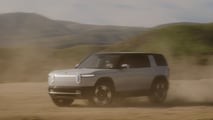


He confirmed that Rivian has no plans to enter China "for a lot of reasons," he said it's crucial to know if China's EVs will be competitive in the U.S. or Europe. And he added—correctly, I might add—that many Chinese automakers are finding inroads into the American market via technical and battery partnerships. And Rivian seeks to learn a lot from not just how these cars are built but also how their underlying supply chains work.
"It's that every single component... is 20% to 30%, sometimes 40% cheaper than what we would have for a part or a component that's sourced in the Western market," he said.
Ultimately, what Scaringe says here underscores the challenges of competing in the EV arena, even if it's a company like Rivian that's native to the space. It's all about control of batteries, control of the supply chain and getting costs down for making cars in a very different way than has been done across 100 years of gas-powered automobiles. And throughout his chat, he stressed that getting out of the $90,000 to $100,000 price range Rivian is in now with the future R2 and R3 models will be key to the company's survival—not unlike when Tesla got to the day when it could crank out the Model 3 and Model Y in volume.
What do you think?
View
Comments
"We are working very hard to have a very similar outcome, where R2 is the dominant vehicle within our portfolio from a volume point of view," he said.
Contact the author: patrick.george@insideevs.com
More Rivian News
The Rivian R1T Is Safest Truck The IIHS Has Ever Tested
The Best New Electric Cars For City Living
Lucid Gravity SUV Will Get Tesla's NACS Charging Port
China's BYD Shark Vs. Tesla Cybertruck, Rivian R1S: ‘Exceptional Build Quality’
Tesla Universal Wall Connector Not Charging Your Non-Tesla EV? Here’s The Solution
How Rivian's New Rewards Program Can Get You A Free Rivian
We want your opinion!
What would you like to see on Insideevs.com?
Take our 3 minute survey.
- The InsideEVs team
Share this Story
- (https://twitter.com/intent/tweet?url=https%3A%2F%2Finsideevs.com%2Fnews%2F733582%2Frivian-xiaomi-su7-rj-scaringe%2F&text=Why%20Rivian%20Bought%20China%27s%20%27Apple%20Car%27&via=InsideEVs)
- copy
GO TO COMMENTS
(
)
Got a tip for us? Email: tips@insideevs.com
View all comments ( )
Trending
Diesel Prices Are Surging. This Electric Trucking Company Is Seeing More Interest
Tesla Opens Self-Driving Cybercab Orders To 'Select Customers' At $29,990
Solid-State Cells Can Make The U.S. Competitive In Batteries Again: CEO
I Took A Rivian R2 On A Camping Trip To The Middle Of The Desert
Latest Stories
- Diesel Prices Are Surging. This Electric Trucking Company Is Seeing More Interest Nov 14 - News -
- Tesla Opens Self-Driving Cybercab Orders To 'Select Customers' At $29,990 Nov 13 - News -
- Do EVs Wear Tires Faster? Here's What The Studies Show Nov 13 - Features -
- The VW ID. Buzz Is Getting A New Job As A Robotaxi Nov 13 - News -
- Audi A4 EV Delayed Amid VW Group Financial Troubles: Report Nov 13 - News -
- Tesla Just Killed Its Cheapest All-Wheel-Drive Model Y Nov 13 - News -
- A Record Number Of Uber Miles Are Happening In EVs Nov 13 - News -
RECOMMENDED FOR YOU
The Lincoln Aviator PHEV May Have Died In America, But It’s Coming Back In China
Diesel Prices Are Surging. This Electric Trucking Company Is Seeing More Interest
Chinese Cars Cost Way Less To Build Than European Ones. Here’s Why
Tesla Opens Self-Driving Cybercab Orders To 'Select Customers' At $29,990
Chinese EVs Are Praised For Value, But This $150,000 Minivan Has A Serious Braking Problem
Do EVs Wear Tires Faster? Here's What The Studies Show
BYD’s $10,000 EV Is Getting A Huge Upgrade, With 5-Minute Charging