Home
News
Industry
A $16,000 American-Made EV? The U.S. Government Wants A Competition To Build One
The sub-$10,000 BYD Seagull has made American automakers restless. A U.S. official has ideas on building our version of it.
Suvrat Kothari 
By: Suvrat Kothari
May 30, 2024 at 12:30pm ET
Add InsideEVs as a preferred source in Google
- (https://twitter.com/intent/tweet?url=https%3A%2F%2Finsideevs.com%2Fnews%2F721571%2Fcompetition-to-build-16000-dollar-american-ev%2F&text=A%20%2416%2C000%20American-Made%20EV%3F%20The%20U.S.%20Government%20Wants%20A%20Competition%20To%20Build%20One&via=InsideEVs)
- copy
Share
Comment
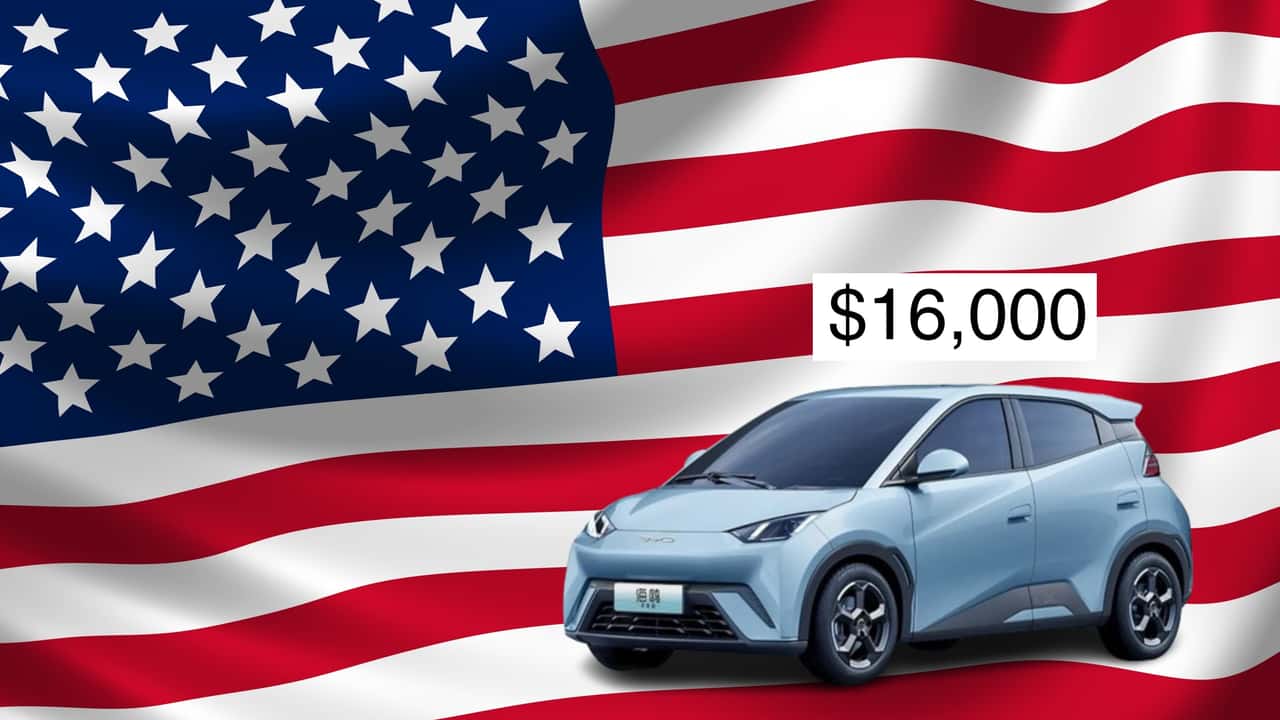
The sub-$10,000 BYD Seagull is a tour de force representing China’s strong lead in the global EV market. Some of the cheapest EVs in the U.S.—like the Nissan Leaf—cost three times as much before tax credits. Now, a member of the Advanced Research Projects Agency-Energy (Arpa-E), a technology incubator under the U.S. Department of Energy, said that doing things differently could help the U.S. build a Seagull fighter.
Halle Cheeseman, a program manager overseeing next-generation battery programs at Arpa-E, told The Information that a potential solution to spur innovations is to host a competition to develop a high-quality U.S.-manufactured EV that would cost approximately $12,000 to build and retail for around $16,000.
Get Fully Charged
High costs jeopardize EV adoption. But low-cost EVs seem imminent.
The high purchase price of EVs has obstructed the wider adoption of climate-friendly electric cars. Expensive batteries and capital-intensive development and production contribute the most to this problem. But things are slowly streamlining and EVs might reach price parity with gas cars sooner than we think.
Cheeseman's proposal, presented at an Arpa-E conference in Dallas last week, underscores the growing concern among U.S. officials about the influx of inexpensive Chinese EVs into the American market. There now appears to be a genuine desire to take steps beyond just imposing tariffs on Chinese imports.
The Seagull is the result of China’s vast local and national subsidies, manufacturing scale and its stranglehold on the battery supply chain. BYD also has one of the highest amounts of vertical integration of any automotive company. Most of its parts, including the chips and the battery, are manufactured in-house.
“We are being beaten, and we're being beaten badly,” Cheeseman told the news outlet. “We need to do something differently.” According to him, the U.S. can tackle this problem by accelerating the adoption of robotics and 3D parts printing in factories, increasing the role of utility companies in battery ownership and leaning on technologies such as vehicle-to-grid (V2G).

Broadly speaking, robotics can enhance precision and efficiency, reduce labor costs and minimize production line errors. 3D printing could speed up the production of complex parts. Together, these systems may enable more efficient production lines and potentially create lighter, more efficient EVs, all contributing to lower overall costs.
But they come with high initial investments, and their integration could be a nightmare—something evident in the Tesla Model 3’s “production hell” era.
Cheeseman said Arpa-E’s senior management could take a year to select a concept as an official program. The program could last up to three years, during which $30 million would be distributed among competing teams. If a team’s solution seems truly promising, they’re given a chance to scale up.
Proposals like the affordable EV could take up to a decade to reach commercial scale and are contingent on how fast automakers incorporate any breakthroughs.

Get the best news, reviews, columns, and more delivered straight to your inbox.
back
Subscribe For more info, read our Privacy Policy & Terms of Use.
Another potential solution is letting utilities pay for and own the battery pack, which could drive down the purchase price for consumers. Vehicle-to-grid (V2G) technology, which can feed power back into the local grid from an EV’s battery pack during emergencies or power cuts, could reduce the need for traditional powerplants, according to Cheeseman.
V2G is in a nascent phase, with a handful of EVs like the Nissan Leaf and Ford F-150 Lightning offering the feature. Even then, local utility companies must conduct necessary compatibility upgrades for the grid to accept power from an EV’s battery.
The U.S. is on track to witness several affordable EVs starting as soon as 2025 and 2026. These EVs would be more expensive than Cheeseman’s $16,000 target, but still cheaper compared to today’s prices. And they would likely arrive much faster than a direct Seagull fighter ever could—unless some breakthrough alters the whole landscape.
What do you think?
View
Comments
Tesla is working on affordable models, General Motors recently said that the next-gen Bolt EV would be its cheapest EV, Stellantis confirmed this week that a $25,000 Jeep was on its way and Volkswagen’s $21,000 EVs will premier in 2027.
Whether through government-funded programs or private-sector initiatives, cheap EVs are coming.
More EV News
2025 Cadillac's Optiq Crossover Aims For A Newer And Younger EV Crowd
Here’s The Facelifted Rivian R1S Before You’re Supposed To See It
$25,000 Electric Jeep Is Coming Soon, Says Stellantis CEO
The Ford Mustang Mach-E Rally Is An Absolute Hoot
We want your opinion!
What would you like to see on Insideevs.com?
Take our 3 minute survey.
- The InsideEVs team
Share this Story
- (https://twitter.com/intent/tweet?url=https%3A%2F%2Finsideevs.com%2Fnews%2F721571%2Fcompetition-to-build-16000-dollar-american-ev%2F&text=A%20%2416%2C000%20American-Made%20EV%3F%20The%20U.S.%20Government%20Wants%20A%20Competition%20To%20Build%20One&via=InsideEVs)
- copy
GO TO COMMENTS
(
)
Got a tip for us? Email: tips@insideevs.com
View all comments ( )
Trending
I Took A Rivian R2 On A Camping Trip To The Middle Of The Desert
Solid-State Cells Can Make The U.S. Competitive In Batteries Again: CEO
BYD's Futuristic EV Charger Can Run On Sunshine And Batteries
Google’s Gemini AI Assistant Now Works On Apple CarPlay
Latest Stories
- Slate Is Selling A $30 'Screenless GPS' For Its Low-Tech Truck Nov 12 - News -
- America's 3 Most Popular SUVs Are About To Be Hybrid Or Electric Nov 12 - News -
- The 2026 Chevy Silverado EV Trail Boss Makes No Sense. I Loved It Anyway Nov 12 - Car Reviews -
- Scout's New Factory Is Already Making Trucks. But You Won't Be Able To Buy One For A While Nov 12 - News -
- BYD's Futuristic EV Charger Can Run On Sunshine And Batteries Nov 12 - Charging -
- I Took A Rivian R2 On A Camping Trip To The Middle Of The Desert Nov 12 - Car Reviews -
- Solid-State Cells Can Make The U.S. Competitive In Batteries Again: CEO Nov 12 - Battery Tech -
RECOMMENDED FOR YOU
Hyundai Says Hydrogen Cars Aren’t Dead. Finding Customers Is Another Story
Slate Is Selling A $30 'Screenless GPS' For Its Low-Tech Truck
GM Is Closing Its Detroit EV Battery Plant
America's 3 Most Popular SUVs Are About To Be Hybrid Or Electric
Inside The Texas Factory Racing To Break China’s Grip On EV Magnets
The 2026 Chevy Silverado EV Trail Boss Makes No Sense. I Loved It Anyway
Volkswagen Delays The ID. Buzz's Return To The U.S. Again