Home
News
Battery Tech
Stellantis Will Use SVOLT's Batteries From 2025 On
The cells will come from the upcoming gigafactory in Saarland, Germany.

Mark Kane 
By: Mark Kane
Jul 14, 2021 at 4:38pm ET
Add InsideEVs as a preferred source in Google
- (https://twitter.com/intent/tweet?url=https%3A%2F%2Finsideevs.com%2Fnews%2F520236%2Fstellantis-use-svolt-batteries-2025%2F&text=Stellantis%20Will%20Use%20SVOLT%27s%20Batteries%20From%202025%20On&via=InsideEVs)
- copy
Share
Comment
SVOLT Energy Technology officially announced that from 2025 on, it will supply lithium-ion batteries for upcoming new Stellantis' electric cars.
The cells for Stellantis will be sourced from both SVOLT's Chinese plants as well as from the European plan, which is under construction in Saarland, Germany.
The company is investing some €2 billion ($2.4 billion) to build a gigafactory in Germany, with an output of 24 GWh annually. We guess that there must be other customers as well, as the production will start by the end of 2023.
"From 2025 onwards, Stellantis will also source its lithium-ion batteries from SVOLT. SVOLT will provide Stellantis with a broad product portfolio for this purpose, from battery cells and high-voltage storage systems to battery management systems. For the order, SVOLT will use its production capacities in China and future production capacities in Europe."
The deal with Stellantis is not a surprise, as the partnership with PSA was rumored since 2020, and several days ago, Stellantis listed SVOLT among its battery suppliers (the list includes also Automotive Cells Company (ACC) JV with Total/Saft, CATL, BYD, Samsung SDI and LG Chem's LG Energy Solution).
Maxim Hantsch-Kramskoj, Vice President Sales & Marketing SVOLT Europe said:
“We are very pleased to have won such a renowned customer like Stellantis for our high-quality lithium-ion batteries and battery systems and to be able to supply them with batteries in the future,”.
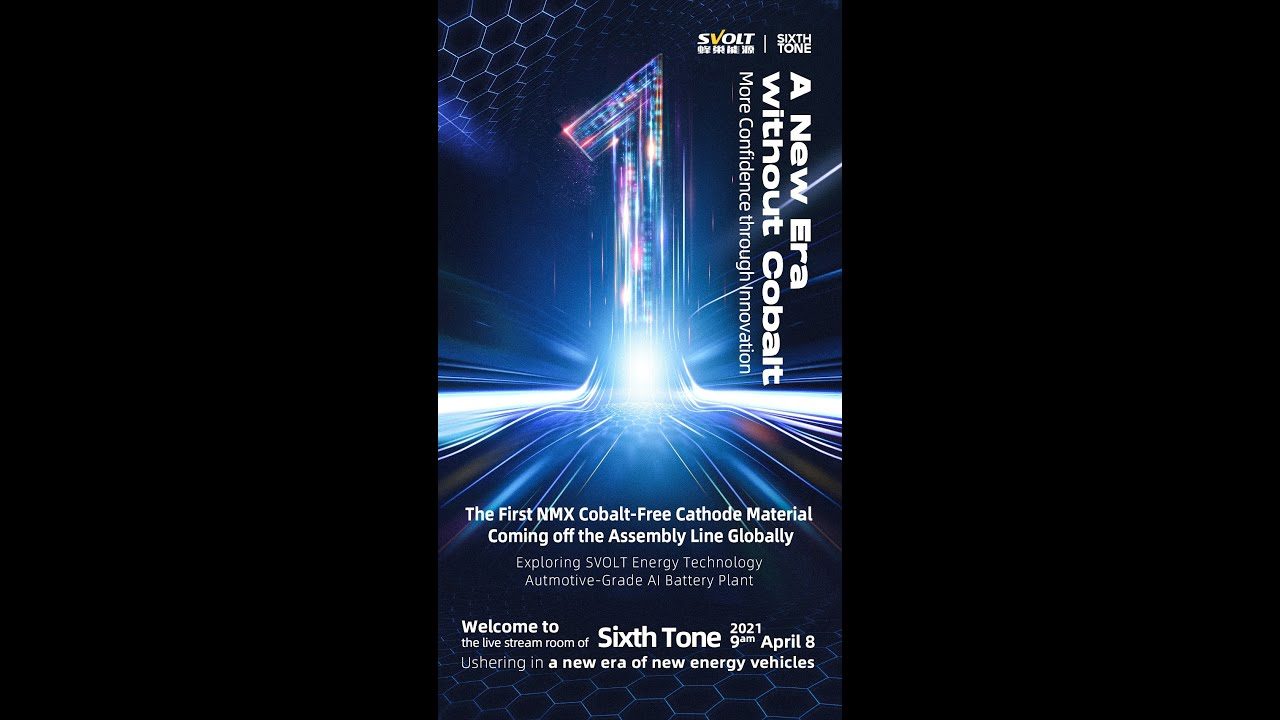
The volume or battery chemistry was not revealed, but SVOLT is probably ready for any order. The company announced this year all-new cobalt-free NMx lithium-ion battery cells with an energy density of 240-245 Wh/kg.
In April 2021, the company started production of NMx cathode materials (75% nickel and 25% manganese) at its Jintan plant in China.
"In January 2021, the pilot production of 10 tonnes of cobalt-free cathode material was successfully completed in the battery cell factory in Jintan. In its current development stage, the cell factory now produces 5,000 tonnes of the main material for cobalt-free battery production per year."
Another interesting thing about the SVOLT is the safety technology from the Soteria Battery Innovation Group (BIG), which makes the cells immune to thermal-runaway.
SVOLT target: 200 GWh annually by 2025
SVOLT's ambitious are extraordinarily high, considering that the company has opened its first cell factory in Jintan, Changzhou in 2019 and as of February 2021 had manufacturing capacity of 12 GWh annually.
By 2025, the company would like to have several gigafactories and a total output of 200 GWh annually (up from 100 GWh previously). Partially it will be possible thanks to a strong ability to raise capital. In February, the company raised 3.5 billion yuan (around 450 million Euros).
There are several gigafactory projects underway now:
- Jintan, Changzhou, China - expansion from 12 GWh to 18 GWh
- Hunan and Hubei province, China - 40 GWh
- Suining, Sichuan province, China - 20 GWh (10 GWh in the first phase)
- Huzhou in the Zhejiang province, China - 20 GWh (10 GWh in the first phase)
- Lishui, China - 14.6 GWh (6.6 GWh in the first phase)
pouch-format for hybrids - Saarland, Germany - 24 GWh
- the remaining capacity is currently still in evaluation
What do you think?
View
Comments
The Suining and Huzhou plants were announced in February 2021.
"The Huzhou plant will be wholly owned by SVOLT. Plant construction is scheduled to begin in October 2021 and will take place in two phases. While construction of Phase 1 will begin in October of this year, Phase 2 will start in March 2022. Both industrialization phases will include six production lines. The start of production for the first phase is scheduled for October 2022."
See also
 Volkswagen Group Will Develop Unified Cell With Gotion High-Tech
Verkor Raises €100 Million To Develop EV Batteries in France
We want your opinion!
What would you like to see on Insideevs.com?
Take our 3 minute survey.
- The InsideEVs team
Share this Story
- (https://twitter.com/intent/tweet?url=https%3A%2F%2Finsideevs.com%2Fnews%2F520236%2Fstellantis-use-svolt-batteries-2025%2F&text=Stellantis%20Will%20Use%20SVOLT%27s%20Batteries%20From%202025%20On&via=InsideEVs)
- copy
GO TO COMMENTS
(
)
Got a tip for us? Email: tips@insideevs.com
View all comments ( )
Trending
Kia EV3 Lease Deals Are Here, And It’s Cheaper Than The Chevy Bolt And Nissan Leaf
I Let Android Auto Plan My EV Roadtrip. Here’s How It Worked
This Chevy Bolt Has 470,000 Miles. Here’s How Much A New Battery Was
Here's What It's Like To Take Delivery Of A Rivian R2
latest articles
- Can The BMW iX3 Take Down The Tesla Model Y L And Rivian R2? Oct 20 - News -
- Waymo Plans To Have 20,000 Cars By The End Of 2027 Oct 20 - News -
- The Boring Company Uses Tesla Model 3 Sleds To Shuttle Shipping Containers Through Its Tunnels Oct 20 - News -
- How Much Range Do EVs Lose When Parked? (And How to Stop It) Oct 20 - EV 101 -
- This Chinese EV Is Now Made In Europe. More Are Coming Oct 20 - News -
- GM Is Closing Its Detroit EV Battery Plant Oct 20 - Industry -
- The 2027 Lexus NX Plug-In Hybrid Gets A Bigger Battery And Fast Charging Oct 20 - Official -
RECOMMENDED FOR YOU
The Roadster Will Have Tesla’s Most Advanced Battery Pack Yet
How Much Range Do EVs Lose When Parked? (And How to Stop It)
Tesla Supplier Reports Record Earnings From EV And Energy Storage Batteries
This Chinese EV Is Now Made In Europe. More Are Coming
China Wants Mass-Produced Solid-State Batteries By 2030. CATL Knows That's Hard
GM Is Closing Its Detroit EV Battery Plant
How Geely's New Battery Handles A Megawatt Of Charging Power Without Crazy Degradation