
Rare-Earth Materials May Start Coming From Japanese Seafloor
One more thing EVs and ICE vehicles may have in common.
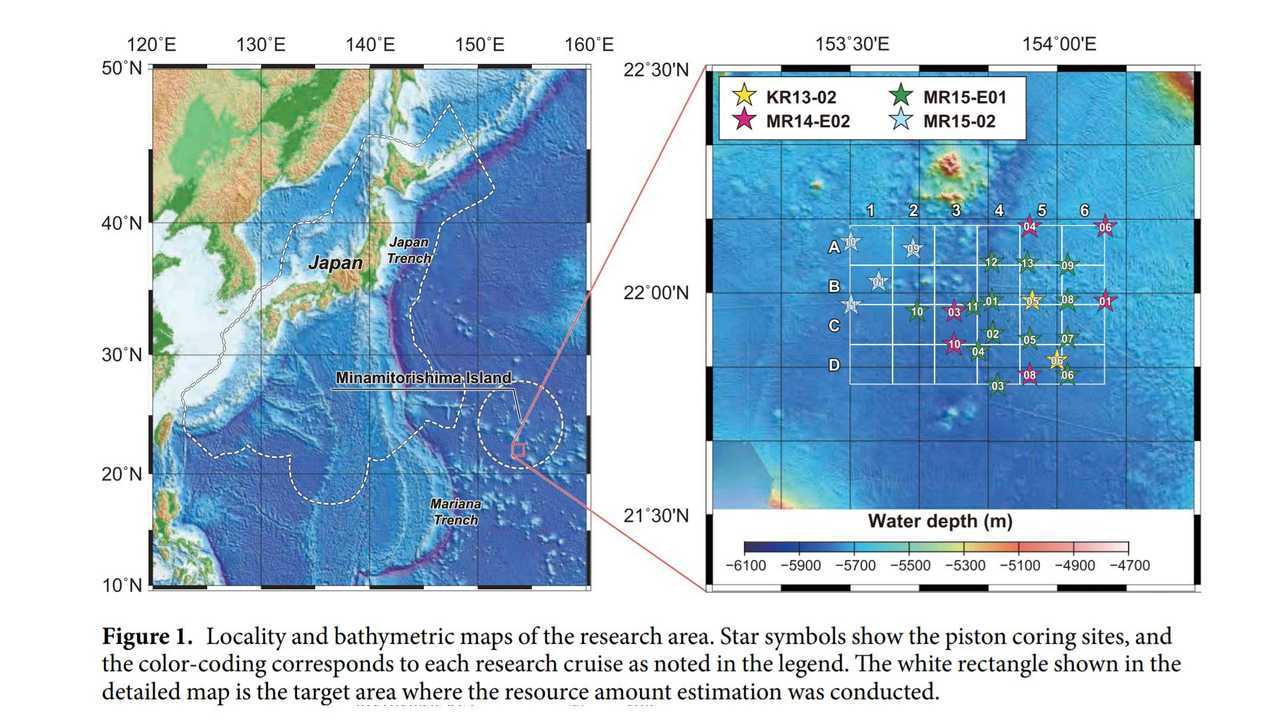

When oil started to be more and more difficult to obtain – and prices rised – it started to be extracted from the seafloor. Sometimes really deep in the ocean, at depths that can reach 28,000 ft underwater. What if we told you rare-earth materials may one day also come from “under the sea”, as Sebastian would say? Well, that’s the intention.
A group of scientists from the Waseda University made research in an area of more than 617,700 acres (2,500 km²) of the Japanese seabed at depths of 19,000 ft and discovered there very big sources of rare-earth materials.
More Mining News:
To be more precise, and taking the current global demand into consideration, it could supply “supply Y (yttrium), Eu (europium), Tb (terbium), and Dy (dysprosium) for 780, 620, 420, and 730 years, respectively,” states the study published at Nature.
The study also brings this curious remark that the reserve “has the potential to supply these metals on a semi-infinite basis to the world”. We have no idea about what “semi-infinite” may mean. Probably the same as “semi-pregnant” or “semi-dead”, right?
The important part is that the area contains “16 million tons of rare-earth oxides”. Once the material is extracted from the bottom of the sea, the researchers propose “hydrocyclone separators” to process the minerals.

It could seem like fantastic news. A way to cut dependency on China. More countries able to become big in the rare-earth elements business. Apart from one thing, probably the most important one: how to make the extraction? That is not addressed.
And that brings more questions. Considering the extraction problem is addressed at a price that is worth conducting it, what will the environmental impact on the area? Will it threaten the animals that live there?


Rare-earth materials are not exactly rare, as this great article at The Verge explains well. Producing them is the problem. This is the lead China has. If Japan finds a way to process these elements in a safer and cheaper way then China currently has, that will probably be even better than finding this “semi-infinite” source on the bottom of the sea.
Sources: Asia Times, Japan Insides, Nature, and The Verge
Gallery: Rare-Earth Materials May Start Coming From Japanese Seafloor
RECOMMENDED FOR YOU
Rivian Is Adding A Second Shift To The R2 Assembly Line. Here’s Why It Matters
Tesla Burned Through Its California EV Rebate Funds In Just Five Days
Inside BMW's Plan To Produce The iX5’s Gigantic Battery Pack In The U.S.
The Ford Fathom Will Get a $25,000 Hybrid Crossover Sibling: Report
Hyundai’s $5 Billion EV Battery Plant In Georgia Powers Up
Ford’s New AI Assistant Can Read Your Car’s Manual And Diagnostics
See How Tesla Tore Down The Model S Factory To Build Robots Instead