
Can Tesla FSD Take You Up The Steepest Dirt Road In America All By Itself?
It turns out that FSD is surprisingly capable even when the pavement disappears.

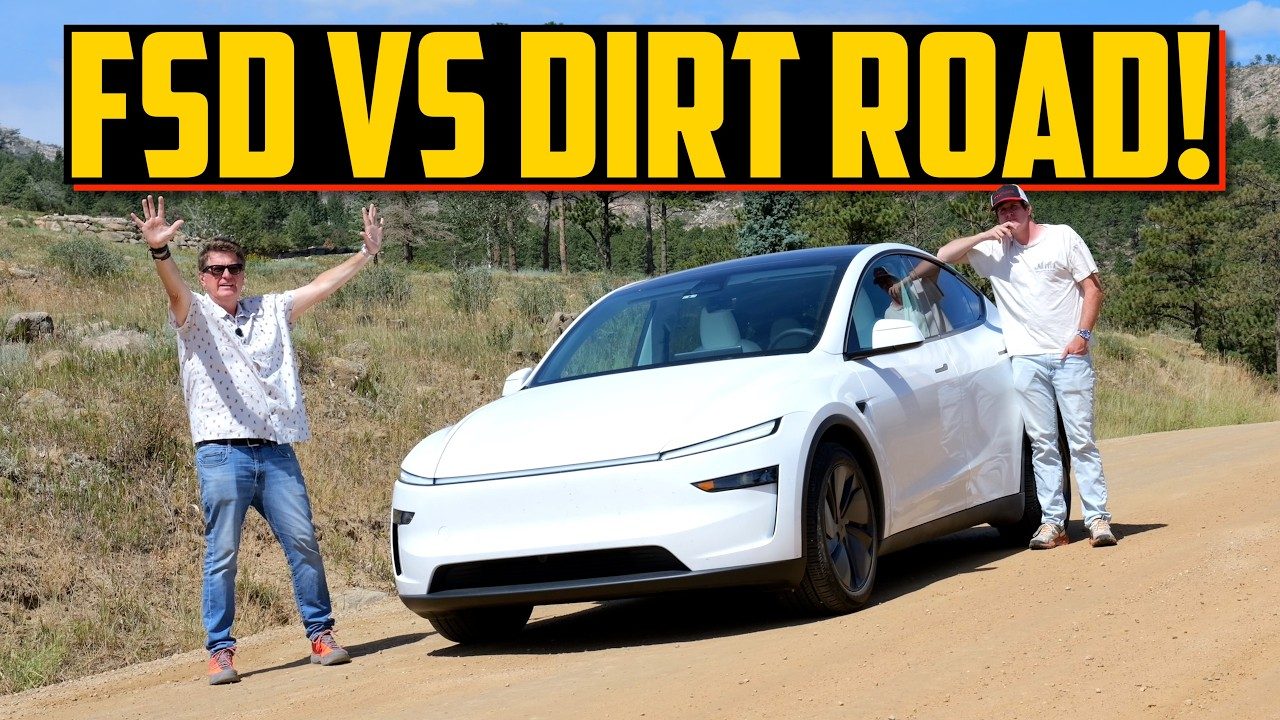
- The Fast Lane EV YouTube channel took a Tesla Model 3 equipped with Full Self-Driving (Supervised) up what's considered the steepest dirt road in the U.S.
- The Tesla performed pretty well, despite the lack of lane lines and uneven road surface.
The folks from The Fast Lane EV are braver than I am. I don't like letting driver assistance features like Tesla's Full Self-Driving (Supervised) completely take over for me almost anywhere, never mind on a windy dirt road littered with rocks and construction debris. Especially when that dirt road also happens to be the steepest such road in America. But that's what TFLEV did, with a Tesla Model 3, to see if it could handle it.
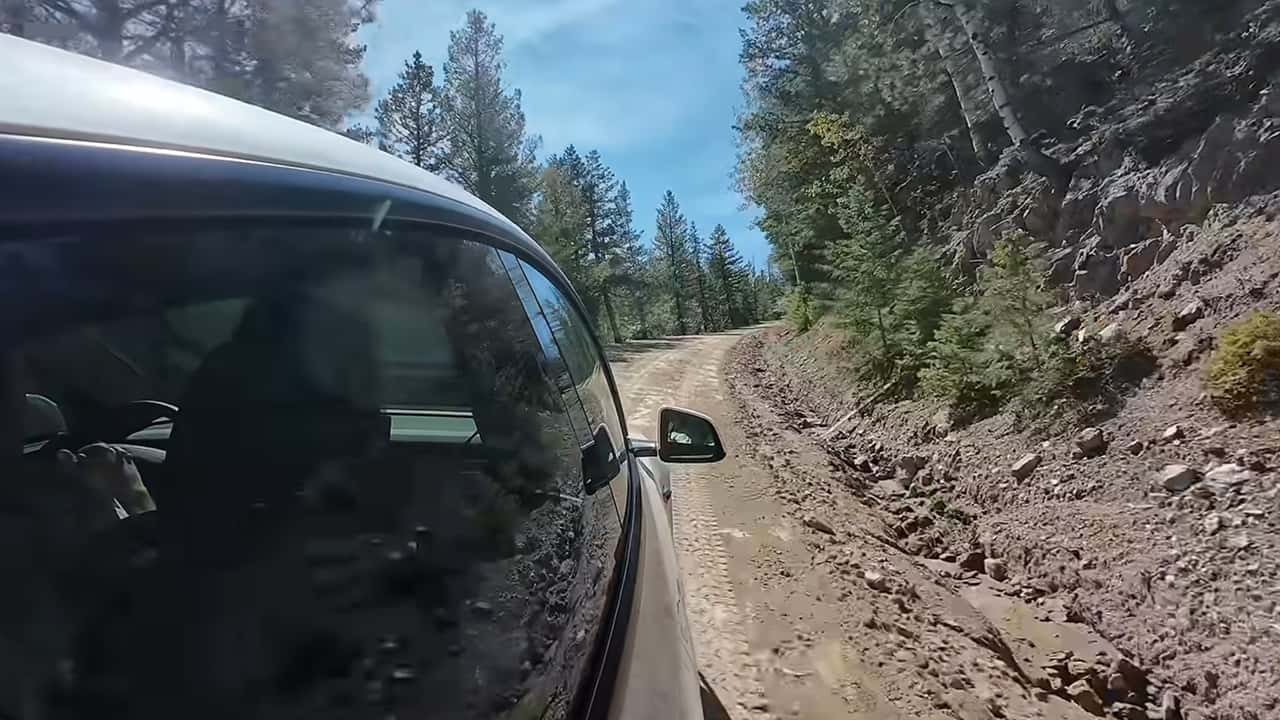
Colorado's unpaved Lick Skillet Road is a mile of dirt road with plenty of blind corners, an average grade of 14.2% and a peak grade of 18%. It isn't desolate, either. There are cars, trucks, and even cyclists using it, too. And there are no lane lines for the car's camera-based driver-assistance system to reference. Quite the test for the Tesla.
The Tesla seemed to understand the width of the road pretty well and kept the car on the correct side the entire time. TFLEV purposely kept their recovery vehicle—a Toyota Land Cruiser—behind them, so the Model 3 didn't have anything to follow. And yet it still understood where it was. Admittedly, the road has pretty clear shoulders, a few guardrails, and is flanked by trees for much of the way, so it definitely had some visuals to go by. But it's not like it had any painted lines or road signs to use.

They did run into a pickle when they came up behind a couple of cyclists. While the Tesla didn't do anything wrong, and it kept itself at an appropriate distance, it just followed behind them. And that can be awkward for the cyclists who will wonder why there's a car stalking them instead of passing. In the Tesla's defense, there weren't many great places to pass, since most of the corners were blind, so maybe the system wanted to pass but never saw a good opening. The TFLEV crew eventually had to take over manually to pass the cyclists. But before they did, it failed to recognize a pedestrian walking near the cyclists until the last second. Thankfully, it wasn't in a position to hit them. But had it been, manual intervention would have been necessary.
Even when other vehicles were coming around corners in the opposite direction, the Tesla was always on the correct side of the road and never got into any trouble. Lickskillet Road has to be one of the least FSD-friendly roads in the country, and yet the car basically handled it in its entirety just fine. It proves that if you needed it to, FSD could handle a pretty crappy road.
Check out these similar stories
RECOMMENDED FOR YOU

Waymo Is Headed To Germany
I Went To Toyota’s Employee Electrification Training. Here’s What Surprised Me
Tesla Just Made The Cybertruck An Even Tougher Sell
The Electric Land Rover Defender Just Got Delayed By Two Years: Report
Tesla's FSD Lite Seems To Have A Hard Time Seeing Trees And Logs
Polestar Still Has No Idea Why The U.S. Kicked It Out
The Mercedes CLA 350 4Matic Destroys EPA-Rated Range With Shocking Efficiency