
More EV Owners Can Now Get Paid To Power California’s Grid
The new Chevy Bolt EV and Kia EV9 are among a bunch of new EVs capable of vehicle-to-grid power sharing.
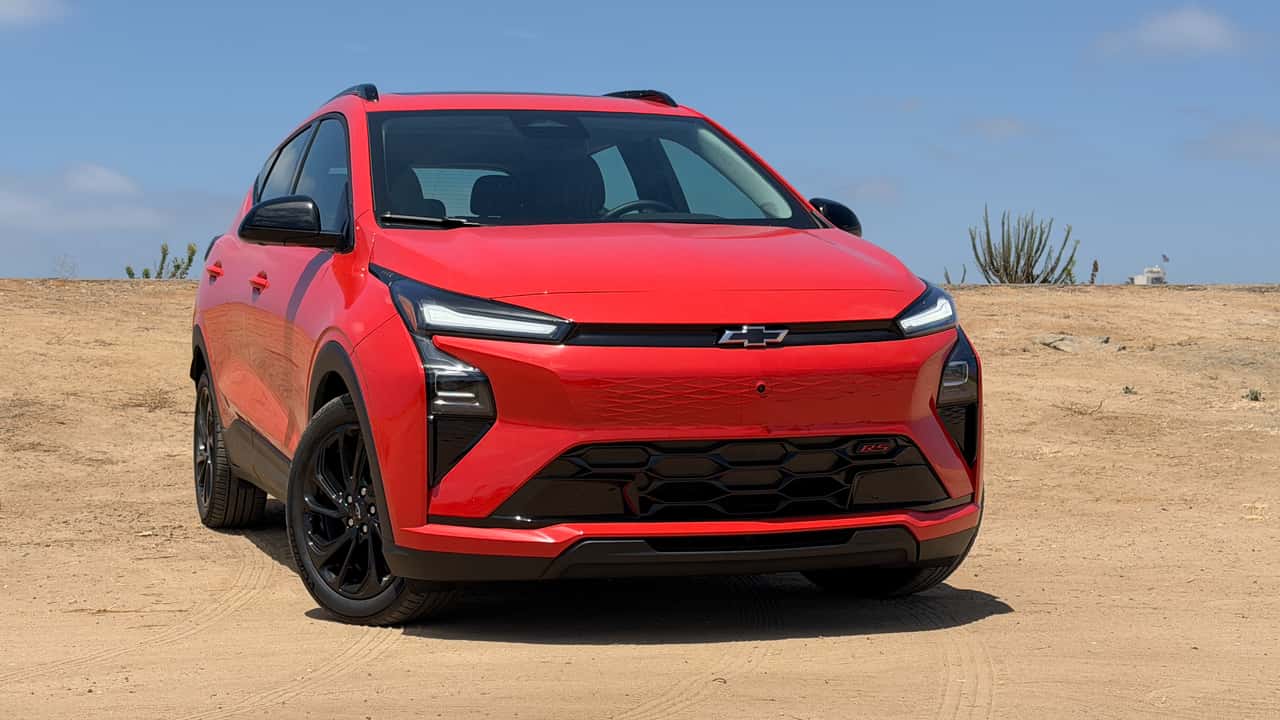

- The West Coast's largest utility is expanding its vehicle-to-everything bidirectional charging program.
- Owners of many new all-electric models can now participate, including those who own the Volvo EX90 and the Chevy Bolt.
- PG&E's initiative allows EV drivers to lower their energy bills and support the grid.
More electric vehicle owners in California can now use their cars’ batteries to share electricity with the grid and get paid for doing it.
Pacific Gas & Electric said Monday that it is expanding its vehicle-to-everything (V2X) program to include EVs from Nissan, Volvo, Polestar and Kia, along with more General Motors models like the Chevy Bolt.
EVs are essentially giant power banks on wheels. They can not only swallow huge amounts of electricity at charging stations, but many can also send that stored energy back to power appliances, homes, and even the electric grid. That capability could be a game-changer at scale, helping reduce strain on the grid during periods of high demand while giving EV owners another source of backup power during outages and natural disasters.

Volvo EX90 charging from a Level 2 home charger.
PG&E said it is partnering with software company Bidirectional Energy, which operates a platform that connects EVs to homes and the grid and allows customers to earn money by sharing power. The utility is also teaming up with renewable energy company PowerFlex to expand V2X adoption across California.
Several GM EVs were already compatible with the program, including the Chevrolet Silverado EV and Equinox EV.
"This expansion is all about choice," David Almeida, the director of clean energy transportation at PG&E said in a statement. "By broadening the mix of eligible vehicles and chargers, we're helping our customers access this valuable technology, while also offering them a way to turn their EV into a home backup and a grid asset."
PG&E said the expanded program now includes the new Chevy Bolt EV, Cadillac Celestiq, Escalade IQL, Nissan Leaf (previous gen), Volvo EX90, Polestar 3, and Kia EV9 and EV6. The Ford F-150 Lightning and Tesla Cybertruck were already compatible with the program.
Residential customers can receive incentives of up to $2,500 for installation, with that amount rising to $3,000 for customers in disadvantaged communities. There’s also a separate $1,500 Early Adopter incentive for the first 250 customers.
For businesses, the incentive is worth up to $4,500, increasing to $5,000 for those in disadvantaged communities. The enrollment period runs through June 2027.
Of course, V2X isn’t quite as simple as plugging an EV into the wall and telling it to start making money. You need specialized hardware to send electricity from the vehicle back to your home or the grid.
A Tesla Cybertruck, for example, can send power to the grid using Tesla’s Universal Wall Connector home Level 2 charger combined with its Powershare Gateway system. GM EVs can use the company’s PowerShift charger, while the Kia EV9 and EV6 can send power to the grid using Wallbox Quasar 2 chargers. PG&E has a full list of compatible vehicles and chargers.
So how much can customers actually earn by sending electricity back to the grid?
One of the biggest advantages of this kind of arrangement is the ability to charge an EV when electricity is cheap, typically overnight, and then send power back to the grid when electricity prices are higher during peak daytime hours. Customers may not necessarily see a big difference in their bank account right away, but they can reduce how much electricity they need to buy from the grid, lowering their home energy bill in the process.
If the value of the electricity exported from the EV exceeds the cost of the energy being consumed by the home, that’s when the savings can turn into actual earnings.
PG&E’s hourly electricity rates change every day and are influenced by factors including transmission costs, grid demand, time of day and weather conditions. According to the utility's Home Flex pricing chart, customers could earn anywhere from 5 cents to 50 cents per kilowatt-hour on August 23.
Right now, V2X still involves a somewhat messy combination of software platforms, compatible vehicles, and specialized chargers. And it's still limited to pilot programs around the country such as PG&E's, which as been running for a couple of years. So the expansion is a welcome step toward making bidirectional charging more useful to a much larger pool of EV owners.
Contact the author: suvrat.kothari@insideevs.com
Related Stories
RECOMMENDED FOR YOU
2027 Chevy Bolt Review: Do Americans Really Want Cheap EVs?
Genesis' First Few EVs Didn't Blow Me Away. The GV90 Flagship Did
GM And LG Restart EV Battery Production In Ohio After Seven-Month Shutdown
Wawa Branded EV Chargers Are Here Thanks To Electrify America
The 17 Cheapest Electric Cars In 2026 (Updated)
Europe’s EV Sales Explode, Now Making Up A Quarter Of New Cars
Chevy Is Giving Up On The Chinese Market