
'I Wouldn’t Even Let Mine Get Below A Certain Percent': Woman Says It Takes Longer To Charge Her Tesla In Winter. Is That True?
“The only downside to a Tesla….is charging up more in the winter”
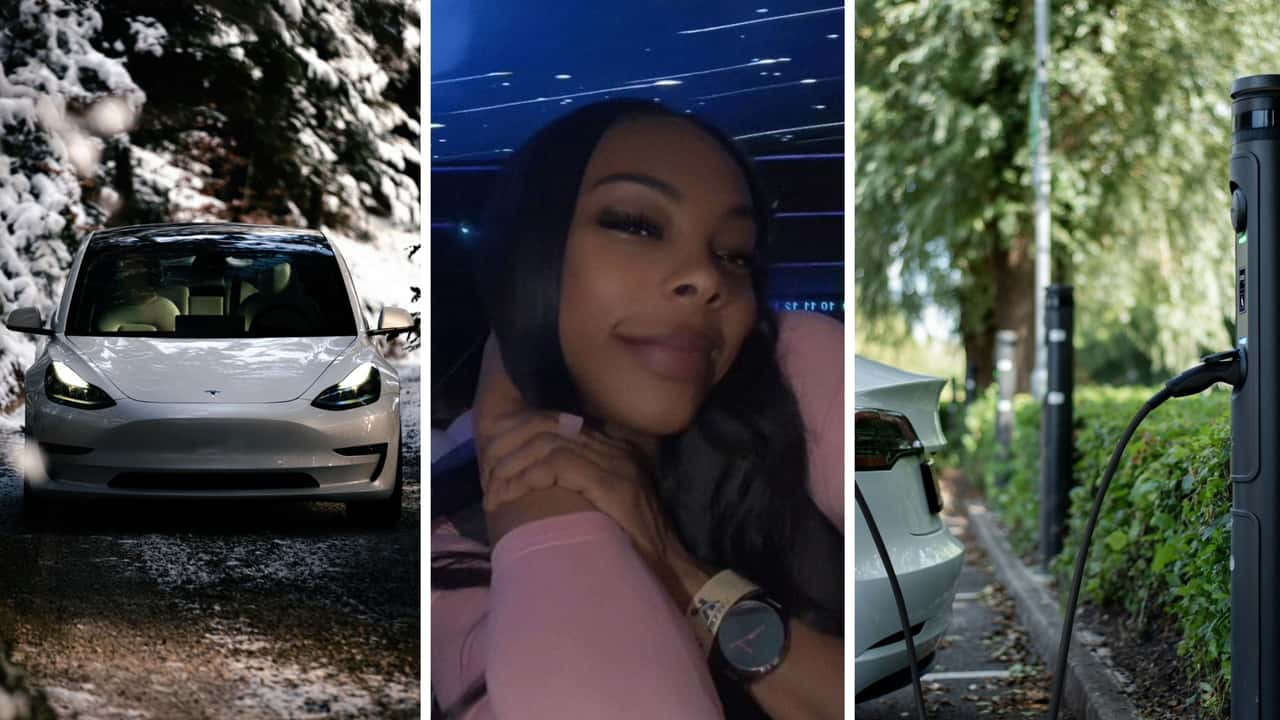

EV drivers are no strangers to the dreaded “snowflake” or similar icon on their vehicle’s dash display. The picture lets you know that your range has been compromised because of wintry weather.
TikTok user Shay Belle (@_shaybelle1) uploaded a video echoing these cold-weather EV woes. In the clip, she says she needs to charge her ride more frequently. In the comments, she also said she’s very meticulous about ensuring her battery’s never drained.
Belle’s video begins with her recording the infotainment display of her Tesla. The satellite map view on her screen displays a supercharging location stop with three available stalls. “The only downside to a Tesla….is charging up more in the winter,” she writes in a text overlay of her clip. Commenters echoed the range anxiety they feel while driving their EV and how this trepidation affects their driving habits. “I wouldn’t even let mine get below a certain percent because who got time?” they said.
Why Are EV Batteries Less Efficient in Cold Weather?
The majority of electric vehicles feature large, lithium-ion power backs to provide juice for their motors. An Associated Press article explains that in these units, “lithium ions flow through a liquid electrolyte, producing electricity.” This electron movement is a fundamental principle of how lithium-ion batteries, and most batteries in general, work.
Environments that promote free-flowing ion movement in these batteries will result in faster charger times and better overall efficiency. Tesla drivers who’ve planned a supercharging route will be familiar with battery pre-conditioning measures. When a supercharger is selected on the car’s infotainment display, they’ll receive a message that the vehicle’s battery is getting ready for fast charging. Pre-conditioning the battery results in faster charging times.
The opposite is true for colder weather. The AP story explains that lithium ions “travel more slowly through the electrolyte when it gets cold.” Additionally, frostier temperatures prevent these ions from releasing, energy, which can deplete batteries faster and reduce vehicle range.
This also applies to charging times: “Since electrons move more slowly, the battery can’t accept as much electricity from a charging plug.”
EV Range Drops In Winter
InsideEVs previously reported that an EV's range can drop as much as 30% in the winter and that there is indeed an “optimal operating temperature range” for electric vehicles: between 68°F and 113°F.
FROM THE TRENDING NEWS DESK
Viral bits from across the social media landscape
Our team of experts tracks what's trending so you don't have to—from viral videos to online debates that have everyone talking.
The actual drain depends on the make and model. For instance, the Volkswagen ID.4 tested by InsideEVs had its range reduced by 46% in cold temperatures, whereas the Audi e-tron’s range only dipped by 16%.
Thermal systems that manage EV battery temperatures, like heat pumps, can go a long way in ensuring cold climates don’t kill a battery’s range, power thresholds, and charging times.
Your EV’s range also can be reduced in the winter because of normal use. Gas powered vehicle motors generate more heat than EV motors do, meaning they can crank up the cabin temperature when it’s cold and not worry about depleted fuel efficiency. In contrast, using an EV’s radiator will cause drivers to experience a significant drop in range. So relying on heated seats/steering wheels could help drivers to keep their cars driving for longer when it’s cold outside.
Tesla Range Woes
Tesla owners have expressed their disappointment with their EVs, even under non-freezing conditions. This Reddit user who posted on the site’s r/TeslaLounge sub asked other folks on the social media site if it’s “normal” to only clock in 50%-60% of their car’s quoted range.
Another person said that while their Model Y says they have 303 miles of range after a full charge, they’ll average “200 miles in the winter and in the summers … 280 miles or more.” Another person chimed in, telling the concerned Tesla driver that they should plan for a 35% range drop in winter.
A 2016 Tesla Model S P90D owner on the Tesla Motors Club forum said that they, too, were only getting 60% of their car’s quoted range, despite driving it in chill mode. When they brought the vehicle into a Tesla service center to get the car analyzed, Tesla employees attributed the driver’s mitigated range to “driving style.”
InsideEVs has reached out to Belle via TikTok direct message and Tesla via email for further information.
RECOMMENDED FOR YOU

Tesla Apparently Won't Let Cybertruck Buyers Transfer FSD Without Spending Another $20k
I Drove The Revived Chevy Bolt. Here Are 4 Pros And 2 Cons
This Tesla Model 3 Went Nearly 400 Miles In A Range Test, 30 More Than Its EPA Rating
This Dodge Charger EV Prototype Packs An Experimental Semi-Solid-State Battery
Teslas Are More Likely To Hit 250,000 Miles Than Almost Every Car Brand
China Loves This Cheap Battery Tech. Here's Why General Motors Might Not Stick With It
The Best EV Lease And Finance Deals In June 2026