
San Francisco Woman Gets Into A Waymo. Then She Uses It For DoorDash
There’s no obvious rule that singles out app-based hustling from the passenger seat
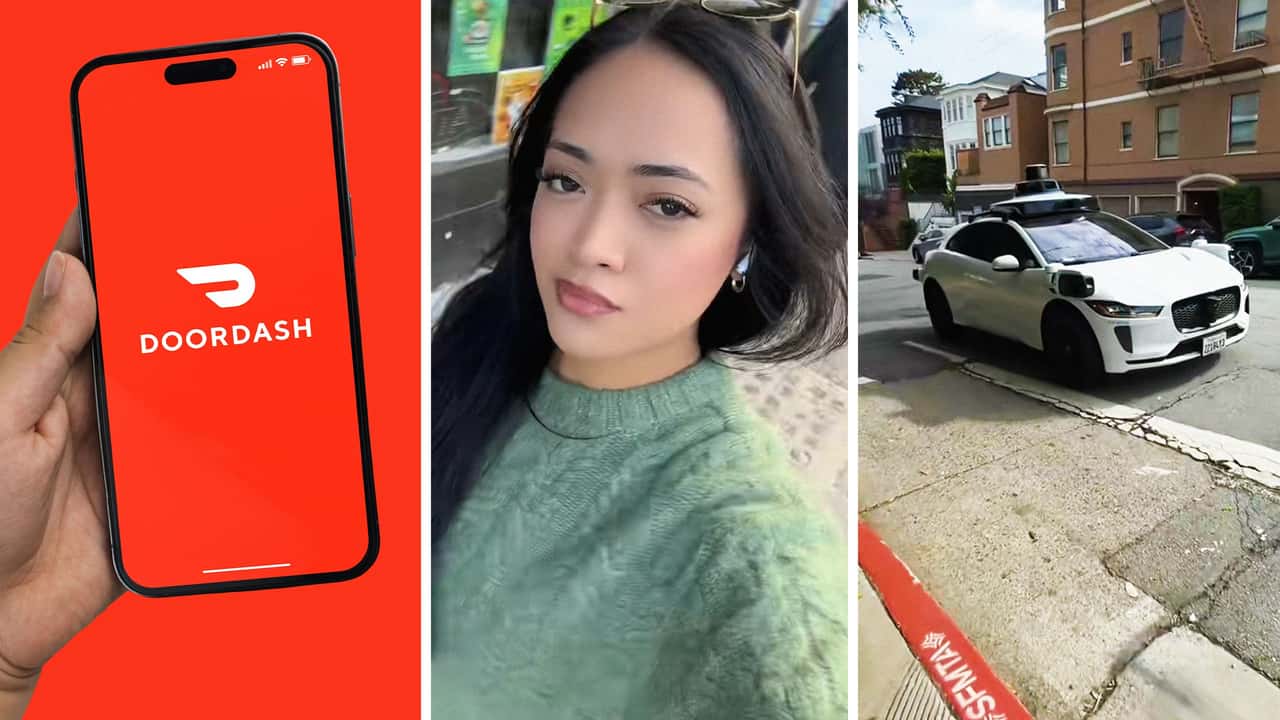

First came delivery drivers replaced by apps. Then came cars that drive themselves. Now, one woman has combined both by using a Waymo robotaxi to make her DoorDash runs.
The face of the new gig economy looks a lot like San Francisco TikTokker dmnzzz (@dmpnzzz), whose first ride in a Waymo helped her complete a food delivery order to earn some extra dough.
We don’t learn much about her intentions or the economics of the deal she’s trying to pull off, but her clip raises many questions about how low-overhead the gig economy could become.
Now Trending
Her video lands at a moment when autonomous ride-hailing has moved from beta curiosity to an everyday option in parts of San Francisco, Los Angeles and Phoenix. Waymo’s app now lets anyone in those cities request a fully driverless ride, 24/7, in an all-electric fleet, primarily Jaguar I-PACE SUVs fitted with the company’s sixth-generation self-driving hardware. Waymo says it currently operates in those metros and is scaling its fleet after receiving its final delivery from Jaguar, with plans to build more I-PACE robotaxis through 2026.
Doing The Gig Math
So is turning a Waymo into a rolling DoorDash shuttle a clever hustle or an expensive stunt? The short answer: It depends on the fare, the distance, and the tip. Independent analyses of San Francisco Waymo receipts suggest a rough formula that includes a base fee plus per-mile and per-minute charges; one breakdown pegs it at about $9.52 to start, $1.66 per mile, and $0.30 per minute in San Francisco.
Another dataset looking at dozens of trips found average effective prices that can spike by time of day. Those aren’t official rate cards, and Waymo doesn’t publicly post static fares, but they help bracket the cost of using a robotaxi as a delivery shuttle.
FROM THE TRENDING NEWS DESK
Viral bits from across the social media landscape
Our team of experts tracks what's trending so you don't have to—from viral videos to online debates that have everyone talking.
On the revenue side, DoorDash earnings vary widely by city, time, and tipping. Gridwise’s 2025 benchmarking puts average DoorDash gross around the mid-teens per active hour nationally, and its weekly lookback shows many Dashers lean heavily on tips to make the math work. Separate reporting found tips accounted for roughly half of delivery workers’ earnings in 2024 as base pay often starts in the $2-$3 range. In that context, a short, tip-heavy delivery that happens to align with a cheap, quick Waymo ride might pencil out. A longer crosstown drop probably won’t.
Rules And Regulations
There’s also the policy gray area. DoorDash markets itself to contractors who can “use any car to drive, deliver, and earn,” and it supports bikes and e-bikes in select markets to keep costs low. It requires insurance when using a motor vehicle and has stepped up identity checks to prevent account sharing or unauthorized use. There’s precious little data that contemplate a Dasher being a passenger in a taxi—human-driven or robotic—while making a delivery.
As independent contractors, Dashers typically control how work gets done, but they also agree to platform rules and local law, and DoorDash has publicly emphasized tightening safeguards around identity and compliance. Practically, that leaves this TikTok use case in murky territory: probably not expressly forbidden in a policy page, but not clearly endorsed either.
Waymo’s own rules focus on safe ridership rather than whether passengers can run side hustles from the back seat. The company’s rider guidelines cover commonsense conduct and securing items in the cabin or trunk; the public terms prohibit illegal activity and harassment, not gig-work experimentation.
If a rider isn’t breaking local delivery laws or creating hazards, there’s no obvious rule that singles out app-based hustling from the passenger seat. That said, both companies’ terms are broad enough that enforcement ultimately comes down to their discretion.
If the economics are squishy, the symbolism is crystal-clear: Automation is bleeding into the last mile of gig work. The irony is that DoorDash itself is piloting autonomous delivery the other way—without a human Dasher at all. In October, Waymo and DoorDash announced a program in Phoenix that lets customers opt into driverless delivery: When the I-PACE arrives, the customer unlocks the trunk via the DoorDash app and grabs the order, with no human courier required. TechCrunch reports there’s no driver to tip in that flow, underscoring how driverless vehicles could compress delivery costs by stripping out labor entirely.
Safety and regulation remain the backdrop for all of this. Waymo has published increasingly granular safety data and partnered with Swiss Re on an insurance-claims study showing large reductions in property-damage and injury claims versus human drivers across tens of millions of fully driverless miles, though outside experts still debate framing and benchmarks. California regulators continue to scrutinize deployments and expansions, even as the company grows service areas in San Francisco and Los Angeles. For riders, the upshot is that robotaxis are available and getting denser in coverage, but the rules of the road are still evolving.
InsideEVs reached out to the creator via direct message and a comment on the clip. We’ll be sure to update this if they respond.

RECOMMENDED FOR YOU

Woman Buys Cadillac EV. Then They Offer Her A Deal On EVgo
How America’s Policy Whiplash Derailed The EV Transition
"The Motor Is Supposed To Last 1 Million Miles": Man Hits 360,000 Miles On His Model 3. Is That The Norm?
The Hyundai Ioniq 5 Is Now America's Best-Selling EV That Isn't A Tesla
Can Waze Still Track The Police?
Polestar EVs Are A Whopping $25,000 Off After The Brand Got Kicked Out Of America
‘Didn’t Know This Was So Common': Truck Hits Subaru In Disneyland Garage And Runs. They Didn’t Expect A Tesla To Get The Footage