
‘It Was My First Ticket In 12 Years’: Woman's Full Self-Driving Tesla Pulls Over For Police
"I'm still learning to trust the Full Self-Driving. But if I didn't trust it yesterday, today is a different story.”
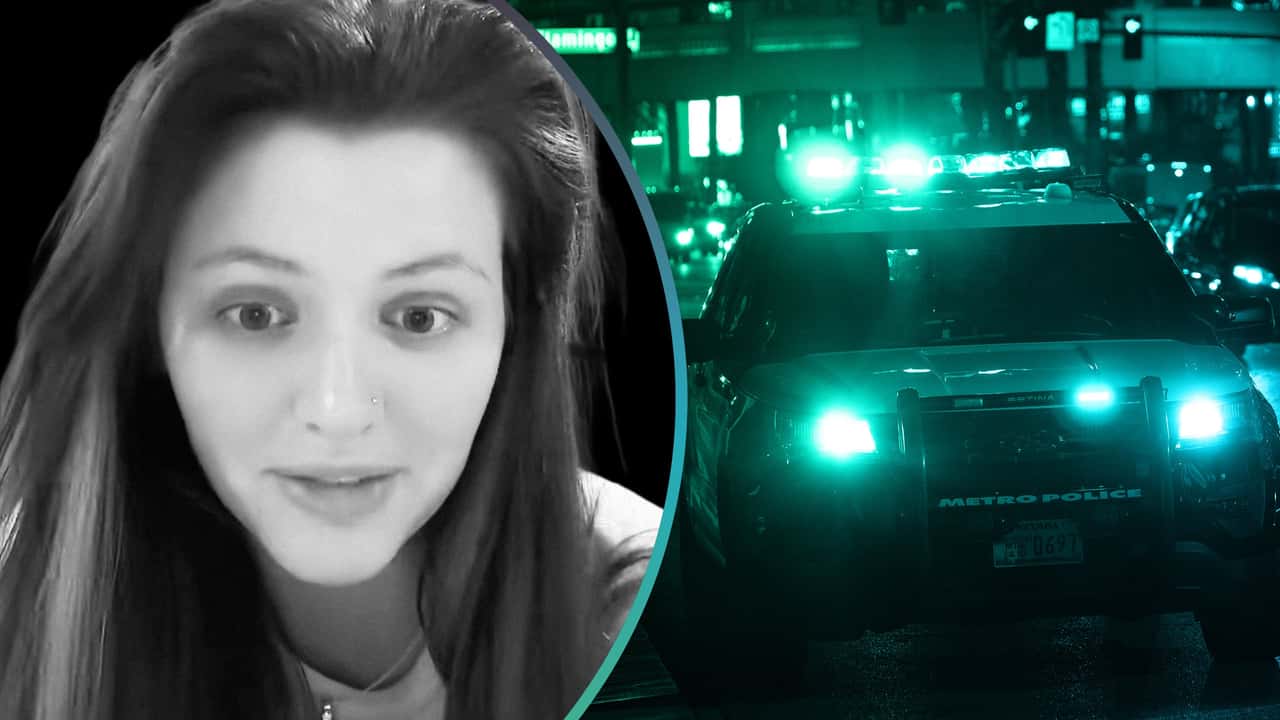

When the flashing police lights appeared behind her Tesla, a TikTokker said she didn’t touch the wheel. Instead, her Tesla, in Full Self-Driving mode, allegedly slowed and steered itself to the roadside before she even realized what was happening.
Pacific Northwest-based creator Emily Nicole (@emilynicole556) is a mix of amazed and perturbed by her recent on-road experience, which she recapped in a clip that has been viewed more than 23,000 times.
“Pulled itself over. It recognized that there was a cop behind me with lights, and it safely maneuvered to the side,” she said. “Mind you, I'm still learning to trust the Full Self-Driving. But if I didn't trust it yesterday, today is a different story.”
She goes on to explain that she wasn’t cited for speeding; instead, the ticket was for using her phone while driving. She frames the incident as both frustrating and laudable; frustrated by the traffic stop but awed by what she describes as her vehicle’s autonomous response. The clip’s tone is disarming, a mix of casual surprise and quiet pride in the machine. The dichotomy of being annoyed by the citation, yet impressed by the car, appears to have captured the imaginations of many viewers.
FSD Has Pros And Cons
Some comments on the clip applaud the moment: One writes that FSD got a traffic ticket, meaning “the car” was the actor in the interaction. Others are sharply skeptical, accusing Nicole of fabricating or misinterpreting events. Several reported similar experiences: FSD “jerking” left without warning, changing lanes mid-intersection, or even running a red light while in control.
One user claimed, “My FSD ran a red light and changed lanes in the middle of the intersection yesterday. I saw my life flash before my eyes.” Another said, “Mine is always switching lanes at an intersection!!!” Some say they’ve opted to stop using FSD entirely after unnerving episodes. The mix of praise, doubt, and horror stories highlights the uneven and unpredictable nature of real-world user experiences with Tesla’s driver-assist software.
Now Trending
Although commenters criticized the system’s inconsistencies, Tesla’s Full Self-Driving software has shown flashes of near-futuristic awareness that go far beyond basic driver assistance. In various user-shared videos, the system has been observed detecting and yielding to emergency vehicles, identifying flashing red-and-blue lights from a distance, and even adjusting behavior when it spots roadside hazard flares or stopped cars with hazard lights on.
FROM THE TRENDING NEWS DESK
Viral bits from across the social media landscape
Our team of experts tracks what's trending so you don't have to—from viral videos to online debates that have everyone talking.
According to Tesla’s own public statements and leaked FSD Beta release notes, newer builds of the software are increasingly trained to recognize visual cues such as police cruisers, construction zones, school buses, and hand gestures from traffic officers. That pattern recognition is powered by Tesla’s proprietary neural network, which draws from billions of miles of real-world driving data and improves via over-the-air updates.
Plenty Of Questions Remain
The anecdotal accounts posted under the video are critical to understanding the gap between what drivers perceive the system can do and what it is designed to do. Despite popular naming, Tesla’s Full Self-Driving (FSD) remains a Level 2 driver-assistance system, requiring constant driver supervision and readiness to intervene. It is not true autonomy, and Tesla’s own documentation insists that the driver “must be prepared to take action at any time” while FSD is engaged. Critics warn that users often overestimate system capability or become complacent. Meanwhile, the legal and safety context surrounding FSD is volatile and evolving.
Federal regulators have long been examining Tesla’s Autopilot and FSD systems in light of crashes involving emergency vehicles or failures to respond properly. In 2023, Tesla recalled approximately 362,000 vehicles equipped with FSD Beta after the NHTSA concluded that the software could allow unpredictable behaviors at intersections, fail to fully stop at stop signs, or violate speed limits. In its broader review, NHTSA has tied 75 crashes and one fatality to FSD/Autopilot systems. However, it remains unclear in many cases whether human error or system misbehavior was to blame. The agency has also issued a standing order requiring prompt reporting of crashes involving vehicles using automated-driving or advanced driver-assist systems.
Tesla’s latest FSD v14 update includes language about handling “pull over or yield for emergency vehicles (e.g. police cars, fire trucks, ambulances).” In earlier versions of FSD, these behaviors were experientially reported by users but had not been clearly documented in release notes. Some Tesla forums speculate that v12 or v13 had unannounced improvements in this direction.
Yet even with emerging software support, there’s no guarantee that every Tesla on the road today will reliably detect flashing lights, register police presence, and execute a safe pullover maneuver. Differences in camera calibration, lighting conditions, occlusions or software versioning may all cause inconsistency. And legal, regulatory and liability questions remain unsettled: If the car “pulls itself over,” who bears responsibility for how it does so?
For EV and Tesla readers, Nicole’s TikTok raises both tantalizing promise and necessary caution. It captures the vision of a car capable of anticipating traffic law enforcement, yet also magnifies the ambiguity still surrounding real-world deployment and user trust. Her video offers a fleeting glimpse of a plausible future. However, the public record and user reports suggest that the journey to that future is still messy, contested and under-regulated.
InsideEVs reached out to Emily Nicole via direct message.

RECOMMENDED FOR YOU

Someone Keeps Stealing Entire Truckloads Of Tesla Batteries
Slate Has No Plans To Sell Its Cheap EV Pickup In Canada
An App Flagged This Tesla Battery As Degraded. The Car Said It Was Worse
Tesla Starts Testing Steering-Wheel-Free Cybercab On Austin Streets. Can It Match Waymo?
Teslas Will Now Deploy Their Airbags Before Crashes Happen Thanks To Cameras
California's New EV Incentive Is Almost Here—With Special Benefits For Rivian And Lucid
Tesla Is Giving Away Free Supercharging. Here's How To Win.