
Mercedes’ Solid-State EV Batteries Are Coming By The Decade's End
The German automaker’s solid-state batteries promise up to 25% more range compared to regular lithium-ion packs.
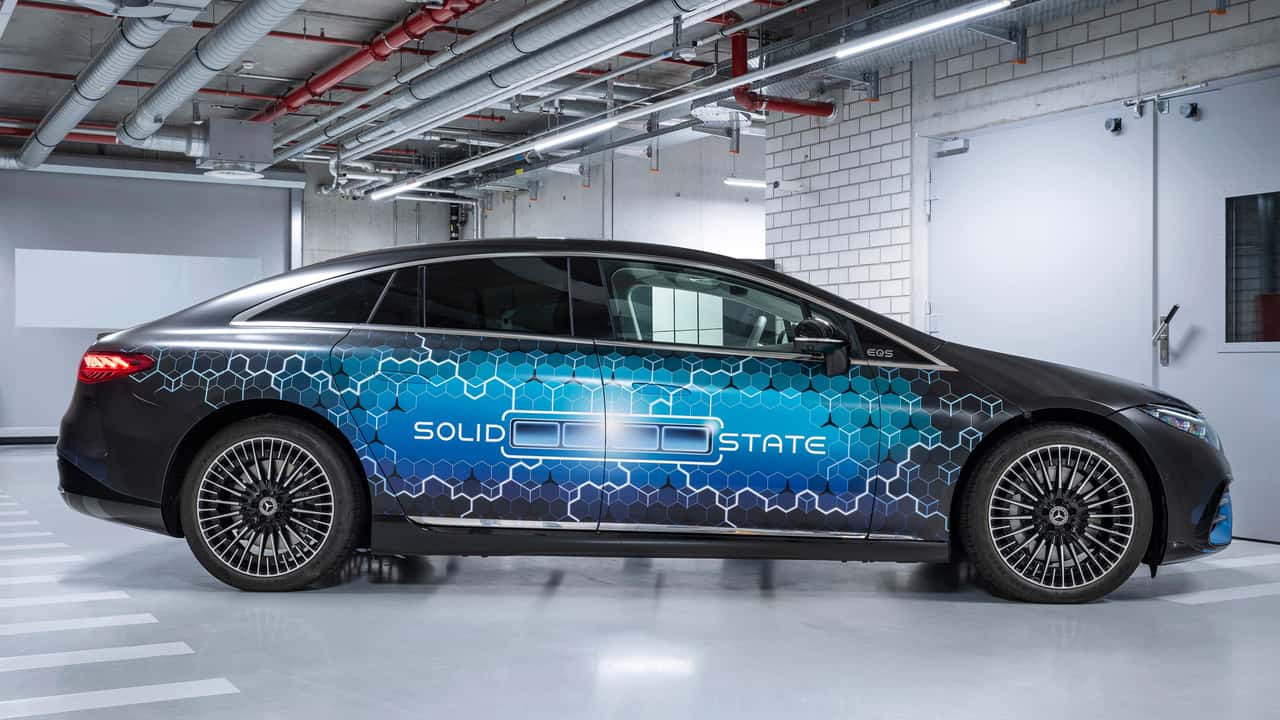

- Mercedes-Benz is bringing solid-state batteries to its EVs sooner rather than later.
- The company’s head of development said the range-boosting batteries will hit the market “before the end of the decade.”
- The German automaker has partnered with U.S.-based Factorial to develop solid-state batteries that promise up to 25% more range.
The elusive solid-state battery is getting closer to becoming reality, at least when it comes to electric vehicles. Mercedes-Benz said it expects to bring a production-ready solid-state-powered electric vehicle “before the end of the decade.”
The statement belongs to Markus Schafer, the German automaker’s head of development, who spoke with Automotive News’ German sibling Automobilwoche during an event in Copenhagen, Denmark.

Mercedes-Benz's first solid-state-equipped prototype hit the road earlier this year.
That’s great news, seeing how solid-state batteries promise to offer up to 25% more driving range compared to a similarly sized conventional lithium-ion battery pack. In other words, if your current EV can go up to 300 miles on a full charge, a solid-state battery of the same size could increase that figure to 375 miles.
Other benefits include better safety. Thanks to increased thermal efficiency, there's less of a fire risk for solid-state batteries. Faster charging should be possible, too. If an automaker solves all of this, they will solve many of the common problems with today's EVs.
Mercedes-Benz partnered with U.S.-based Factorial to develop the solid-state batteries that will eventually make it into EVs anyone can buy. Factorial is also working with Stellantis, which said it would launch a demonstration fleet next year. Meanwhile, Mercedes-Benz already has an EQS prototype with solid-state batteries gathering data in the real world.
More Stories On Solid-State Batteries
Compared to a conventional lithium-ion battery, which uses a liquid electrolyte to move electrons between charge cycles, a solid-state battery has a solid electrolyte, which allows for a higher energy density and improved fire safety. Weight reduction is also a potential bonus.
A stopgap between the two types of batteries is already being used by some automakers. Known as semi-solid-state batteries, these have a gel-like electrolyte and bridge the gap between liquid and all-solid packs by using existing manufacturing facilities and thus lowering costs.
Several automakers are working on bringing solid-state batteries to the mass market, but we’re not quite there yet. BMW is working with Solid Power to get things rolling, while Volkswagen is collaborating with QuantumScape.

RECOMMENDED FOR YOU
Home EV Charging Has A Hidden Cost. Here’s How To Reduce It And Lower Your Bill
This New All-In-One Range Extender Is Ready To Go Into Any Electric Truck
Mercedes Boss Says The Auto Industry Went 'Too Far' With Removing Buttons
Chinese Regulators Recall Millions Of EVs Because Their Mechanical Door Handles Are Too Hard To Find
'Most Companies Are Struggling': Executive Shares An Uncomfortable Truth About Solid-State EV Batteries
Nevada Opens The Door To Thousands Of Paid Robotaxis, And Tesla Has The Edge
Inside The $2 Billion Battery Factory Making Cells For Tesla And Toyota