
This Early Hyundai Ioniq 9 Charge Test Looks Really Good
Hyundai's three-row absolutely blitzes through a 10-80% charge test.
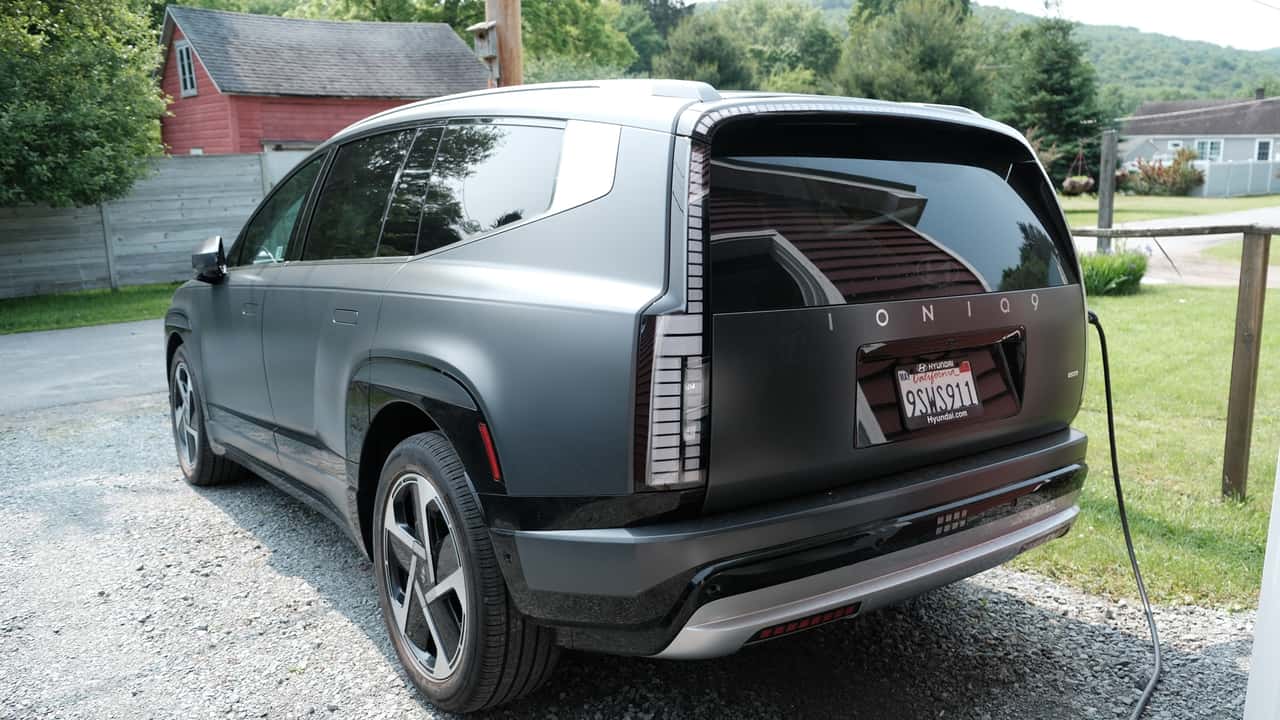

EVs on the Hyundai Motor Group's E-GMP platform tend to be charging monsters. The Hyundai Ioniq 5 can knock out a 10-80% fast-charging session in about 20 minutes, which is quicker than most high-end luxury cars can manage. The Kia EV6 and EV9 are equally impressive. But now that the all-new three-row Hyundai Ioniq 9 is hitting the streets, so how does it stack up?
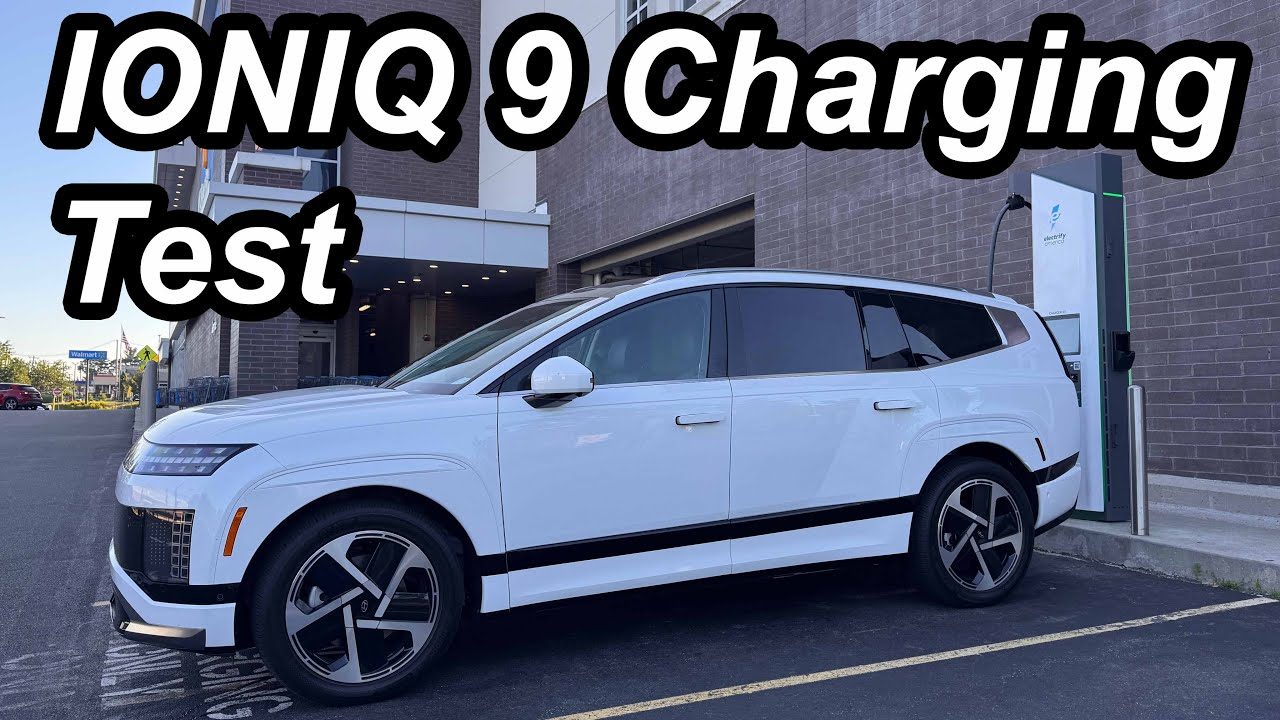
On first blush, the results look good. In a test by The Ioniq Guy, the Ioniq 9 charged from 10-80% in under 24 minutes, which is right in line with Hyundai's claimed charging speed. That included a peak charging rate of 243 kilowatts, which is pretty impressive.

But you won't see those numbers everywhere. The Ioniq 9 is the first all-new Hyundai product to come from the factory with a Tesla-style North American Charging System (NACS) port. That gives it native access to Tesla Superchargers, but with one big caveat: The Ioniq 9 will take far longer to charge on a Tesla charger.
This is the result of Hyundai's greatest charging advantage, its 800-volt architecture. Cranking the voltage allows you handle more wattage (i.e. power) with less current and heat, making 800- or 1,000-volt cars like the Ioniq 5, Ioniq 9, Lucid Gravity and Porsche Taycan charging champs. Yet most EVs use lower-voltage platforms, with primarily 400-volt components that are more commonplace and cheaper. That's what the Tesla Model 3, Model S, Model X and Model Y use, which is why it's also what Tesla Superchargers use.
Gallery: 2026 Hyundai Ioniq 9 First Drive Review




When you try to charge an 800-volt system with a 400-volt chargers, things get complicated. (Note that we talk about voltages by class, but nominal voltages are precise figures. So while a Tesla charger is considered to be in the 400-volt class, it operates at 480 volts. Similarly, while the Ioniq 9's platform is an 800-volt-class system, it operates at around 610 volts.)
For the car to accept the power from the charger, it needs to step up the voltage using internal DC-to-DC converters, which are lossy and not always powerful enough to max out your charging speed.
Related Stories
The end result: Slower charge times on Superchargers, as Tim Levin explains here.
The Ioniq Guy's test was carried out on a 350-kilowatt Electrify America station, which natively supports 800-volt systems. That's the best-case scenario. It's also what will be available once 1,000-volt Tesla Superchargers and native NACS dispensers come online, which should happen soon. But in the meantime, Ioniq 9 owners will see slower charge times on Superchargers. How much slower? For that, you'll need to wait for the official InsideEVs charge test, coming soon.
Contact the author: Mack.Hogan@insideevs.com
RECOMMENDED FOR YOU
Hyundai And Genesis EVs In The U.S. Get A Big Discount At Ionna Chargers
'Most Companies Are Struggling': Executive Shares An Uncomfortable Truth About Solid-State EV Batteries
These Affordable EVs Just Got A New Lifeline: Replacement Motors Cost 30% Less
This New All-In-One Range Extender Is Ready To Go Into Any Electric Truck
The 17 Cheapest Electric Cars In 2026 (Updated)
Chinese Regulators Recall Millions Of EVs Because Their Mechanical Door Handles Are Too Hard To Find
The Hyundai Ioniq 5 N Has A Range Problem. Smaller Wheels Helped A Lot