
'Build Quality': EV Enthusiast Asks Why Teslas Aren't Respected Compared To Other Electric Vehicle Brands
No car brand is as polarizing as the famed EV pioneer.
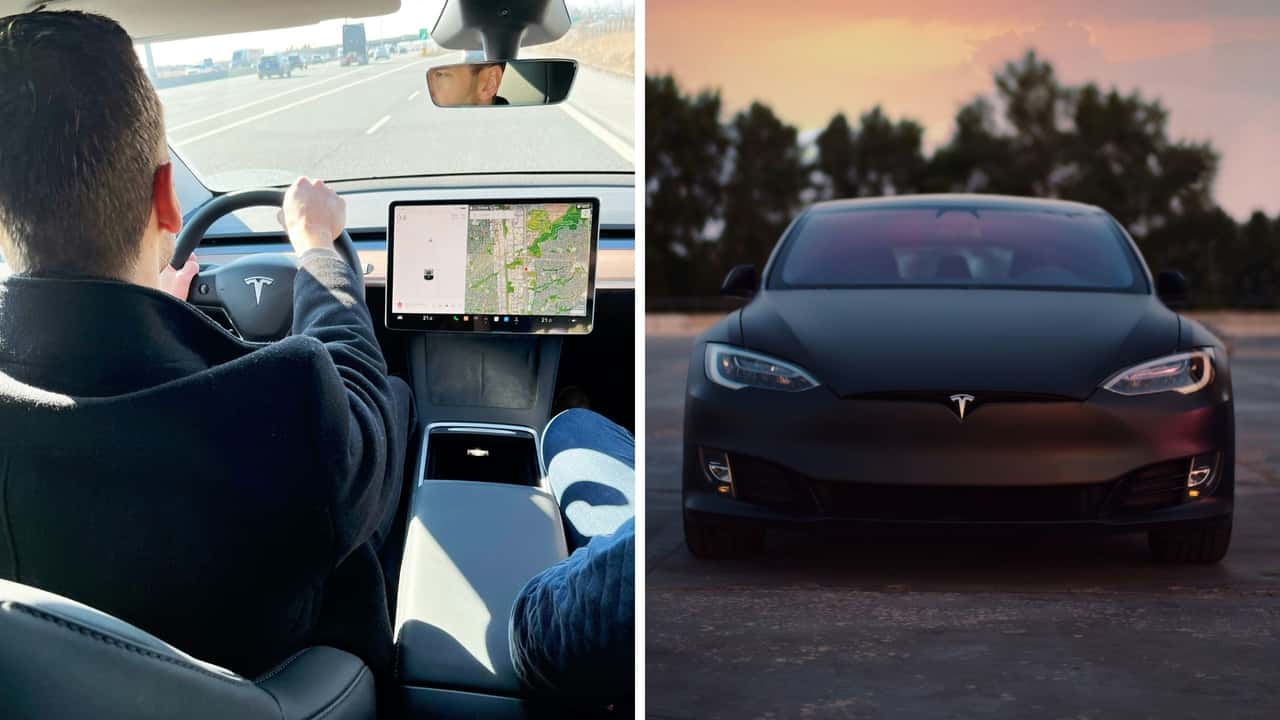

The Tesla Model S can outrun supercars, travel hundreds of miles on a charge and tap into the world’s best fast-charging network. Yet in online EV culture, it’s often dismissed as “mid.”
That disconnect is at the heart of a viral TikTok clip that’s drawn tons of opinions on both sides of the Tesla quality debate.
With a simple one-panel question post, creator @neutralgarage has racked up more than 79,000 views and hundreds of comments. It proves that no car brand is as polarizing as the famed EV pioneer.
Much of the criticism aimed at the Tesla Model S dates back to its early production years, when inconsistent panel gaps, uneven paint, and interior fit-and-finish issues became recurring themes. Those complaints were widely documented by outlets such as Consumer Reports and J.D. Power, which flagged quality concerns in multiple surveys throughout the late 2010s, even as Tesla scored well in owner satisfaction and performance metrics.
Tesla has since invested heavily in manufacturing improvements, from new paint shops to tighter tolerances at its Fremont and Texas factories. Consumer Reports, for example, has noted gradual quality improvements on newer Model 3 and Model Y builds, even while continuing to cite inconsistency compared with legacy automakers. Still, as several commenters on the TikTok thread pointed out, reputations in the auto world tend to linger long after engineering fixes are made.
For luxury buyers in particular, perception can matter as much as reality. A single bad delivery story or a viral teardown video can outweigh years of incremental progress, especially when competitors position themselves as premium alternatives from day one.
Minimalism Or Cost-Cutting?
Another recurring theme in the debate centers on Tesla’s interior philosophy. The Model S helped popularize the idea that a large central touchscreen could replace most physical controls, a design choice Tesla has continued to refine across its lineup. Fans praise the approach for its simplicity and ease of use, often comparing it to consumer tech products rather than traditional cars.
FROM THE TRENDING NEWS DESK
Viral bits from across the social media landscape
Our team of experts tracks what's trending so you don't have to—from viral videos to online debates that have everyone talking.
Critics, however, see something else entirely. Many commenters described Tesla interiors as “plain,” “bare” or lacking the tactile richness expected at six-figure price points. By contrast, rivals like the Lucid Air emphasize layered dashboards, stitched materials, ambient lighting, and multiple displays meant to surround the driver rather than streamline the experience.
That difference reflects a broader divide in how luxury is defined. Tesla optimized for scalability, efficiency, and software iteration. Lucid and Porsche leaned into craftsmanship, visual drama, and sensory feedback, elements that are harder to quantify but easier to feel.
On paper, Tesla’s performance credentials are difficult to dispute. The Model S Plaid remains one of the quickest production cars ever built, a fact verified by independent testing from publications like Car and Driver and MotorTrend. Tesla’s acceleration numbers routinely embarrass far more expensive internal-combustion exotics.
Yet straight-line speed alone no longer guarantees prestige. In the same price neighborhood, the Porsche Taycan trades outright acceleration for steering feel, braking confidence and chassis balance, qualities Porsche has honed over decades. Reviews from outlets such as Road & Track and The Drive consistently praise the Taycan for feeling like a performance car first and an EV second.
Several commenters who claimed to have owned both Teslas and their luxury EV rivals echoed that sentiment, describing Teslas as brutally fast but less engaging, quieter but less refined, and impressive yet emotionally distant.
The Charging And Software Paradox
Ironically, charging infrastructure and software, the areas where Tesla still holds a commanding lead, rarely earn it “luxury” points in online debates. Tesla’s Supercharger network remains the most reliable and widely available fast-charging system in North America, a conclusion supported by repeated studies from groups like Consumer Reports and PlugShare. Tesla’s infotainment system and over-the-air updates are also widely regarded as best-in-class.
But those advantages increasingly feel utilitarian rather than aspirational. For buyers shopping at the upper end of the market, reliability and convenience are expected, not celebrated.
In the end, the viral TikTok debate highlights a simple truth: Tesla and its luxury-leaning rivals are often judged by different standards, even when they occupy similar price brackets. Tesla is measured against what it promised to disrupt: mass-market cars, gas vehicles and legacy manufacturing. Lucid and Porsche are measured against what they promise to preserve: traditional notions of luxury, craftsmanship and driving feel.
Tesla didn’t fail to build a luxury EV so much as it redefined what an EV could be, then moved on. For some buyers, that makes it revolutionary. For others, it feels unfinished.
The fact that a single TikTok post could ignite thousands of words’ worth of debate shows that Tesla remains the gravitational center of the EV conversation, even when it’s not the brand everyone agrees to admire.
InsideEVs reached out to the creator via direct message and comment on the post. We’ll update this if they respond.
RECOMMENDED FOR YOU

Teslas Will Now Deploy Their Airbags Before Crashes Happen Thanks To Cameras
Drivers Are Not Happy With Their Cars' Screens
Tesla Is Giving Away Free Supercharging. Here's How To Win.
Lucid Cosmos And Earth: Everything We Know About The Tesla Model Y Rivals
This Ex-Rental Tesla's Battery Was Heavily Degraded. Then The Decline Slowed
This Chinese SUV Sold 100,000 Units In Seven Months For A Good Reason
Tesla FSD Finally Reached Europe. Now Speed Limits May Slow Its Expansion