
What Will You Spend Charging A Tesla Without A Home Charger?
One TikToker spent a year—and more than $3,000—at public chargers.
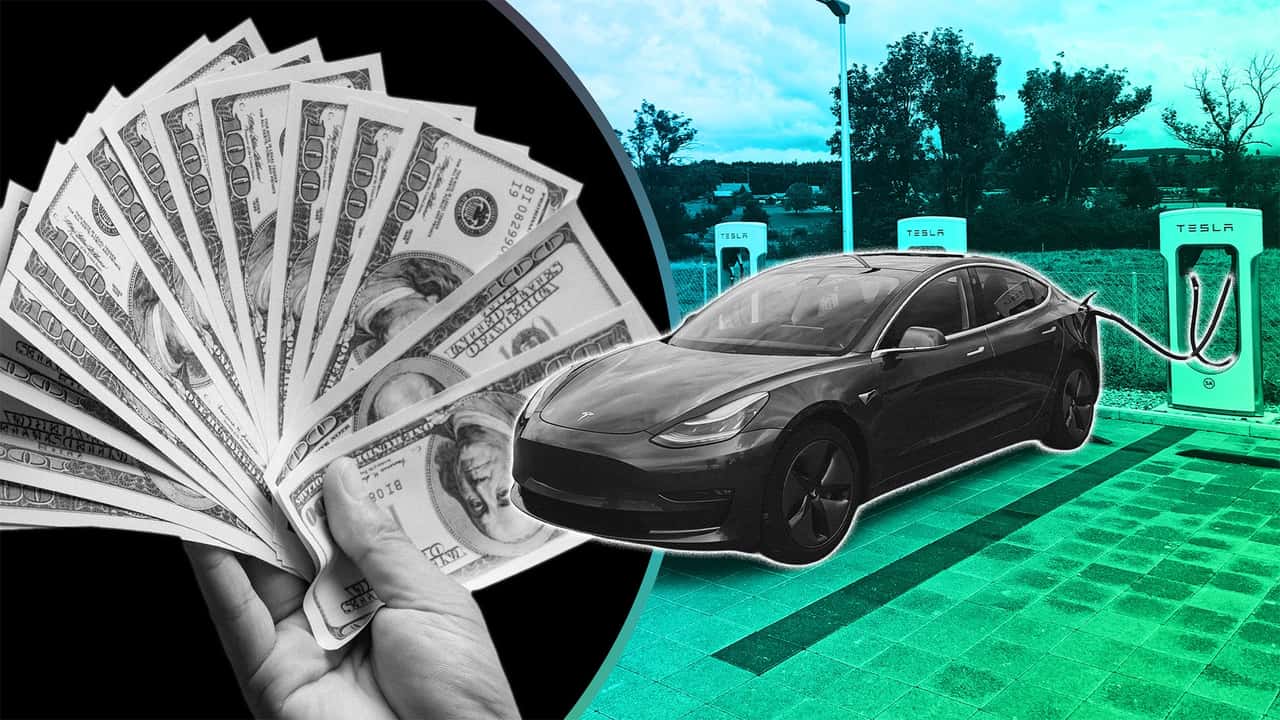

What happens when you drive a Tesla but can’t plug in at home? One TikTok creator decided to find out—spending an entire year relying exclusively on public chargers. The final tally? Thousands of dollars, hundreds of hours, and a flood of hot takes in the comments.
For city dwellers, renters or road-trippers considering an EV lifestyle, the clip sparked a pressing question: Is skipping a home charger really worth it?
Tesla Model 3 owner Jay (@juiceee3e) clearly is having second and possibly third thoughts about becoming an electric vehicle driver, based on his viral slideshow. The caption spells out his concerns, explaining that he was told he’d save money on fuel, but his 12-month charging data shows he spent $3,589 to keep the vehicle charged and running.
Jay’s annual charging expense stands in stark contrast to what most Tesla Model 3 drivers spend when they plug in at home. According to the U.S. Department of Energy, the average residential electricity cost in the U.S. is about 16 cents per kilowatt-hour, which translates to roughly $500-$600 per year for the same driving duration.
Now Trending
Public fast-charging networks like Tesla’s Supercharger system often bill at $0.30 to $0.60/kWh, depending on location and demand. That means heavy reliance on public charging can double or even triple annual fueling costs compared to charging overnight in a garage.
Other EV owners in the TikTok thread pointed out that their monthly bills are a fraction of Jay’s. One commenter said their Model Y costs about $30 a month to charge at home, while another reported $20 in monthly costs thanks to off-peak utility rates. These anecdotes line up with industry research showing that home charging remains the cheapest and most convenient option for the majority of EV drivers.
Why Some Owners Skip The Home Charger
If the economics are so lopsided, why would anyone avoid installing a home charger? The comments shed some light: Renters and condo dwellers often don’t have access to garages or landlord approval to add a Level 2 charger, which typically costs between $500 and $1,500 to install. Others balk at the upfront price, preferring to spread the expense out through regular Supercharger visits.
FROM THE TRENDING NEWS DESK
Viral bits from across the social media landscape
Our team of experts tracks what's trending so you don't have to—from viral videos to online debates that have everyone talking.
This isn’t a fringe issue. A 2023 J.D. Power study found that nearly half of EV owners rely on public charging at least part of the time, with urban residents far more likely to skip home charging altogether. And for some, it’s about access.
Public charging is expanding rapidly in dense city centers, with Tesla, Electrify America and other providers adding thousands of stalls every quarter. That makes EV ownership feasible even for those without a driveway.
While Jay’s charging bill is the headline figure, another risk looms in the background: battery degradation. Frequent use of DC fast charging can accelerate wear on lithium-ion cells compared to slower Level 1 or Level 2 charging.
A 2020 study published in the Journal of Energy Storage found that fast charging increases the rate of capacity fade, especially in hot climates. Tesla acknowledges this tradeoff, advising owners to use Superchargers “when necessary” rather than as their primary charging method.
Commenters on Jay’s video echoed this concern, warning that constant fast charging could cut into long-term range and resale value. Tesla’s battery warranty—eight years or 120,000 miles for the Model 3 Long Range—covers major failures but not gradual range loss. For drivers who plan to hold onto their vehicles, relying solely on public fast charging could mean higher costs down the road.
Not Just A Math Problem
Ultimately, the debate sparked by Jay’s post wasn’t just about dollars and cents. It touched on the broader question of how EVs fit into different lifestyles. Some commenters noted that workplace charging or free mall stations made their EV ownership practical and affordable. Others argued that without home charging, the inconvenience of waiting at stations made the entire experience less appealing.
The split mirrors the challenges facing the EV market more broadly. In suburban settings, home charging is nearly universal. But in cities, where EV adoption is climbing, public charging must fill the gap. Tesla has begun adding “urban Superchargers” with slower speeds but smaller footprints to fit city infrastructure. Whether those investments can bridge the convenience gap remains to be seen.
For now, Jay’s year-long experiment shows both the promise and the pitfalls of skipping a home charger.
InsideEVs reached out to Jay via direct message.

RECOMMENDED FOR YOU

Who's Winning The Robotaxi Race? It's... Complicated
The New Chevy Bolt Was Driven Until It Died. Here’s What Its Battery Buffer Looks Like
The Rivian R2 Is Just As Efficient As A Tesla Model Y, Despite Weighing More
Dacia’s Tiny EV Keeps Its Name, But Not Much Else
Tesla Owners Are Using Doll Heads To Fool Full Self-Driving
The Mercedes VLE Is A Brave Gamble. Will It Pay Off?
Full Tesla Cybercab Specs: EPA Documents Confirm Battery Size, Weight, Power, And Preliminary Range