Home
News
Battery Tech
America’s Largest Oil Company Is Making EV Battery Breakthroughs
ExxonMobil is on track to become a lithium supplier. Now, it’s also making advancements in battery chemistries.
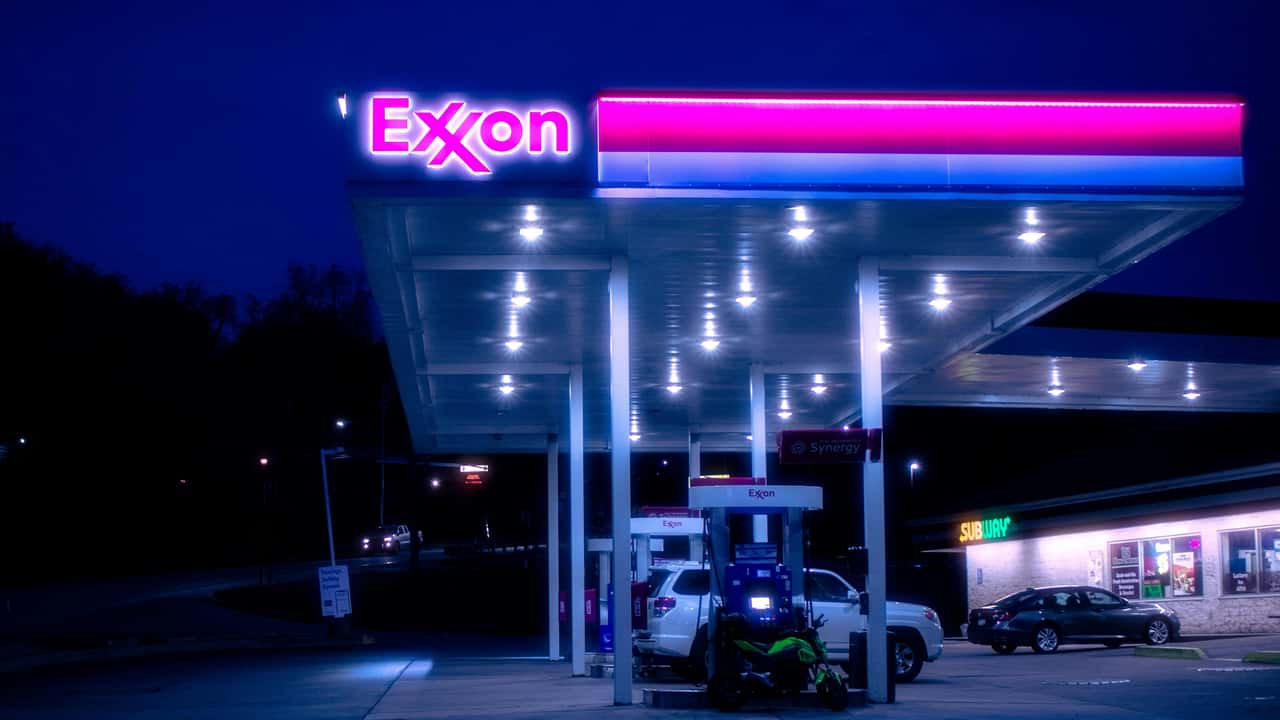
Photo by: Raymond Kotewicz on Unsplash
Suvrat Kothari 
By: Suvrat Kothari
Sep 15, 2025 at 4:17pm ET
Add InsideEVs as a preferred source in Google
- (https://twitter.com/intent/tweet?url=https%3A%2F%2Finsideevs.com%2Fnews%2F772344%2Fexxon-mobil-ev-battery-graphite-invention-anode%2F&text=America%E2%80%99s%20Largest%20Oil%20Company%20Is%20Making%20EV%20Battery%20Breakthroughs&via=InsideEVs)
- copy
Share
Comment
- ExxonMobil claims to have made a lithium-ion battery breakthrough.
- The company claims its synthetic graphite anode can extend an EV battery's lifespan by 30%.
- Synthetic graphite is an emerging alternative to natural graphite which requires extensive mining.
When ExxonMobil chemist Stanley Whittingham invented the lithium-ion battery in the 1970s, few could have imagined it would one day power everything from iPhones to Teslas. But Exxon’s interest in renewables waned, and other companies picked up the mantle of pushing lithium-ion technology forward.
Now, as global demand for oil begins to slow down, Exxon is once again ramping up investments in renewable energy. On Friday, the company's CEO said that it has developed a new type of synthetic graphite that could improve the lifespan and performance of electric vehicle batteries, Bloomberg reported.
Exxon claims the new material—used in EV battery anodes—can extend a battery's lifespan by 30%. The material is being tested by multiple unnamed EV makers, according to the outlet. Graphite also has a direct impact on battery performance and efficiency, so better quality also means more range and faster charging speeds.

Our newsletter keeps you up to date on the fast-moving future of EVs.
back
Subscribe For more info, read our Privacy Policy & Terms of Use.
Just last week, Exxon announced that it had acquired graphite processing company Superior Graphite. Exxon said it bought the company to “build a robust synthetic graphite supply chain in the U.S.”
If you’re unfamiliar with this battery jargon, here’s a basic lowdown on what graphite really does. It is the raw material used in lithium-ion battery anodes—the part of the battery which stores electrons during a charge. A battery's cathode, which mainly determines its energy density, is what's made of other materials you may have heard of, like lithium iron phosphate (LFP) or nickel manganese cobalt (NMC).
Graphite itself is abundant on Earth, but its mining can be labor intensive and expensive. And China controls some 95% of the global supply of battery-grade graphite. Still, battery makers have been using it for decades for its stability and safety.
Exxon said synthetic graphite is less labor-intensive and more consistent in quality. Its graphite can apparently be made using “carbon-rich feedstocks from existing refining streams.” That basically means less digging and tapping more into petroleum coke or coal tar pitch, which are byproducts of oil making, according to a study published in Science Direct.
While the Trump administration handed oil companies a win with the One Big Beautiful Act, which cuts subsidies for clean energy programs, the bill itself can’t magically generate more fossil fuel underground. According to the U.S. Energy Information Administration, global fossil fuel reserves could meet energy demand until 2050, but supplies beyond that are highly “uncertain.”
Studies show that EVs are already displacing millions of barrels of road fuel each day. And now oil companies are trying to find alternative revenue sources and position themselves for the future.
What do you think?
View
Comments
Exxon is also investing heavily in domestic lithium production. Its first planned project in Arkansas will supply lithium to Korean battery makers SK On and LG Energy Solution. Oil giants Shell and BP, on the other hand, are developing EV charging stations.
Contact the author: suvrat.kothari@insideevs.com
Related Stories
 Porsche’s Wireless EV Charging Could Cost You $8,000
Hyundai And Kia Just Can't Win Under Trump
Who Needs Gas? I’m Driving 8 EVs To Europe’s Craziest Mountain Roads
GM’s BrightDrop Van Is In The Race To Become An Amazon Delivery Vehicle
We want your opinion!
What would you like to see on Insideevs.com?
Take our 3 minute survey.
- The InsideEVs team
Share this Story
- (https://twitter.com/intent/tweet?url=https%3A%2F%2Finsideevs.com%2Fnews%2F772344%2Fexxon-mobil-ev-battery-graphite-invention-anode%2F&text=America%E2%80%99s%20Largest%20Oil%20Company%20Is%20Making%20EV%20Battery%20Breakthroughs&via=InsideEVs)
- copy
GO TO COMMENTS
(
)
Got a tip for us? Email: tips@insideevs.com
View all comments ( )
Trending
Diesel Prices Are Surging. This Electric Trucking Company Is Seeing More Interest
Tesla Opens Self-Driving Cybercab Orders To 'Select Customers' At $29,990
Solid-State Cells Can Make The U.S. Competitive In Batteries Again: CEO
I Took A Rivian R2 On A Camping Trip To The Middle Of The Desert
Latest Stories
- Diesel Prices Are Surging. This Electric Trucking Company Is Seeing More Interest Nov 14 - News -
- Tesla Opens Self-Driving Cybercab Orders To 'Select Customers' At $29,990 Nov 13 - News -
- Do EVs Wear Tires Faster? Here's What The Studies Show Nov 13 - Features -
- The VW ID. Buzz Is Getting A New Job As A Robotaxi Nov 13 - News -
- Audi A4 EV Delayed Amid VW Group Financial Troubles: Report Nov 13 - News -
- Tesla Just Killed Its Cheapest All-Wheel-Drive Model Y Nov 13 - News -
- A Record Number Of Uber Miles Are Happening In EVs Nov 13 - News -
RECOMMENDED FOR YOU
Solid-State Cells Can Make The U.S. Competitive In Batteries Again: CEO
Diesel Prices Are Surging. This Electric Trucking Company Is Seeing More Interest
Ford Tested 36,000 Mustang Mach-E Batteries. Here’s How They Held Up After 100,000 Miles
Tesla Opens Self-Driving Cybercab Orders To 'Select Customers' At $29,990
China Has An Iron Grip On EV Batteries. Here's America’s Plan To Break It
Do EVs Wear Tires Faster? Here's What The Studies Show
Mercedes Wants To Rethink EV Batteries With This Clever New Technology