
‘There Are 29 Cameras Inside And Outside The Car’: Group Of 5 Try To Squeeze Into Waymo. Then A Voice Comes Through The Speaker
"Y'all needed Waymo room than that"
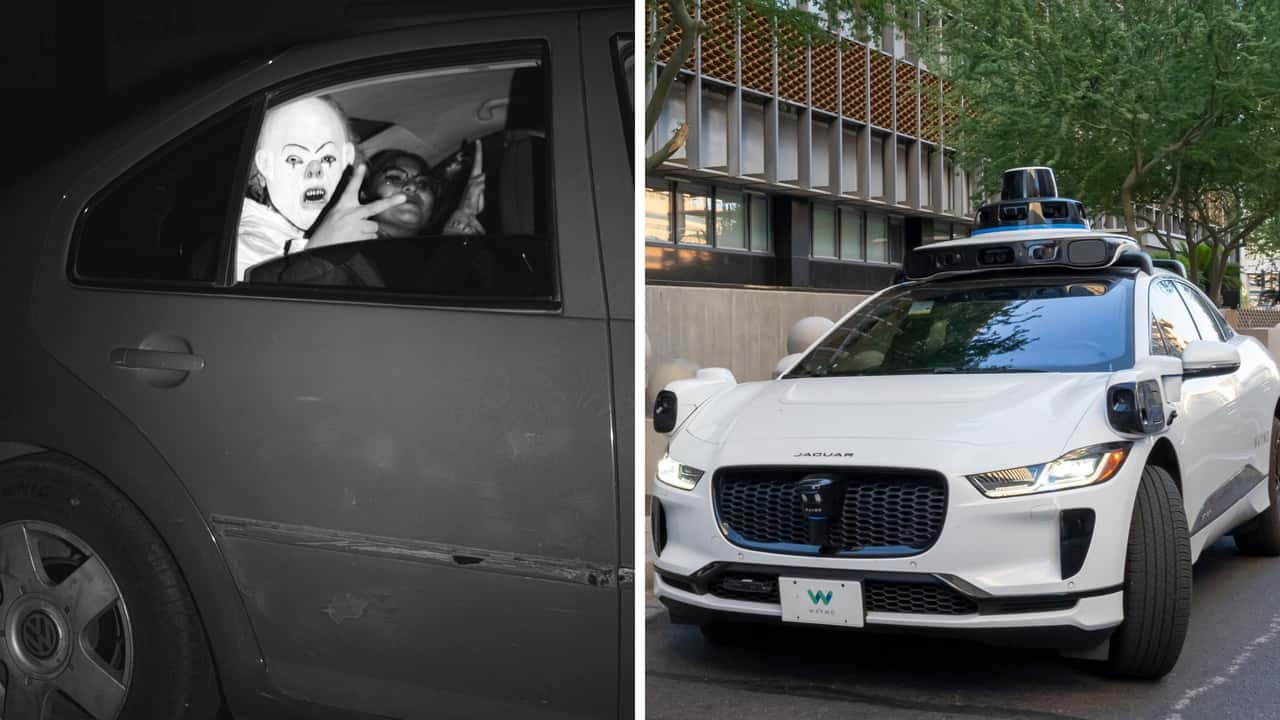

If you thought backseat drivers were annoying, try 29 of them, all watching you at once.
That’s what a group of five TikTokers learned when they tried to squeeze into a Waymo robotaxi, only for the car itself to announce that it could see every one of them through nearly 30 cameras and wasn’t going anywhere until one got out.
The viral clip from TikTokker Justin (@bottomculture) was taken on the high-volume travel night of Halloween and captures five friends trying to stay together by crowding into a single rideshare vehicle. But the watchful wizards from parent company Google weren’t about to let the group exceed its occupancy limits, informing them that the more than two dozen cameras on the vehicle had helped determine they were over the limit.
Now Trending
Their only option, according to the customer service representative speaking to them via the car’s speaker system? Take a moment to “Adjust” their numbers when the taxi abruptly pulled over.
Cameras Inside And Out
According to Waymo’s official rider help page, its service vehicles are limited to a maximum of four passengers, excluding the driver's seat, under standard operating conditions. In the clip, the vehicle’s voice interrupts after five people climb aboard, enforcing a policy that many human drivers might simply ignore. For this group, the moment went from spooky fun to literal eviction: one person would need to exit before the ride could continue.
The heart of the viral moment lies in that audible line: “There are 29 cameras inside and outside the car.” That number is no joke. Waymo’s description of its fifth-generation “Waymo Driver” system notes that the company utilizes 29 cameras to provide full 360° vision around the vehicle, along with lidar and radar sensors. While the clip may highlight cabin surveillance, the larger sensor suite is designed for external perception: navigation, object detection, and safety in complex urban environments.
FROM THE TRENDING NEWS DESK
Viral bits from across the social media landscape
Our team of experts tracks what's trending so you don't have to—from viral videos to online debates that have everyone talking.
At first glance, the incident is humorous and almost absurd: five friends trying to squeeze into a self-driving car only to hear it reprimand them for doing so. But for electric-vehicle enthusiasts and mobility watchers, it also offers insight into how autonomous vehicles enforce rules differently from human drivers. A human Uber or Lyft driver might silently tolerate an extra rider or wait while someone hops out, but a robotaxi does not. It pulls the car over and says, in effect, “You must comply now.” That shift from driver discretion to algorithmic determinism raises interesting questions about passenger expectations. As one commenter put it: “We only have four riders… li-ar.” The car isn’t pretending.
The clip and ensuing comment thread, with viewers tallying likes, joking about “caught in 4 K” or “Waymo-room than that,” also surface deeper concerns: How much of this technology is watching us, and what happens to the data? Waymo attempts to address these questions: Its public policy states that interior and exterior cameras and sensors are used for vehicle operations, safety, and performance.
What Those Cameras Mean
Third-party reporting has pointed out that law enforcement in Phoenix and San Francisco has obtained footage from Waymo vehicles under warrant. While there is no direct indication that the viral clip involved data transfer beyond the app's display, the broader surveillance backdrop remains a reality.
For the EV and autonomous mobility audience, this episode serves multiple purposes:
- It highlights how self–driving services treat passengers differently than legacy rideshare.
- It underscores that yes, these vehicles have major sensor suites, and we’re moving into a realm where occupant behavior is monitored.
- It raises subtle but real issues of trust, transparency, and how passengers will adapt to the fact that their “car” is not only driving them, but watching them.
And of course, it’s a fun viral moment: five friends, Halloween night, a robot at the wheel calmly pulling over and saying “Please adjust.” It speaks to the everyday reality of living with autonomous mobility: you might get the ride you asked for, but you won’t always ride it your way.
As Waymo expands its service footprint, including into new cities and more frequent use of electric vehicle platforms, users and skeptics alike will be watching how the company balances convenience and surveillance. For EV-interested readers, the takeaway is: The mobilities of tomorrow are already here, complete with sensors you don’t see, rules you didn’t know you agreed to and camera systems that listen and react. Next time your ride shows up and says “max 4 riders,” you might smile or think about how many eyes are watching you as you buckle in.
InsideEVs reached out to Justin via direct message and comment on the post. We’ll be sure to update this if they respond.

RECOMMENDED FOR YOU

Woman Buys Cadillac EV. Then They Offer Her A Deal On EVgo
The Volvo EX60 And EX90 Get An Important EV Fast-Charging Upgrade
"The Motor Is Supposed To Last 1 Million Miles": Man Hits 360,000 Miles On His Model 3. Is That The Norm?
A Tesla Model Y Battery Test Looked Bad. Then The Degradation Almost Stopped
"Dealerships Are Shady": Man Says Texas Toyota Dealership Agreed To Sell Highlander Hybrid For $26,900, Then Jacked Up The Price
License Plate Cameras Are About To Start Tracking A Lot More Than Just Your Car
Can Waze Still Track The Police?