Home
Tesla
News
Tesla Keeps Killing Cars. Now It Wants To Build Cybercabs In Germany
A $3.3 billion factory expansion takes Musk’s autonomy gamble overseas as Tesla trims its conventional lineup.
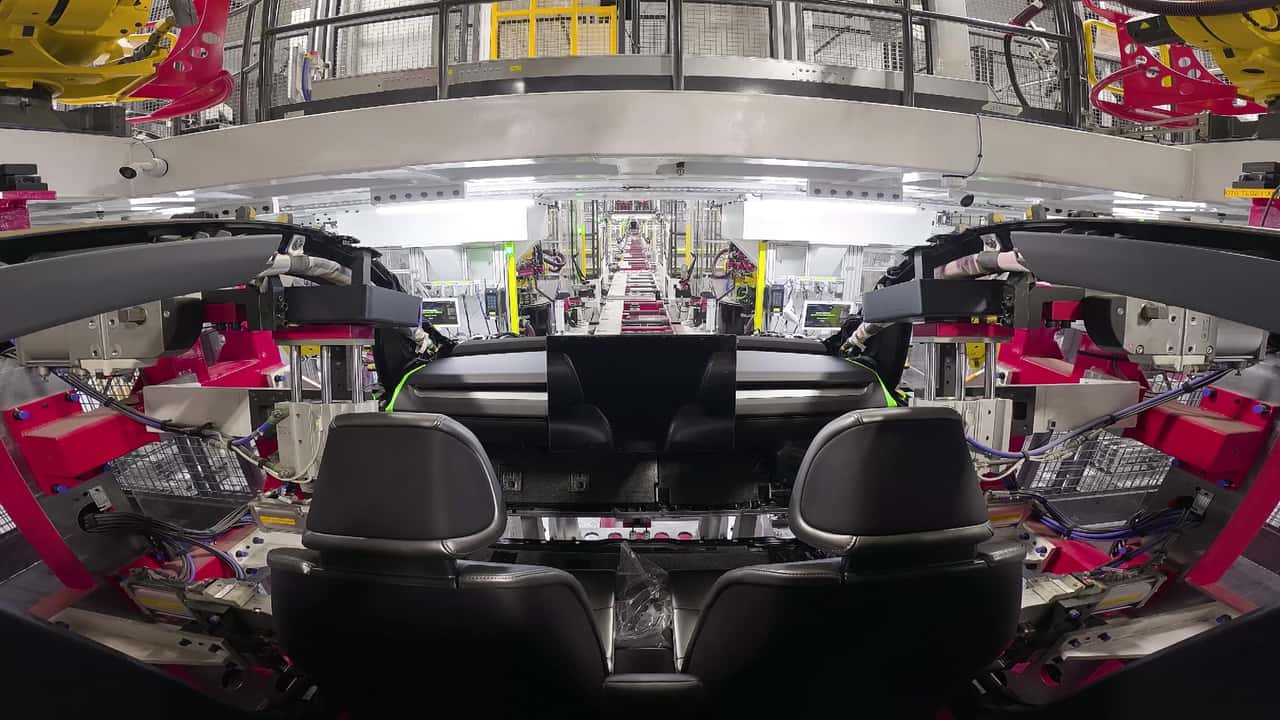
Photo by: Tesla
Andrei Nedelea 
By: Andrei Nedelea
Nov 16, at 1:32pm ET
Add InsideEVs as a preferred source in Google
- (https://twitter.com/intent/tweet?url=https%3A%2F%2Finsideevs.com%2Fnews%2F815634%2Ftesla-german-factory-expansion-cybercab%2F&text=Tesla%20Keeps%20Killing%20Cars.%20Now%20It%20Wants%20To%20Build%20Cybercabs%20In%20Germany&via=InsideEVs)
- copy
Share
Comment
- Tesla plans a $3.3 billion German factory expansion to build Cybercabs starting in 2029.
- The expansion follows the Model S/X’s retirement, Cybertruck’s planned shutdown, and cuts to cheaper variants.
- Tesla is betting more heavily on autonomy while European approvals remain limited to supervised driving.
Tesla’s core lineup is shrinking as the company focuses in on robotaxis. Now, Tesla boss Elon Musk wants to take his autonomous vehicle manufacturing ambitions beyond Texas and begin Cybercab production in Germany.
The company plans to invest €3 billion ($3.3 billion) to expand its factory near Berlin, targeting production of up to one million Cybercabs. According to Reuters, Tesla intends to apply for permits before the end of the year, begin construction in the first half of 2027, and start German Cybercab production in 2029.
The news comes as Tesla keeps reducing the number of conventional cars on offer. Over the past year or so, it has retired entire models, dropped cheaper variants, and earmarked factory space for robots and robotaxis. Knowing that, the new German Cybercab plan starts to look less like an addition to Tesla’s business and more like a replacement for part of it.

Photo by: Tesla
The most significant departures this year were the Model S and Model X. Tesla ended both model lines and announced it would repurpose its former Fremont factory space to build Optimus humanoid robots. Granted, the S and X were aging, low-volume products, but they made Tesla look more like a traditional automaker.
The Cybertruck is next, although its departure has become a moving target. Musk initially announced a mid-2027 shutdown to free Texas factory space for Cybercabs, then extended production through the end of summer to fulfill its order backlog. But it’s still scheduled for retirement.
Not even the ubiquitous Model Y has escaped. Tesla dropped its cheapest all-wheel-drive version earlier this month, less than a year after introducing it. Buyers who want two motors must now stretch to the Premium AWD or just get the base rear-wheel-drive variant, which remains available.

Stay informed with our newsletter every weekday
back
Subscribe For more info, read our Privacy Policy & Terms of Use.
Tesla isn’t abandoning human-driven cars altogether. The redesigned Roadster revealed last month is now promised for 2028, complete with thruster-assisted theatrics. After years of delays and a complete redesign, it’s still a vehicle Tesla promises to build.
Basically, the new Roadster offers spectacle, but it doesn’t fill the practical gaps left by a luxury sedan, a large SUV, and a pickup. Tesla doesn’t even seem to be interested in filling those gaps.
The Cybercab faces a different issue. Without manual controls, its usefulness depends on Tesla’s autonomous driving capabilities and permission to deploy them. In the U.S., regulators have already opened an investigation into how the vehicle complies with federal safety requirements. A German production facility doesn’t, by itself, settle where its output can operate.
More Cybercab Stories
Tesla's Cybercab Is Built In A Radical New Way. Here's How It Works
Tesla Designed The Cybercab To Use LFP Batteries In The Future
'End Of The Year': Tesla Says Cybercab Customer Deliveries Will Begin Soon
Tesla Says The Cybercab Is Street Legal. Regulators Want To Know How.
Tesla’s struggle to get FSD approved in Europe shows how slow that process can be. Dutch regulators cleared the supervised system in April after more than 18 months of testing, but its rollout has since depended on individual countries granting permission. EU-wide approval remains pending, and Tesla has renamed it “Tesla Assisted Driving” and tightened its speed settings to address regulators’ concerns.
What do you think?
View
Comments
All that work is for software that still requires an attentive driver. Getting permission for a Cybercab with no steering wheel or pedals is a separate challenge. And now Tesla wants to build those in Europe…
Still, Tesla’s survival doesn’t only rest on the Cybercab. The Model 3 and Model Y are still very popular worldwide, and the Semi could give it a foothold in electric trucking. But shrinking its passenger car lineup while spending billions on robotaxis leaves Tesla with fewer alternatives if Musk’s driverless future takes longer or proves less profitable than he expects.
We want your opinion!
What would you like to see on Insideevs.com?
Take our 3 minute survey.
- The InsideEVs team
Share this Story
- (https://twitter.com/intent/tweet?url=https%3A%2F%2Finsideevs.com%2Fnews%2F815634%2Ftesla-german-factory-expansion-cybercab%2F&text=Tesla%20Keeps%20Killing%20Cars.%20Now%20It%20Wants%20To%20Build%20Cybercabs%20In%20Germany&via=InsideEVs)
- copy
GO TO COMMENTS
(
)
Got a tip for us? Email: tips@insideevs.com
View all comments ( )
Trending
Diesel Prices Are Surging. This Electric Trucking Company Is Seeing More Interest
I Tried Mercedes MB.Drive Assist Pro. It's Like Tesla FSD, But With One Catch
Tesla Opens Self-Driving Cybercab Orders To 'Select Customers' At $29,990
Tesla Model 3 Maintenance Guide: What Needs Servicing And What Doesn't
Latest Stories
- Tesla Keeps Killing Cars. Now It Wants To Build Cybercabs In Germany Nov 16 - News -
- Tesla Model 3 Maintenance Guide: What Needs Servicing And What Doesn't Nov 16 - Repair / Maintenance -
- Audi A2 e-tron First Drive: Does The Iconic Nameplate Live Up To The Hype? Nov 16 - First Drives -
- I Tried Mercedes' Answer To Tesla FSD. Here's How It Went Nov 16 - Tech Review -
- BMW Just Started Making EV Batteries In America. The New iX5 Will Be First In Line Nov 16 - Manufacturing / Production -
- BMW’s iX5 Beat The Lucid Gravity On Highway Range. Not On Efficiency Nov 16 - Range / Efficiency -
- Tesla Just Bumped The Cheapest Model Y’s Range, But The Price Stays The Same Nov 16 - Range / Efficiency -
RECOMMENDED FOR YOU
Tesla Model 3 Maintenance Guide: What Needs Servicing And What Doesn't
Audi A2 e-tron First Drive: Does The Iconic Nameplate Live Up To The Hype?
Tesla Just Bumped The Cheapest Model Y’s Range, But The Price Stays The Same
I Tried Mercedes' Answer To Tesla FSD. Here's How It Went
Tesla Drivers Can Now Plug In And Charge Automatically at Ionna Stations
BMW Just Started Making EV Batteries In America. The New iX5 Will Be First In Line
Diesel Prices Are Surging. This Electric Trucking Company Is Seeing More Interest