
Tesla FSD Just Got The Green Light From Germany. But It Might Need A New Name
German regulators support approving FSD for use throughout Europe. But they want Tesla to drop the "Full Self Driving" name.
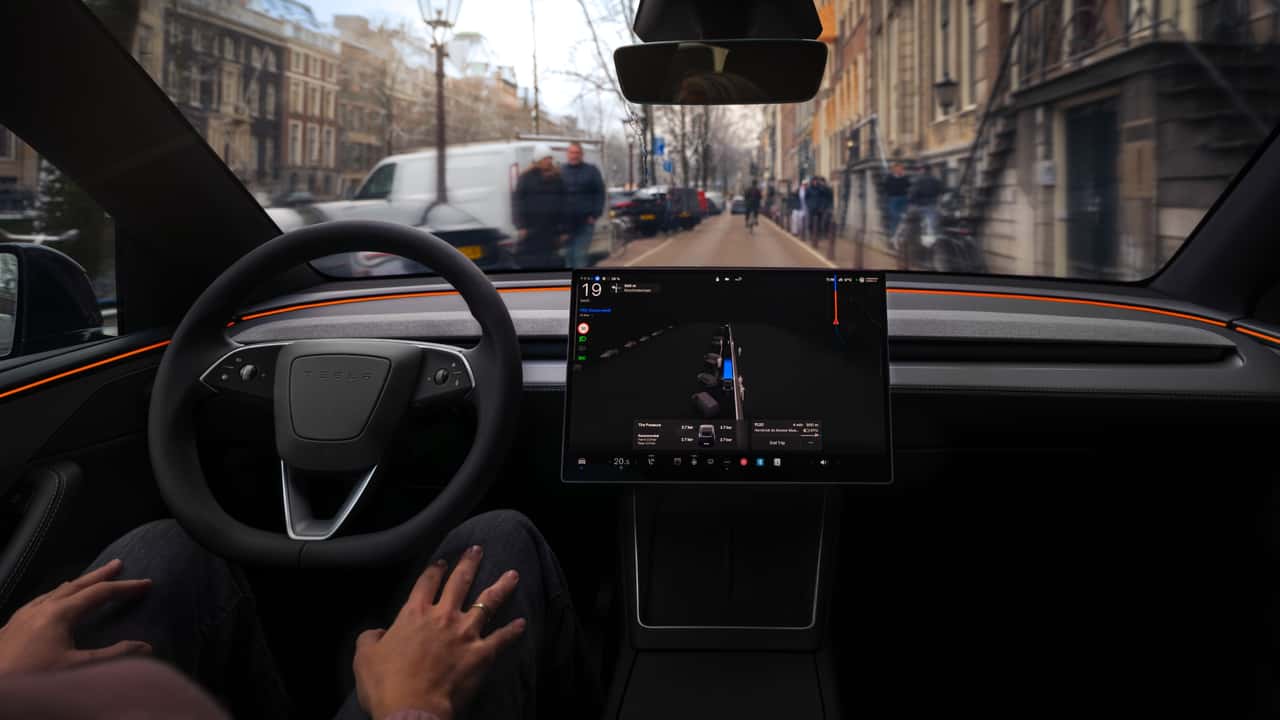

- German regulators support EU-wide FSD approval with a speed offset capped at 10% above the limit.
- Tesla has offered to rename FSD “Tesla Assisted Driving” to make clear that drivers remain fully responsible, the statement claims.
- FSD is available in eight European countries, but EU-wide approval remains pending.
An October 6 statement from Germany’s Federal Ministry of Transport details September talks between Transport Minister Steffen Bilger and Tesla about the future of its "Full Self-Driving" technology suite. They reached agreement on technical and liability issues, prompting Bilger to push for timely EU-wide approval, the office announced.
The ministry says they agreed to allow speeds up to 10% above the limit, conceding that small excesses can sometimes smooth traffic flow. That tackles a major concern regulators had about excessive speeding, as the U.S. version of FSD includes a "Mad Max" mode that drives far over the speed limit in some circumstances.
Regulators were also concerned about the technology's long-controversial name. German regulators consider the FSD name to be misleading. Tesla will reportedly address this by calling it “Tesla Assisted Driving” instead, according to the German account of the discussion.
The ministry praises the system’s urban capabilities, too, noting that it rarely requires driver intervention to handle steering, acceleration, and braking. In general, though, the statement notes it is supporting European regulatory approval for the tech, not actually approving its current form.
FSD’s European rollout has been a patchwork, but approval in Germany might smooth adoption throughout the rest of the European Union. When it debuted in the Netherlands in April, the decision to allow it on public roads followed more than 18 months of assessment. Other countries can recognize that authorization individually, while EU-wide acceptance requires a separate vote by member states.
FSD also differs between the U.S. and Europe. One difference is how the speed offset feature works, and another is that the European version approved by Dutch regulators excludes the more aggressive ‘Mad Max’ driving mode available in the U.S.
Early FSD demonstrations in Europe have put it in a very positive light. It had no trouble navigating incredibly tight cobbled streets in downtown Aarhus, Denmark, where cyclists, pedestrians and cafe customers left precious little room for a car to pass. The drive showed impressive spatial judgment with only minor mistakes.

FSD passed 1.48 million subscribers in July. It introduced FSD subscriptions in the U.S. in July 2021, initially charging $199 a month alongside an outright purchase option. In February 2026, it dropped the upfront purchase for new U.S. customers, making FSD subscription-only. Today, it costs $99 a month in the U.S. and €99 in European markets.
Drivers already have access in the Netherlands, Belgium, Denmark, Lithuania, Estonia, Slovenia, the Czech Republic, and Croatia. With Germany now supporting wider approval, how much longer will it take for FSD to spread to the rest of Europe?
RECOMMENDED FOR YOU

South Korean Police Are Cracking Down On Tesla Owners Jailbreaking FSD
This New Bio-Inspired Membrane Could Make Lithium Extraction Much Cleaner
Do Those Funky Tesla Wheel Covers Actually Boost Range?
‘Unburdensome’: The Slate Truck Is Easier Than A Tesla To Live With, James May Says
'A Weird Religious Stance:' GM Exec Says Ditching Radar For Self-Driving 'Ignores Physics'
The EU Just Hit A Historic Milestone: EVs Outsold Gas And Diesel Cars Combined
The Tesla Model Y's Structural Battery Was Nearly Impossible To Repair. The Cybercab Fixes That