Home
Features
EV 101
Every Kind Of Hybrid Explained: Parallel, Series, EREV, PHEV, MHEV
Americans are flocking to hybrids to get away from high gas prices, but not all hybrids are the same. Here’s what you need to know.
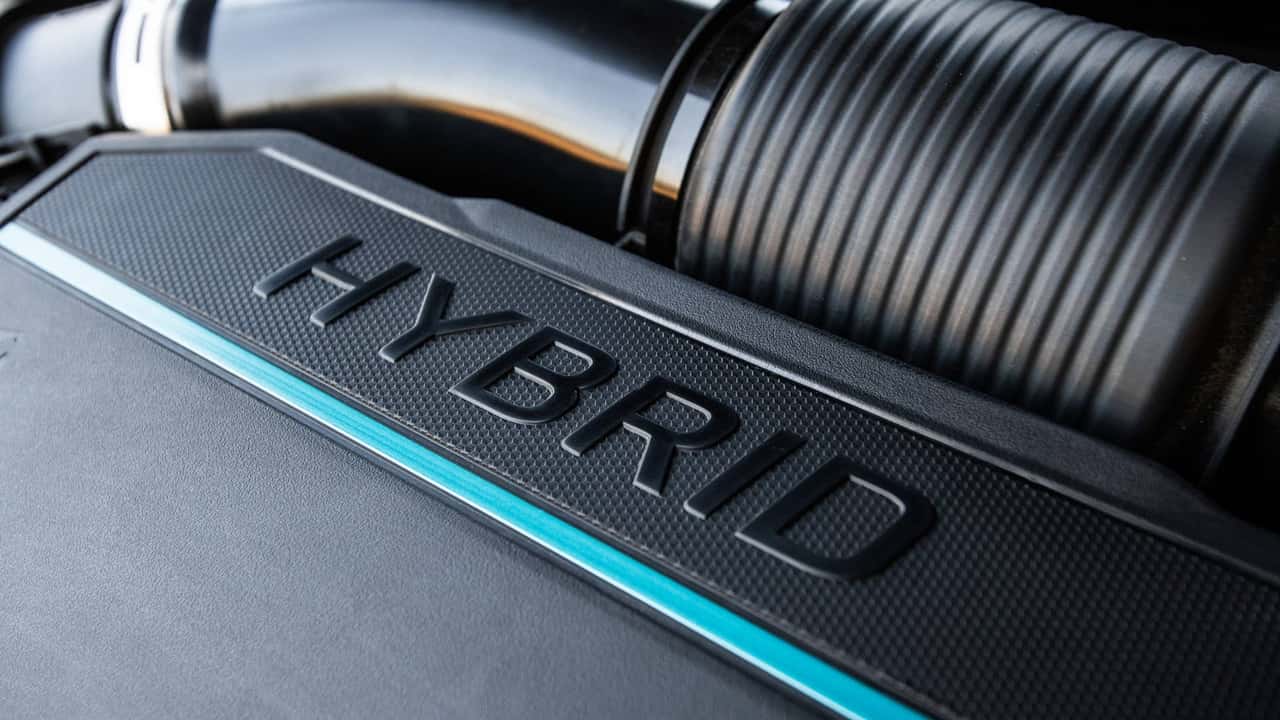
Photo by: Hyundai
Iulian Dnistran 
By: Iulian Dnistran
Nov 17, at 10:08am ET
Add InsideEVs as a preferred source in Google
- (https://twitter.com/intent/tweet?url=https%3A%2F%2Finsideevs.com%2Ffeatures%2F815414%2Fevery-hybrid-type-explained-phev-erev-mhev-series-parallel%2F&text=Every%20Kind%20Of%20Hybrid%20Explained%3A%20Parallel%2C%20Series%2C%20EREV%2C%20PHEV%2C%20MHEV&via=InsideEVs)
- copy
Share
Comment
- There are several different types of hybrids on sale in America: 48V mild hybrids, parallel hybrids, plug-in hybrids, and more.
- More are coming too in the form of extended-range EVs, commonly known as EREVs.
- All hybrids work slightly differently, and they can help you use less gas—or none at all.
Americans’ appetite for electric cars has softened in the last year, leaving hybrids as the vehicle of choice for people who want to lower their fuel bills. With the average gas price in the United States hovering around the $4/gallon mark, hybrids promise lower fuel consumption than a traditional combustion car without any perceived inconvenience.
A traditional hybrid will work just like any other gas car with an automatic transmission, so new owners don’t have to go through a crash course on how to drive their new vehicle. But not all hybrids are created equal, and each type of hybrid has its pros and cons.
Here’s everything you need to know about all the different types of hybrid cars, and how each system works.
More Explainers Like This
 How Much Range Do EVs Lose When Parked? (And How to Stop It)
Coasting Vs. Regenerative Braking: What Saves EV Range The Most?
The Best Affordable Electric Cars In 2026: Cheap, Reliable Options For Everyone
The Best Hybrid SUVs To Buy In 2026
How a hybrid car works
To keep things simple, a hybrid has a conventional gas engine under the hood and one or more electric motors that pick up the slack under various scenarios to cut fuel consumption. The electric motor is powered by a high-voltage battery that can store very little energy, as is the case with most traditional hybrids without a plug, or a moderate amount of energy, in the case of plug-in hybrids.
The battery that can power the vehicle, known as the traction battery, is separate from the 12-volt battery that has been a staple of the automotive industry for decades and runs things like the radio and lighting.
Types of hybrid vehicles
Mild hybrid (MHEV)
This is the simplest type of hybrid out there to design, and I’ll let you in on a little secret: It’s barely a hybrid. Mild hybrids are pretty much gas or diesel cars with more more powerful alternator and starter motor combos that may provide small boosts in efficiency and power.
Mazda mild hybrid
Typically, these starter-generators, which can be belt-driven or bolted to the crankcase, run off a separate 48-volt battery. These systems can fill gaps in torque, increase efficiency, and allow for some regenerative braking, but unlike in other hybrids, the electric motor typically can't drive the wheels by itself.
The rest of the car’s electrical architecture still runs on 12-volt power like usual, but by using a more powerful starter-motor, mild hybrids should also be more resilient to the thousands of times when the gas engine turns off and on at stoplights.
The Ram 1500, Mercedes C-Class, BMW X5, and Volvo XC60 are all available with 48V mild-hybrid systems.
Parallel hybrid
Hyundai Parallel Hybrid Systems
Photo by: Hyundai
In this arrangement, the combustion engine and electric motor can power the wheels either independently or together, and both power sources share the same driveshaft. Traditionally, a small electric motor is sandwiched between the gas engine and the transmission, and clutches engage or disengage either power source. A small high-voltage battery provides energy to the electric motor, which also acts as a generator during deceleration, sending back energy to the battery.
Notably, Hyundais like the Tucson Hybrid, Santa Fe Hybrid, Elantra Hybrid, and Sonata Hybrid use this kind of system. The same goes for hybrid versions of Kias like the Sportage, Sorento, and Carnival.
Power-split hybrids or series-parallel hybrids
While similar to parallel systems, in the sense that they combine two power sources into a single output, power-split hybrids up the ante with higher efficiency and a different way of transmitting power to the wheels.
Instead of using clutches and a multi-speed automatic transmission, this type of hybrid vehicle typically uses a planetary gearset to blend power from the gasoline engine and electric motor (or motors). That power is then sent to the driven wheels via an electronically controlled continuously-variable transmission (e-CVT) that constantly alters gear ratios to keep the system at peak efficiency.
Toyota Hybrid Synergy Drive
Photo by: Toyota
On some vehicles that use this type of hybrid system, the powertrain will almost always work in series mode, with the gas engine acting as a generator for the high-voltage battery. At certain speeds, however, the gas engine will also send power directly to the wheels.
All of Toyota's legendary hybrids have a series-parallel setup, and Ford, Subaru, and Honda have also made use of the technology. Most of these aren't using real CVTs but pairs of electronic motors linked via a planetary gearset, allowing them to adjust ratios on the fly without the durability concerns of traditional CVTs.
Plug-in hybrids or PHEVs
A PHEV is a hybrid car with a larger-capacity high-voltage battery that can also be charged from an external source.
At the same time, the traction battery in a PHEV is almost always smaller than on a full-fledged electric car, though some modern models, especially those made in China, are blurring the line between EV range and electric-only PHEV range.
Plug-in hybrids use a variety of powertrain setups. There’s no clear answer to which is best. Volvo, for instance, uses a rear electric motor that’s not physically connected to the engine and transmission in the front of the car. The e-motor can power the vehicle on its own, provided there’s enough energy in the traction battery, or it can do so in tandem with the gas engine.
The 2027 Toyota RAV4 PHEV can fast-charge like an EV.
Photo by: Toyota
Meanwhile, the Mitsubishi Outlander PHEV, which once held the crown for the world’s best-selling plug-in hybrid SUV, is known for its peculiar powertrain that can function as either a series hybrid or a parallel hybrid.
Other PHEVs include plug-in versions of the Toyota Prius and RAV4, and the once-popular (but now discontinued) Jeep Wrangler 4Xe.
Series hybrid or EREV
While extended-range EV (EREV) technology seems fresh and buzzy today, it has been around for decades under a slightly different name: the series hybrid. The tech has been powering diesel-electric locomotives for the longest time, and it has also made appearances in a handful of cars like the original BMW i3 REx and the new Karma Gyesera. (In China, moreover, these are getting more common.)
The EREV powertrain will also make its way into a slew of upcoming vehicles for the United States, like the Scout Terra and Traveler, the next-generation Ford F-150 Lightning, the Ram 1500 REV, the Jeep Grand Wagoneer, and large SUVs from Hyundai and Kia.
Hyundai's upcoming EREV system
Photo by: Hyundai
In a series hybrid setup, the powertrain is designed like an electric vehicle's from the get-go. There’s a large-capacity battery powering one or more electric motors, and the driving range can be significantly higher than a traditional hybrid or plug-in hybrid.
There’s also a gas engine tucked away somewhere under the car’s skin, but its sole purpose is to turn a generator that feeds electricity to the high-voltage battery and electric motors. There’s no physical connection between the engine and wheels. If most conventional hybrids are like a gas vehicle with some electric assistance, series hybrids or EREVs are the opposite idea.
Series hybrids or EREVs typically have a larger-capacity traction battery than plug-in hybrids, and they can also accept higher charging power inputs. What’s more, the gas engine that provides energy for the electric powertrain can work in its most efficient state all the time, whereas a plug-in hybrid with a multi-speed automatic transmission will always hunt for gears, which leads to energy losses.
Series hybrids can have a plug, but they don't have to. Take the new Nissan Rogue Hybrid and its the E-Power system, for example. The Rogue has a 1.5-liter, three-cylinder, turbocharged engine mater to a dual-motor electric powertrain that's fed by a 1.67 kWh battery. The engine only serves as a generator, and the electric motors do all the driving, lending this hybrid a distinctly EV-like driving feel.
The Bottom Line
Reading this rather long list can be daunting, I know. But if there’s anything that should stick after reading it, it’s that hybrids are typically more efficient than simple combustion cars. Thanks to a little boost provided by one or more electric motors, hybrids can and will lower a household’s fuel consumption, which is why they’re selling like hot cakes right now.
If absolute efficiency is what you’re looking for, then an e-CVT-equipped power-split hybrid may be the best choice, as long as you’ve made peace with the fact that you’ll constantly hear the engine buzzing in the background. If a sportier experience is more up your alley, then a parallel hybrid with a multi-speed automatic sounds like a better pick.
What do you think?
View
Comments
If you’re not sure about switching to an EV yet but can charge at home and desire more of the benefits of electric-only motoring, a PHEV or EREV makes a lot of sense.
And of course, if you're ready fora full-blown EV, check out our resources on making the switch, including the best electric SUVs and affordable EVs to buy. Battery-powered cars can deliver benefits to the climate and your wallet that hybrids never will.

Stay informed with our newsletter every weekday
back
Subscribe For more info, read our Privacy Policy & Terms of Use.
We want your opinion!
What would you like to see on Insideevs.com?
Take our 3 minute survey.
- The InsideEVs team
Share this Story
- (https://twitter.com/intent/tweet?url=https%3A%2F%2Finsideevs.com%2Ffeatures%2F815414%2Fevery-hybrid-type-explained-phev-erev-mhev-series-parallel%2F&text=Every%20Kind%20Of%20Hybrid%20Explained%3A%20Parallel%2C%20Series%2C%20EREV%2C%20PHEV%2C%20MHEV&via=InsideEVs)
- copy
GO TO COMMENTS
(
)
Got a tip for us? Email: tips@insideevs.com
View all comments ( )
Trending
I Tried Mercedes' Answer To Tesla FSD. Here's How It Went
Driven: BMW's Electric M3 Is The Real Deal
Tesla Opens Self-Driving Cybercab Orders To 'Select Customers' At $29,990
Tesla Model 3 Maintenance Guide: What Needs Servicing And What Doesn't
Latest Stories
- Every Kind Of Hybrid Explained: Parallel, Series, EREV, PHEV, MHEV Nov 17 - EV 101 -
- BYD Is Winning Over Japan With A Very Japanese Kind Of EV Nov 17 - News -
- Bentley’s First EV Is Already Sold Out, And Production Hasn’t Even Started Nov 17 - Sales -
- The Electric Baby Land Rover Defender And Range Rover GT Will Begin Production Next Year Nov 16 - News -
- Mercedes Is Bringing Hands-Free Driving To Certain U.S. Highways In 2027 Nov 16 - News -
- Tesla Keeps Killing Cars. Now It Wants To Build Cybercabs In Germany Nov 16 - News -
- Tesla Model 3 Maintenance Guide: What Needs Servicing And What Doesn't Nov 16 - Repair / Maintenance -
RECOMMENDED FOR YOU
The Best Affordable Electric Cars In 2026: Cheap, Reliable Options For Everyone
BYD Is Winning Over Japan With A Very Japanese Kind Of EV
How Much Range Do EVs Lose When Parked? (And How to Stop It)
Bentley’s First EV Is Already Sold Out, And Production Hasn’t Even Started
The Best Compact Electric SUVs To Buy In 2026 (Updated)
The Electric Baby Land Rover Defender And Range Rover GT Will Begin Production Next Year
These EVs Have The Highest Claimed Charging Power In 2026