Home
Ford
Fathom
News
$30,000 Ford Fathom: Inside The Structural LFP Battery That Makes It All Possible
The battery chemistry helps keep costs low. The prismatic cell takes the advantages far beyond that.
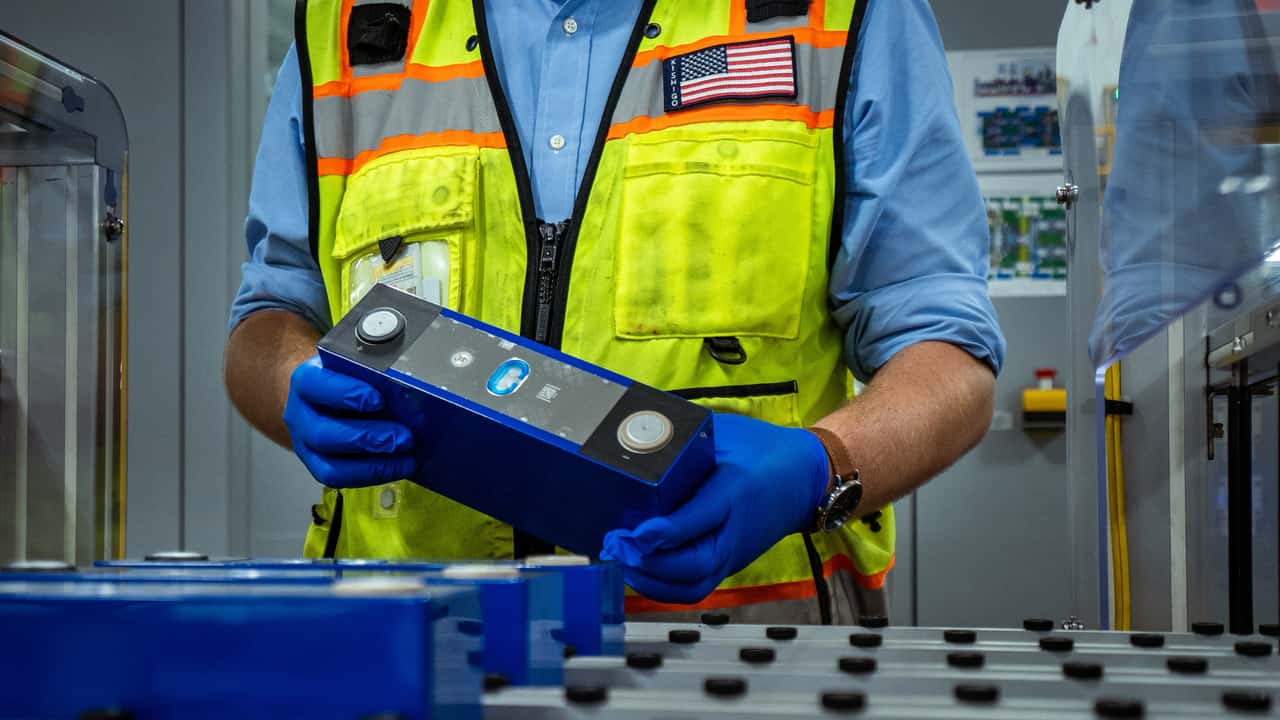
Photo by: Ford
Suvrat Kothari 
By: Suvrat Kothari
Nov 28, at 9:00am ET
Add InsideEVs as a preferred source in Google
- (https://twitter.com/intent/tweet?url=https%3A%2F%2Finsideevs.com%2Fnews%2F816662%2Fford-fathom-lfp-prismatic-battery%2F&text=%2430%2C000%20Ford%20Fathom%3A%20Inside%20The%20Structural%20LFP%20Battery%20That%20Makes%20It%20All%20Possible&via=InsideEVs)
- copy
Share
Comment
In a small corner between two conference rooms at the 2-million-square feet BlueOval Battery Park Michigan, Ford brought the upcoming Fathom electric truck’s battery pack for journalists to look at.
The Fathom will get something that’s rare in the U.S. but common on high-tech EVs in China: low-cost lithium-iron-phosphate (LFP) cells in a prismatic form factor. That combination is a key enabler of the Fathom's $29,495 starting price, and Ford said it does more than just cut costs.
Charles Poon, the vice president of vehicle hardware engineering at Ford, said the prismatic LFP cells will allow the Fathom to be low-cost and fun-to-drive.
“Those two are what enable us to deliver an affordable structure for the vehicle,” Poon said during a media roundtable at BlueOval Battery Park Michigan last week. It allowed Ford to “take out a lot of components from the vehicle and still be able to be a very fun driving very stiff vehicle,” he said.
Gallery: Ford BlueOval Battery Park Michigan

11






Source: Ford
Why LFP And Why Now
Most EVs in the U.S. use cylindrical nickel-manganese-cobalt (NMC) cells. It's a well-established chemistry and form factor, known for the high energy density that gives EVs long driving range.
Chinese LFP technology, however, has narrowed the gap to NMC in energy density and performance in recent years, while keeping a cost advantage because it forgoes expensive raw materials like nickel and cobalt. That combination is why Chinese EVs offer impressive range and fast charging at affordable prices.
The cells made at BlueOval Battery Park Michigan use technology licensed from CATL, the world's largest battery maker. Ford said the cell design is unique to the company and not something available in CATL's global portfolio. LFP batteries are 20-30% cheaper than NMC ones, Ford said, which made them a good fit for a low-cost EV like the Fathom.
Structural Cells
Photo by: Ford
The Fathom's cells are also structural and use a cell-to-pack design, meaning they are installed directly in the pack without modules. Ford said this allowed 20% better packaging efficiency compared to its first-generation EVs like the Mustang Mach-E and F-150 Lightning, since larger cells mean fewer of them are needed, which simplifies assembly.
The cells are load bearing, too. Ford said the battery structure handles 60% of the vehicle's load, and 40% of that passes through the cells. Ford engineers said this allowed an even lower center of gravity, which improves the Fathom's overall stiffness and supposedly makes it fun to drive.
What About Repairability?
Cell-to-pack designs raise a concern about repairability. They aren't as easy to service as module-based packs and can require replacing the whole battery, which can be expensive once a vehicle is out of warranty.
I asked Ford engineers how they plan to address potential cell failures. They pointed to extensive testing, including more than 1,400 process and quality controls in the production system, validation testing in temperatures from -40 degrees Celsius to 60C, nail penetration and collision tests, and environmental testing on equipment like hydraulic shakers that simulate vehicle behavior on the road.
Photo by: Ford
One part of the battery will be repairable: the electronics. On most EVs, the electronics sit in a penthouse on top of the pack. On the Fathom, they are mounted behind the battery, which keeps the pack fully flat and opens up more interior room. They can be accessed, repaired or replaced without lowering the pack.
What do you think?
View
Comments
All said, most buyers likely won't know or care what LFP or prismatic means. They'll care about range, charging speed, and whether the battery lasts. That is where Ford's approach will be tested when the Fathom goes on sale towards the end of next year.
Contact the author: suvrat.kothari@insideevs.com
Related Stories
Ford Has A Dedicated Battery Abuse Team. It Obsesses Over How Cells Fail
Ford Just Started Fathom LFP Battery Production In Michigan. It's A Big Deal
Ford's Radical New EV Manufacturing Process Is Already Building Trucks
Ford CEO Says Its New EV Tech Is 30% More Efficient Than BYD's
We want your opinion!
What would you like to see on Insideevs.com?
Take our 3 minute survey.
- The InsideEVs team
Share this Story
- (https://twitter.com/intent/tweet?url=https%3A%2F%2Finsideevs.com%2Fnews%2F816662%2Fford-fathom-lfp-prismatic-battery%2F&text=%2430%2C000%20Ford%20Fathom%3A%20Inside%20The%20Structural%20LFP%20Battery%20That%20Makes%20It%20All%20Possible&via=InsideEVs)
- copy
GO TO COMMENTS
(
)
Got a tip for us? Email: tips@insideevs.com
View all comments ( )
Trending
I Drove Volvo’s Long-Range Plug-In Hybrid XC60. It’s A Great Stepping Stone To An EV.
I've Driven Dozens Of Chinese Cars. Americans Are Missing Out On These 4 Features
I’m Thankful For My Electric Car
$30,000 Ford Fathom: Inside The Structural LFP Battery That Makes It All Possible
Latest Stories
- $30,000 Ford Fathom: Inside The Structural LFP Battery That Makes It All Possible Nov 28 - Battery Tech -
- I've Driven Dozens Of Chinese Cars. Americans Are Missing Out On These 4 Features Nov 28 - China -
- EVs Outsold Gas And Diesel Cars Combined In The EU In October Nov 27 - News -
- This Audi E-Tron EV Has 125,000 Miles. Replacing Its Battery Was A Huge Pain Nov 27 - Repair / Maintenance -
- Rivian's Winter Sale Is Live: Save on Chargers, Accessories, And More Nov 27 - Pricing -
- I Drove Volvo’s Long-Range Plug-In Hybrid XC60. It’s A Great Stepping Stone To An EV. Nov 27 - First Drives -
- A Used Cybertruck Is Selling A Month Faster Than A Ford F-150 Nov 26 - News -
RECOMMENDED FOR YOU
Ford Has A Dedicated Battery Abuse Team. It Obsesses Over How Cells Fail
I've Driven Dozens Of Chinese Cars. Americans Are Missing Out On These 4 Features
Ford Just Started Fathom LFP Battery Production In Michigan. It's A Big Deal
EVs Outsold Gas And Diesel Cars Combined In The EU In October
Ford's Radical New EV Manufacturing Process Is Already Building Trucks
This Audi E-Tron EV Has 125,000 Miles. Replacing Its Battery Was A Huge Pain
Ford CEO Says Its New EV Tech Is 30% More Efficient Than BYD's