Home
Ford
Fathom
News
Ford Has A Dedicated Battery Abuse Team. It Obsesses Over How Cells Fail
Electric vehicle batteries go through hell before entering production, getting tested for safety in the most extreme use cases.
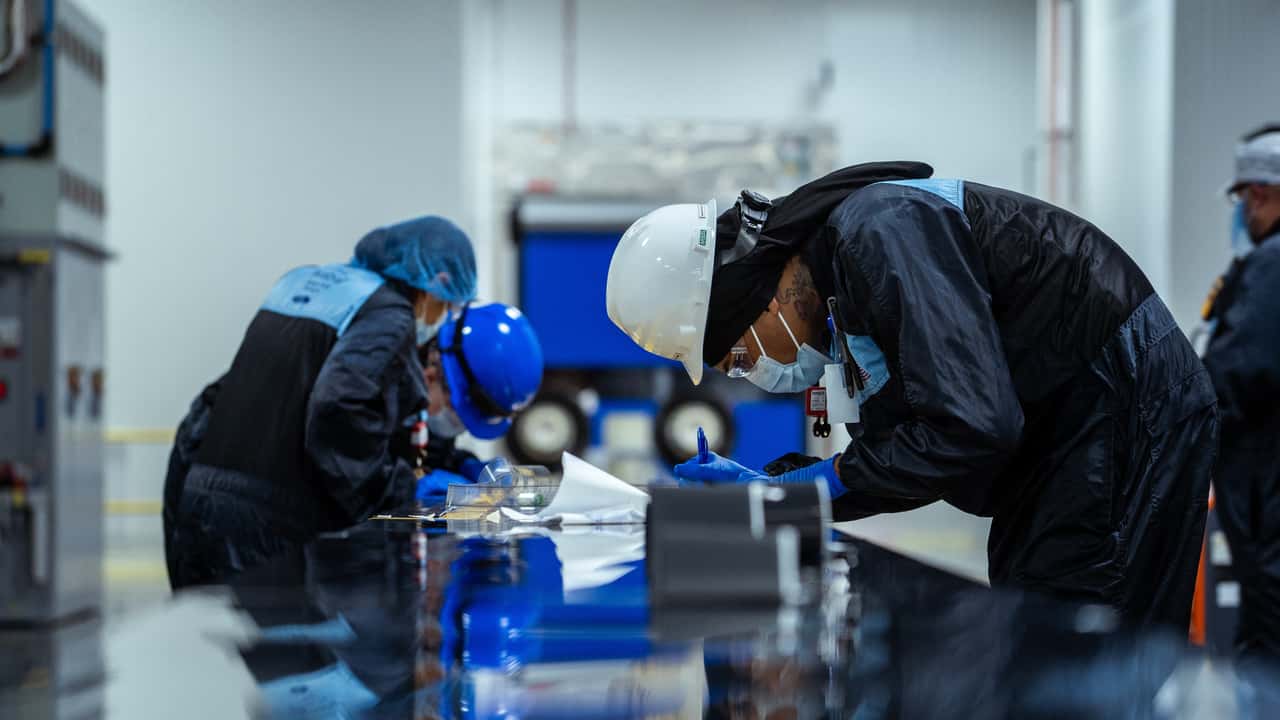
Photo by: Ford
Suvrat Kothari 
By: Suvrat Kothari
Nov 23, at 5:05pm ET
Add InsideEVs as a preferred source in Google
- (https://twitter.com/intent/tweet?url=https%3A%2F%2Finsideevs.com%2Fnews%2F816533%2Fford-lfp-ev-battery-abuse-team%2F&text=Ford%20Has%20A%20Dedicated%20Battery%20Abuse%20Team.%20It%20Obsesses%20Over%20How%20Cells%20Fail&via=InsideEVs)
- copy
Share
Comment
Electric vehicle batteries live a harder life than the ones in your phone or laptop. They spend most of their time outdoors, deal with extreme heat and cold, and can take a beating from road debris and potholes.
That means for battery makers, engineering for durability is a priority right up there with energy density and charging speed. And to make sure its cells can handle the abuse of daily life as an EV, Ford has a team dedicated to understanding how batteries fail—and how to stop it.
“That team is 100% focused on battery abuse, design, and testing as a function,” Wesley Thibault, the global chief engineer of battery product development at Ford said last week during a media roundtable at the automaker’s new battery plant in Marshall, Michigan.
Gallery: Ford BlueOval Battery Park Michigan

11





Source: Ford
Ford is new to the EV battery business. Last week, it started cranking out lithium iron phosphate (LFP) battery packs at BlueOval Battery Park Michigan, using technology licensed from China’s CATL, the world’s largest battery maker. The batteries will power the all-important Ford Fathom pickup, which the automaker says will enter production toward the end of next year and kick off a new generation of vastly better and more profitable EVs.
Despite the licensing deal, Ford officials said they were involved in developing the batteries from the outset, with a focus on durability.
Designing For Failures
The job is not as simple as it sounds. The battery abuse team isn’t tasked with destroying fully made cells and then finding ways to make them indestructible. Instead, Thibault said, it is involved in the design process from the start.
“They want to understand down to the physics level, how a cell fails and why, and when it does fail, how we can prevent it from creating harm to the occupants,” he said.
Quality operator at Ford's BlueOval Battery Park Michigan.
Photo by: Ford
For example, the team measures how cells vent, a crucial process that keeps batteries from catching fire or damaging themselves when they overheat. When temperatures inside a cell get too high, the electrolyte, the liquid chemical that shuttles electrons between the anode and cathode, gets hot and releases gases.
If those gases stay trapped, they can cause short circuits or thermal runaway, so they need to escape in a controlled way. Thibault said his team can measure all of this analytically—using computer models—before the cells are validated.
Thousands Of Quality Checks
Production adds another layer of scrutiny. At various stages, the materials inside the cell, as well as the finished cell itself, go through thousands of quality checks, Ford engineers said. Those include CT scans, X-ray machines, lasers, camera inspections, and AI systems.
For example, when the anode slurry is coated onto a copper foil, every millimeter is scanned by lasers for wrinkles and other anomalies. All employees have the ability to pause production if they spot any problems.In case of any issues, they quarantine the cells affected during a specific time period. Ford also claimed that impacted components can be traced all the way from production to the vehicle they end up in.
To be sure, not all of this is unique to Ford. Strict quality checks like these are common among major battery makers, who all aim to minimize scrap rates for costly batteries and maximize the amount of material that actually gets sold.
Ford engineer operating a winding machine, which brings together the anode and cathode, adding a separator in between.
Photo by: Ford
Ford continuously tests the manufacturing process in other ways, too. Engineers said they intentionally feed damaged components and cells—which they call “red rabbits”—into the production machinery to confirm the quality systems catch them and are working as intended.
When cells are almost ready, they’re blasted with helium gas to check for leaks. Once a pack is assembled, it’s mounted on a hydraulic shaker that mimics thousands of miles and years of real-world road use. The shaker can twist, dive, squat, contort, yaw, and replicate the other movements of a car, putting the pack through everything it would see on the road.
Ford’s EV batteries have fared well, by and large. High-mileage Mach-Es with 100,000 or even 200,000 miles on the odometer show little range loss compared to their original capacity, according to data the company released this month.
On the other hand, Ford’s emphasis on battery quality isn’t exactly surprising. The company has grappled with high warranty costs in recent years. And both the Mustang Mach-E and the F-150 Lightning have had issues linked to their high-voltage batteries. Some early Mach-Es were recalled because their battery contactors would overheat during DC fast-charging. A small number of Lightnings were recalled in 2023 due to defective battery cells.
What do you think?
View
Comments
Ford will want to avoid any similar quality issues as it rolls out the high-stakes Fathom, which it hopes will outsell its previous EVs and set the stage for an electric comeback. It will be years before we know how the Fathom's batteries hold up in the real world, but if the testing so far is any indication, the early signs look promising.
Contact the author: suvrat.kothari@insideevs.com
Related Stories
Ford Just Started Fathom LFP Battery Production In Michigan. It's A Big Deal
Ford's Radical New EV Manufacturing Process Is Already Building Trucks
Ford CEO Says Its New EV Tech Is 30% More Efficient Than BYD's
Ford Fathom Pricing Will Stretch Into the 'High $30,000 Range'
We want your opinion!
What would you like to see on Insideevs.com?
Take our 3 minute survey.
- The InsideEVs team
Share this Story
- (https://twitter.com/intent/tweet?url=https%3A%2F%2Finsideevs.com%2Fnews%2F816533%2Fford-lfp-ev-battery-abuse-team%2F&text=Ford%20Has%20A%20Dedicated%20Battery%20Abuse%20Team.%20It%20Obsesses%20Over%20How%20Cells%20Fail&via=InsideEVs)
- copy
GO TO COMMENTS
(
)
Got a tip for us? Email: tips@insideevs.com
View all comments ( )
Trending
The Mercedes-Benz EQS Sedan, EQS SUV, And EQE SUV Soldier On For 2027
The BMW iX5 Was Driven Until It Died. It Had A Surprising Amount Of Hidden Range Left
What We Both Thought After Driving The Rivian R2
Aptera Finally Built Its First Car For Customer Delivery
Latest Stories
- Ford Has A Dedicated Battery Abuse Team. It Obsesses Over How Cells Fail Nov 23 - Battery Tech -
- This Little Electric Truck Looks Like France's Answer To The Slate Nov 23 - News -
- Tesla's EVs Could Get One Big Upgrade Next Year Nov 23 - News -
- Hyundai Ioniq 5 Maintenance Guide: What Needs Servicing And What Doesn’t Nov 23 - News -
- 2027 Mercedes GLA Electric First Drive: A Big Upgrade Nov 23 - Car Reviews -
- China’s SC01 EV Sports Car Will Get Its Own Factory In Europe Nov 23 - Europe -
- The BMW iX5 Was Driven Until It Died. It Had A Surprising Amount Of Hidden Range Left Nov 23 - Range / Efficiency -
RECOMMENDED FOR YOU
Ford Just Started Fathom LFP Battery Production In Michigan. It's A Big Deal
This Little Electric Truck Looks Like France's Answer To The Slate
Ford's Radical New EV Manufacturing Process Is Already Building Trucks
Tesla's EVs Could Get One Big Upgrade Next Year
Ford CEO Says Its New EV Tech Is 30% More Efficient Than BYD's
Hyundai Ioniq 5 Maintenance Guide: What Needs Servicing And What Doesn’t
Ford Fathom Pricing Will Stretch Into the 'High $30,000 Range'