
Locals Sent Tesla FSD Down Bratislava’s Toughest Streets. It Needed Help
Steep hills and tight gaps showed what FSD can do. Missed signs and driver takeovers showed how much supervision it still needs.
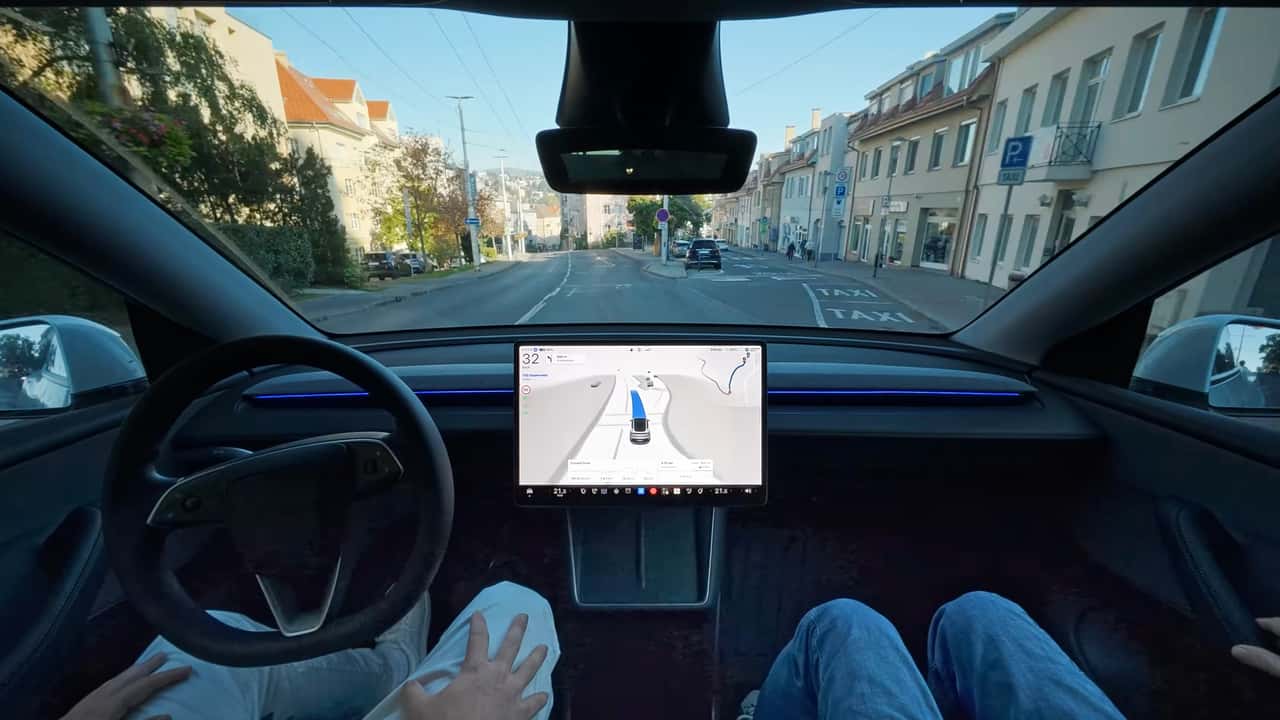

- Locals picked difficult Bratislava streets, where FSD handled tight gaps but needed several driver interventions.
- Missed restrictions, dead-end routing, and steering hesitation exposed weaknesses beyond basic maneuvering.
- FSD is expanding across Europe, where German scrutiny prompted a new name: Tesla Assisted Driving.
If you really want to make a driving-assistance system sweat in a city, ask the locals where to send it. That’s the premise of this Tesla Full Self-Driving outing in Bratislava, where local viewers who know the city supplied a deliberately difficult route packed with steep hills, narrow streets, and tricky junctions.
The 32-minute video published by robot*irl follows a Model Y through a deliberately difficult selection of roads in the Slovakian capital. Some maneuvers leave the driver impressed. Others have them reaching for the controls, including one they describe as their scariest FSD experience.
Things start off promisingly with a sharp U-turn across tram tracks, executed very well. The Tesla then threads through narrow hillside streets, gives people beside parked cars room, and negotiates tight corners. There’s occasional hesitation, including a brief brake application that the presenter attributes to a red directional signal intended for another lane.

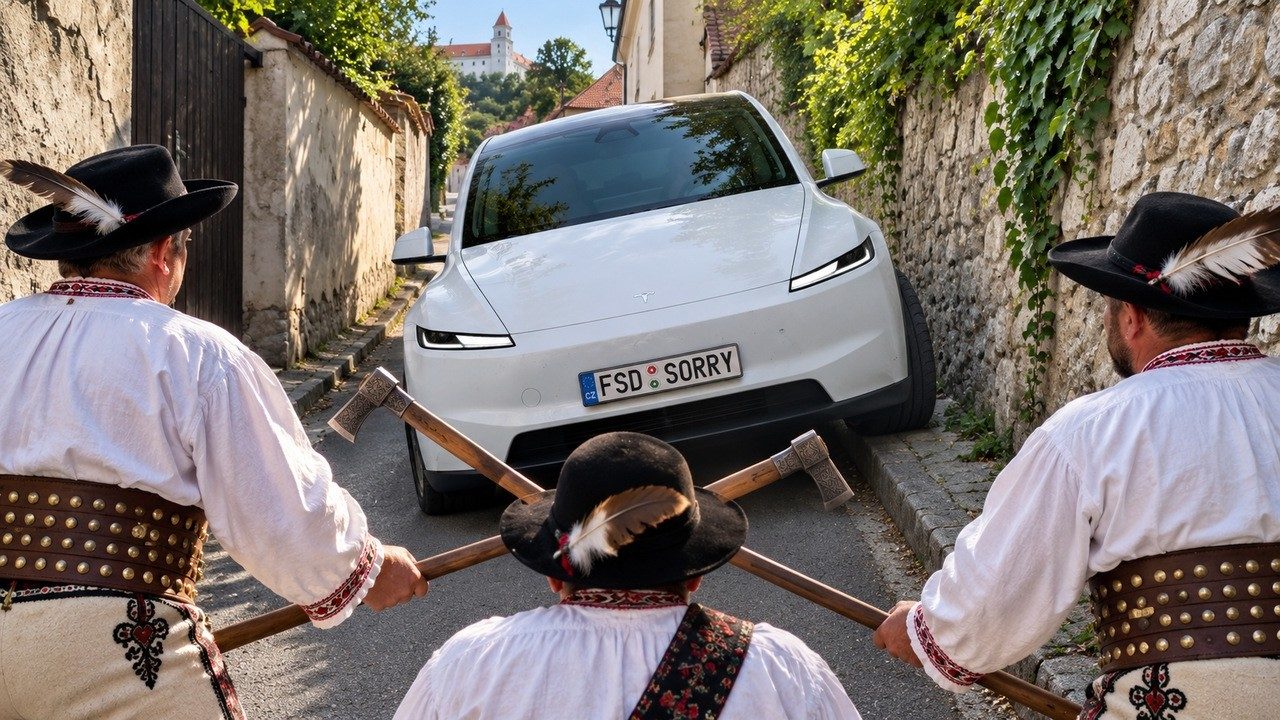
The first explicit takeover comes when the Tesla attempts to enter a street the driver says it isn’t allowed to use. He describes this as an intervention for legal, rather than safety, reasons, but the car should still obey road rules.
The driver takes over again on a steep dead-end road. It starts maneuvering out, but the driver gets uncomfortable with the clearance near its front corner and finishes the maneuver himself. He later says FSD probably could have handled it, and I can understand why they'd be unnerved by the maneuver, since new Teslas rely exclusively on cameras for tight maneuvering, which isn’t as good as ultrasonic sensors like every other car on the road.
Another dead-end reveals a routing problem. After reaching a waypoint, the Tesla attempts to continue down the street when the journey resumes. The driver intervenes and manually turns the car around to avoid reversing a long way back. So the car reached that waypoint, but finding a sensible way out proved harder.

It still gets plenty right, though. The Tesla yields to a dog, backs up to make room for an approaching Mercedes and eases down an intimidating slope. Later, it negotiates an exceptionally tight gap beside another vehicle and its trailer while the driver supplies a running commentary that sounds a lot like someone trying to land an airplane.
Road signs prove less straightforward. At one narrow passage, the presenter says a directional arrow clearly indicates which side to use, but the Tesla repeatedly favors the other side. He disengages and helps position the car for the correct passage. The biggest complaint, however, is a recurring steering-wheel wiggle. It appears several times in the video, particularly when the car seems uncertain about lane selection.
This seems like a more demanding outing than the earlier FSD drive through Aarhus, Denmark, that the same creator posted in September. That Tesla did a great job squeezing past cyclists, pedestrians, and cafe customers on narrow cobbled streets, with only minor mistakes noted. The Brussels drive was more mixed, blending impressive handling of traffic and complex junctions, but a wrong-lane maneuver ultimately required the driver to take over.
The European FSD rollout began with Dutch approval in April, following more than 18 months of assessment by the Netherlands’ RDW. Other countries could recognize that approval individually, while broader EU authorization would go through a separate process. Tesla now lists availability in ten European countries, including Slovakia and Latvia, but it's still not available in 17 more EU states.
Other countries’ authorities are seeking more answers. Sweden challenged FSD’s ability to exceed speed limits, while Finnish officials questioned its performance on snow and ice. Regulators also raised concerns about driver attention and whether the name overstated what the system could do.
Germany later backed broader European approval after talks with Tesla, including an agreement to cap the speed offset at 10%. Its transport ministry also called the Full Self-Driving name misleading, emphasizing that drivers must remain attentive and responsible. Tesla offered a replacement, and its German website now uses it: Tesla Assisted Driving.
RECOMMENDED FOR YOU

South Korean Police Are Cracking Down On Tesla Owners Jailbreaking FSD
The 2027 Kia EV9 Gets Some Standard Features That Used To Be Optional
Do Those Funky Tesla Wheel Covers Actually Boost Range?
Toyota’s New Hybrids And Plug-In Hybrids Will Be 15% More Efficient
'A Weird Religious Stance:' GM Exec Says Ditching Radar For Self-Driving 'Ignores Physics'
This New Bio-Inspired Membrane Could Make Lithium Extraction Much Cleaner
The Tesla Model Y's Structural Battery Was Nearly Impossible To Repair. The Cybercab Fixes That