Home
Tesla
News
How Tesla Is Pressuring European Regulators To Approve FSD
Elon Musk and his online army of fans said delayed FSD approval in Europe will cost lives. Scientists say they have no evidence to back those claims.
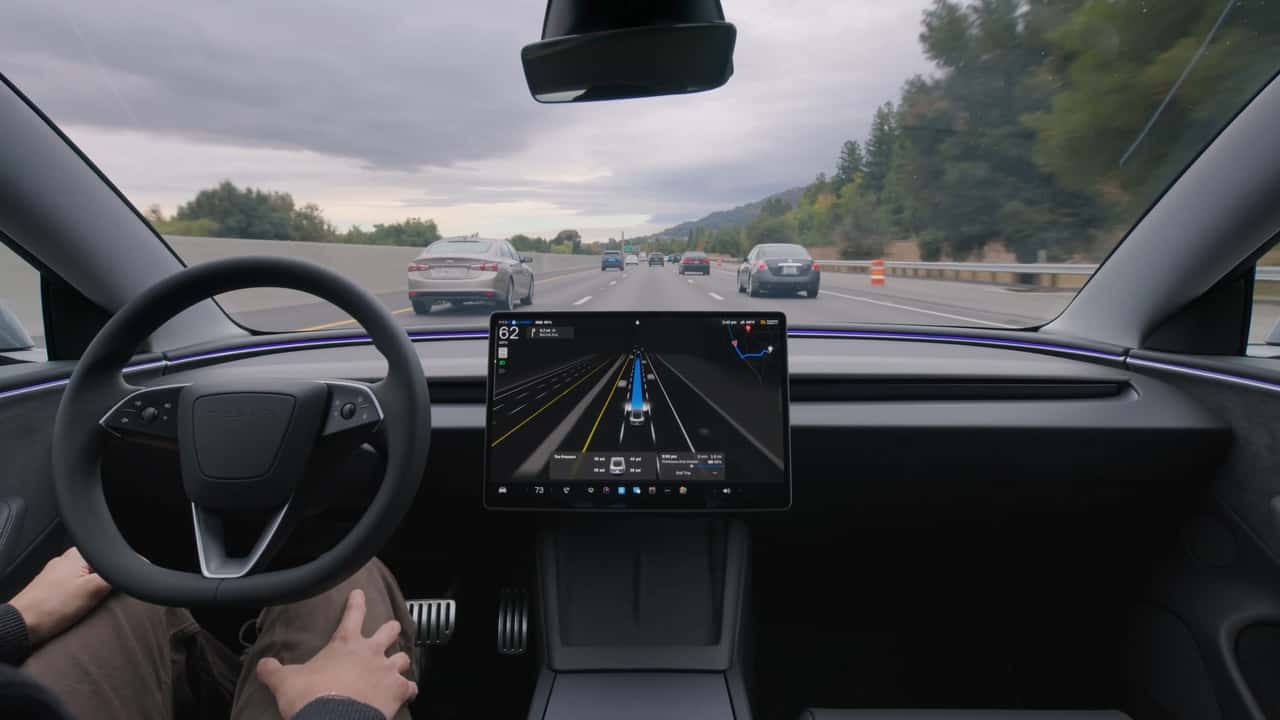
Photo by: Tesla
Suvrat Kothari 
By: Suvrat Kothari
Oct 7, at 3:10pm ET
Add InsideEVs as a preferred source in Google
- (https://twitter.com/intent/tweet?url=https%3A%2F%2Finsideevs.com%2Fnews%2F811098%2Ftesla-pressure-campaign-europe-fsd-approval%2F&text=How%20Tesla%20Is%20Pressuring%20European%20Regulators%20To%20Approve%20FSD&via=InsideEVs)
- copy
Share
Comment
- A new investigation revealed how Tesla was pressuring European authorities to approve its Full-Self Driving (Supervised) system.
- The automaker reportedly presented flawed safety data, which had no independent third-party reviews, to safety regulators in Europe.
- Dozens of Tesla fans emailed regulators in Europe, claiming the authorities would be responsible for deaths if FSD roll out was delayed.
Tesla is pressuring European regulators to approve its Full Self-Driving (Supervised) advanced driver-assistance system, claiming that delays in rolling out FSD across the continent are costing lives. But scientists said there was no evidence to support that claim, according to an explosive new investigation by Reuters.
The outlet reviewed internal emails between Tesla and the Dutch regulator RDW, interviewed agency staffers, and sought the views of seven independent traffic-safety researchers, who identified significant flaws in safety reports Tesla submitted to European authorities. As part of its campaign, Tesla also rallied its fans to pressure European regulators to approve FSD speedily, according to the investigation.
FSD is kind of a big deal for Tesla right now. CEO Elon Musk has bet the company's future on autonomy, AI, and robotics unlocking its next phase of growth. A version of FSD also powers Tesla's Cybercab and Model Y robotaxis in the U.S., although the rollout of that has been notably slow. For Tesla's passenger cars, expanding FSD into Europe could also open up a huge new market worth millions in additional subscription revenue.

Photo by: Tesla
However, there are no publicly available independent or peer-reviewed studies showing that FSD is actually safer than a human driver. Which means authorities have to take Tesla's word for it before conducting their own tests.
According to the investigation, Tesla couldn't make a meaningful case for FSD’s improved safety over human drivers in an “Evidence Dashboard” submitted to European regulators in April. The data reportedly covered far fewer FSD test miles than the hundreds of millions of miles covered by Tesla drivers. Instead, Tesla pointed to “behavioral surrogates” such as horn use, sudden acceleration and deceleration, low turn-signal usage, and automatic emergency braking to demonstrate that FSD was safer.
Researchers told the outlet that some of these measures are poor proxies for actual crash risk. More importantly, none of the seven researchers interviewed by the outlet believed the study demonstrated that FSD prevents fatal crashes.
What’s perhaps more jarring is that internal emails showed Tesla repeatedly pushing the Dutch RDW to reduce the scope or intensity of its evaluation. After Tesla complained about the cost and extent of the review, an RDW staffer offered to discuss ways to “adjust or reduce” the required scrutiny, according to the report. That raises an obvious question: How independent can a safety assessment be if the company being evaluated is negotiating with the regulator over how rigorous that evaluation should be?
The RDW pushed back on that characterization. In response to the investigation, it said the exchanges with automakers were “a routine part of the assessment process and does not compromise the independence or thoroughness of our assessment.”
The Netherlands ultimately approved FSD, and several other countries followed, including Belgium, Denmark, Estonia, Lithuania, Czechia, Slovenia, and Croatia. France and Norway have taken a more cautious approach, while Germany appears to be on track to approve the system and has said it will advocate for EU-wide approval. Tesla also agreed to rename FSD “Tesla Assisted Driving” in Germany after authorities objected to the original name.
Tesla and Musk also used X, the social media platform the trillionaire CEO owns, to mobilize Tesla fans to pressure European regulators to approve FSD. Officials in Sweden and Norway received dozens of emails from Tesla fans asking for a speedy roll out of the technology in the countries, Reuters said. And in some emails, Tesla fans essentially told regulators that they would be responsible for deaths if FSD wasn't approved.
There are few things worth remembering here. Despite its misleading name, FSD isn't a fully autonomous driving system. Tesla says drivers remain responsible for crashes and must be ready to take over at all times. Users say the system has grown more capable over the years, as it gathers data from millions of Teslas on the road to train and improve its behavior. FSD can help Teslas steer, accelerate, brake and even park on their own, but the driver must continuously supervise.
What do you think?
View
Comments
As of the second quarter, Tesla said FSD had about 1.5 million subscribers worldwide, and many drivers appear to be happy with the system. But social media videos also regularly show FSD making questionable decisions, including flouting traffic rules, exceeding speed limits, and failing to recognize obstacles. Fatal crashes involving Teslas with FSD are also under investigation by the National Highway Traffic Safety Administration here in the U.S.
Now an EU-wide vote on FSD is pending. The automaker needs support from 55% of member countries representing at least 65% of the bloc's population. What remains to be seen is whether European regulators independently scrutinize Tesla's claims before giving FSD the green light, or if the company's pressure campaign will make them buckle.
Related Stories
Tesla FSD Just Got The Green Light From Germany. But It Might Need A New Name
The Tesla Model 3 And Model Y Can Now Power Your Home In A Blackout
Tesla Sales Are Down. But They're Doing A Lot Better Than Some Competitors
Tesla Will Now Let You Drive Away From A Supercharger In An Emergency
We want your opinion!
What would you like to see on Insideevs.com?
Take our 3 minute survey.
- The InsideEVs team
Share this Story
- (https://twitter.com/intent/tweet?url=https%3A%2F%2Finsideevs.com%2Fnews%2F811098%2Ftesla-pressure-campaign-europe-fsd-approval%2F&text=How%20Tesla%20Is%20Pressuring%20European%20Regulators%20To%20Approve%20FSD&via=InsideEVs)
- copy
GO TO COMMENTS
(
)
Got a tip for us? Email: tips@insideevs.com
View all comments ( )
Trending
‘We’re Moving Really Fast’: Ionna CEO On 500 kW EV Chargers And Flagship New Location
Every EV Motor Type Explained: They Aren't All The Same
I Tried Mercedes' Answer To Tesla FSD. Here's How It Went
Tesla Model 3 Maintenance Guide: What Needs Servicing And What Doesn't
Latest Stories
- Ford Just Started Fathom LFP Battery Production In Michigan. It's A Big Deal Nov 18 - Battery Tech -
- This GM EV1 Lives After A Painstaking Restoration Nov 18 - News -
- ‘We’re Moving Really Fast’: Ionna CEO On 500 kW EV Chargers And Flagship New Location Nov 18 - Charging -
- BMW's First U.S.-Made EV Is Now Rolling Off The Assembly Line Nov 18 - Manufacturing / Production -
- EV Owners Aren’t Worried About Their Batteries. They’re Worried About Myths Nov 18 - News -
- The Polestar 4 Is Getting Vehicle-To-Load, But The U.S. And Canada Are Left Out Nov 18 - Software -
- Waymo Pulls Its Robotaxis Off All U.S. Highways After California Ban Nov 18 - Autonomous Vehicles -
RECOMMENDED FOR YOU
Chevy, GMC, and Cadillac EV Owners Can Now Plug And Charge At Electrify America
Ford Just Started Fathom LFP Battery Production In Michigan. It's A Big Deal
Tesla Keeps Killing Cars. Now It Wants To Build Cybercabs In Germany
This GM EV1 Lives After A Painstaking Restoration
Tesla Model 3 Maintenance Guide: What Needs Servicing And What Doesn't
‘We’re Moving Really Fast’: Ionna CEO On 500 kW EV Chargers And Flagship New Location
Tesla Just Bumped The Cheapest Model Y’s Range, But The Price Stays The Same