
Tesla Sold FSD To Koreans Who Still Can't Use It. Now It's Facing A Complaint
Data shows that 99% of Teslas imported into Korea last year can't activate Full Self-Driving, even if owners paid for the feature.
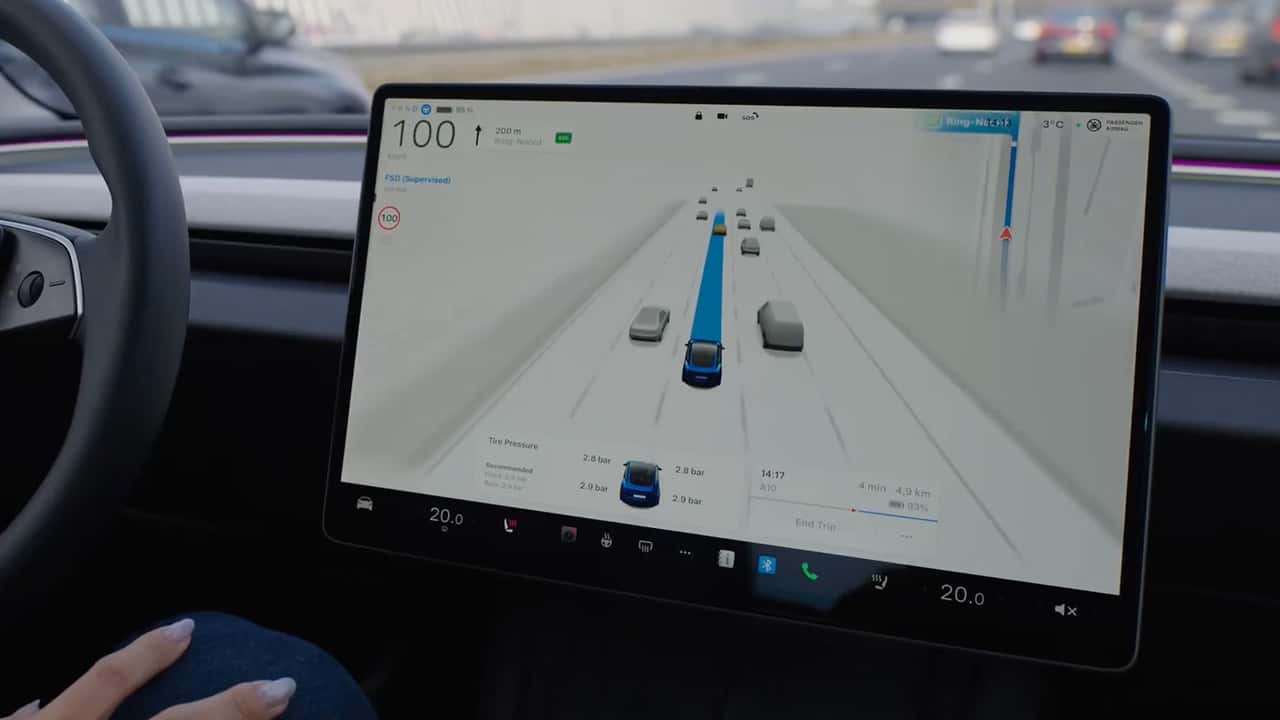

- Korean owners allege that Tesla failed to deliver on its FSD promises.
- About 80% of Teslas sold in South Korea since 2023 are ineligible to activate FSD today due to import restrictions.
- A court rejected a lawsuit from 2024, but a new complaint to a regulatory agency relights the fire as an advertising issue.
Tesla's Full Self-Driving will turn 10 years old next month. Nearly four of those years have labeled FSD as an official beta product, and over two additional years have been under the new "Full Self-Driving (Supervised)" rebranding. Whatever the name, the car that is in your driveway today still can't technically drive itself without you being responsible for what happens behind the wheel.
Needless to say, some drivers are getting impatient—especially those who have purchased FSD for multiple cars, or have managed to pay off their car loan before getting unsupervised FSD. Now a consumer advocacy group in South Korea is firing back to demand answers and accountability.

The rollout of FSD in Korea is even more confusing that it is in the U.S. thanks to another layer of complexity: where the vehicle was manufactured.
According to Reuters, only about 20% of the Teslas registered in South Korea—vehicles assembled in the United States—are actually eligible to enable the Full Self-Driving software. That's because those vehicles meet the U.S. Federal Motor Vehicle Safety Standards, and a trade agreement with the U.S. designates those standards as acceptable to enter Korea without additional modification.
The majority of the remaining vehicles have been manufactured in China, where no agreement (or supplementary safety certification) for its FSD software exists today. Since 2023, Tesla has imported about 170,000 of these Shanghai-built cars with the volume of Chinese-built cars increasing five-fold last year alone. In fact, 99% of Teslas imported into China in 2025 were from China and ineligible to activate FSD.
A complaint being filed by Korean consumer advocacy group Citizens United for Consumer Sovereignty (reviewed by Reuters) with the Korean Fair Trade Commission alleges that Tesla has still been collecting money from buyers for its FSD software for over three years, despite the software not being available to buyers due to this restriction. This meant buyers forked over as much as $6,800 for the feature, but haven't actually been able to switch it on. Some buyers instead resorted to enabling region-locked FSD via a "jailbreak," which is seen as a safety circumvention and led to owners facing jail time or fines of up to $15,000.
Things get a bit more complicated given the recent legal loss raised by dozens of Tesla owners who had their lawsuit thrown out of Korean courts just last week. According to the ruling from the Seoul Central District Court, Tesla didn't technically break its contractual obligations with the 88 owners who requested full refunds via a lawsuit filed in 2024.
The court acknowledged that Tesla's delivery of the features promised with FSD hinged on certain technical advances and regulatory approval that buyers were aware could "take considerable time to become available," according to reporting by the South China Morning Post. If those didn't happen, the court says that Tesla isn't in the wrong.

The complaint by Citizens United raises additional questions about the way that Tesla advertises its vehicles to consumers. And they're not the first. The KFTC confirmed to Reuters that it launched a probe into Tesla's advertising earlier this year, but declined to comment further. Tesla didn't respond to the outlet's request for comment.
Whether or not this avenue will result in action after the court's ruling that buyers weren't entitled to a refund is unclear.
More Tesla FSD News
RECOMMENDED FOR YOU
Used EVs Are Selling Like Hotcakes. The Fastest Movers May Surprise You
Waymo And Uber's Robotaxi Partnership Is Ending
Tesla Warned Owners Not To Test Emergency Drive Away. Some Did Anyway.
Uber Wants Thousands Of Robotaxis By 2027. Waymo Is Already There
One Year Without EV Tax Credits: 4 Key Takeaways
China Has An Iron Grip On EV Batteries. Here's America’s Plan To Break It
Tesla's Cybercab Is Built In A Radical New Way. Here's How It Works