
Tesla's Cybercab Fixes A Big Repairability Problem With Its Structural Batteries
Tesla gave the Model Y's structural battery pack a "D" grade. It says the Cybercab's pack is easier to make and more repairable.
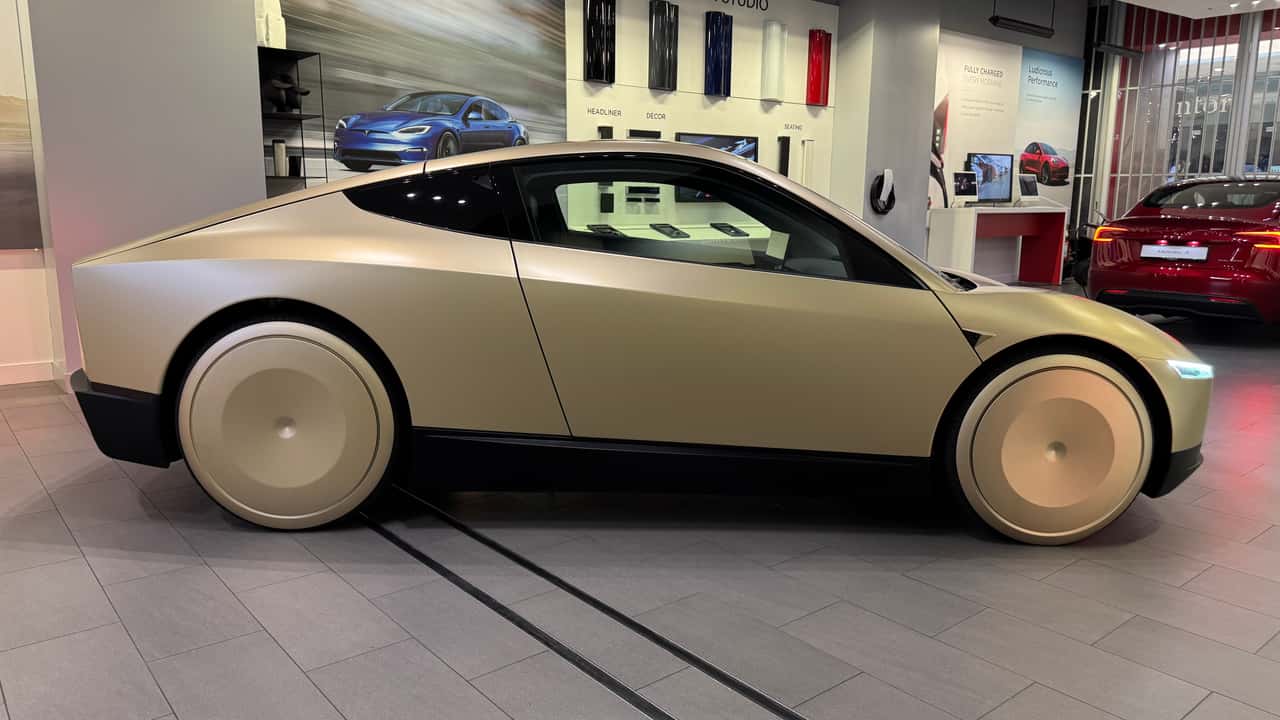

Tesla helped pioneer a shift toward structural battery packs that eliminate traditional modules to save weight and squeeze more energy into a smaller space. But with its latest vehicle, America's EV leader is moving in the other direction in the name of repairability.
Instead of embedding hundreds of in-house 4680 battery cells into a single, tightly integrated assembly, as Tesla did with the structural battery packs found in some Model Ys and the Cybertruck, the Cybercab contains four separate modules of those cells. That means a faulty module can be swapped out without replacing the entire battery pack. Tesla executives explained the decision in a video on YouTube channel of the engineering firm Munro & Associates.
"It's good to be self-critical," said Robert Sumpf, the director of mechanical design engineering for Tesla's battery modules and packs. "I'm going to give our Model Y structural battery a grade D," he added, noting that it was an "awesome product" to the customer but was hard to build.

Tesla 4680 battery cells assembled in a structural pack, without the potting shown.
The other issue with the structural approach is serviceability, he said. Since all the cells are bound together in the pack using a hard potting material, it's practically impossible to repair the battery if one cell is defective, for example. Indeed, after tearing down a Model Y with a structural pack a few years back, Munro & Associates concluded that its battery had "zero repairability."
There are advantages to getting rid of conventional module structures (the building blocks of a battery pack) and making the battery itself structural to the vehicle, in that the design lets manufacturers stuff more cells into a given area and save some material costs. It's why automakers including BMW, Porsche, and Ford are now designing cars with cells that go directly into packs or even directly into the vehicle's body structure.

Tesla's top brass, though, didn't think the serviceability tradeoff was worth it in the Cybercab. Sumpf described the Cybercab's design as "semi-structural." "You're going to get maybe 10% more volume for cells in a structural pack when you delete the structure," Sumpf said. "You're going to save a little cost as a result, but the issue is the service cost."
In general, studies show that EV batteries rarely fail. Degradation is typically predictable and manageable over the lifetime of a consumer EV. However, the Cybercab is supposed to hold up hundreds of thousands of miles of round-the-clock abuse as a robotaxi. That may help explain the decision to switch things up battery-wise. Sure, a structural, module-free pack may help eke out a few extra miles of range, which is great for selling EVs to regular people. But for a fleet-based business, total cost of ownership (TCO) is everything.
"When you think of TCO as we've talked about, replacing an entire pack before half a million miles is a killer on cost," Eric Earley, the Cybercab's chief engineer, told the Munro Live YouTube channel. "So we have to think of [remanufacturing], we have to think of pack serviceability, we have to think of all those things that actually get us to our cost target for the product."
Contact the author: Tim.Levin@InsideEVs.com
We Think You'll Enjoy...
RECOMMENDED FOR YOU
The BMW iX3 Destroyed The Rivian R2 In A Highway Range Test
GM Didn't Want Hybrids. Now It's Putting Them In Its Biggest SUVs: Report
The Longest-Range EVs You Can Buy In 2026
ChargePoint’s New Charger Can Hit A Whopping 750 kW. That's Not Even Its Best Trick.
The Tesla Model 3 And Model Y Can Now Power Your Home In A Blackout
The Ford Fathom's Home Backup System Will Be Way Cheaper Than The F-150 Lightning's
This Cheap Tesla Model S With 135,000 Miles Has A Surprising Amount Of Range Left