
ChargePoint’s New Charger Can Hit A Whopping 750 kW. That's Not Even Its Best Trick.
The Express Solo promises cheaper installation and can shift power between plugged-in cars to make better use of what’s available.
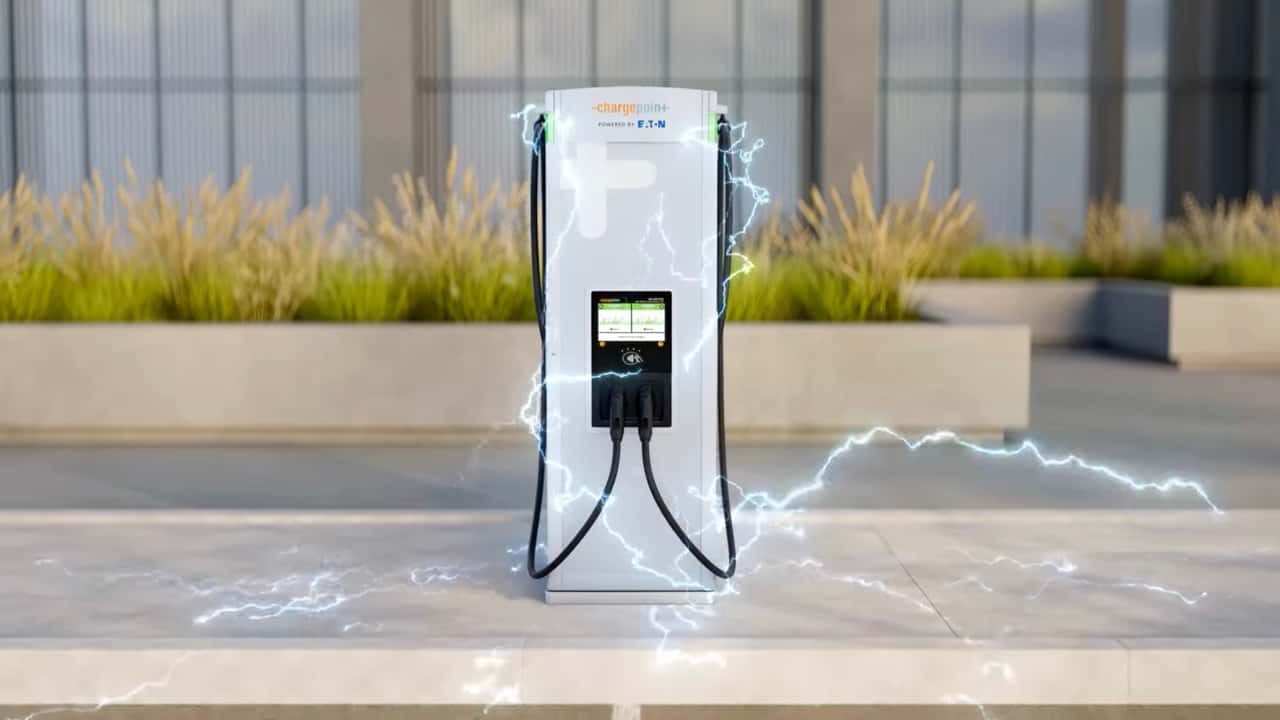

- Two paired Express Solo stations can deliver up to 750 kW to one port, sharing power across connected EVs.
- The all-in-one design simplifies installation and lets operators add plugs without another complete charger, ChargePoint says.
- Solar and battery storage integration could lower operating costs and reduce reliance on expensive grid power.
The charging-speed war is fully on in the United States, with ChargePoint announcing on Tuesday that its latest EV charger can send a whopping 750 kilowatts to one plug. But the Express Solo isn't just about power—it promises to make high-powered fast-charging stations easier to install, expand, and operate thanks to some clever engineering.
Developed with Eaton, the Express Solo combines the charger and power conversion equipment in a single enclosure. It eliminates the need for a large, separate power cabinet, reducing the wiring and groundwork needed to get everything connected up. ChargePoint calls it the most powerful standalone charger in the U.S.

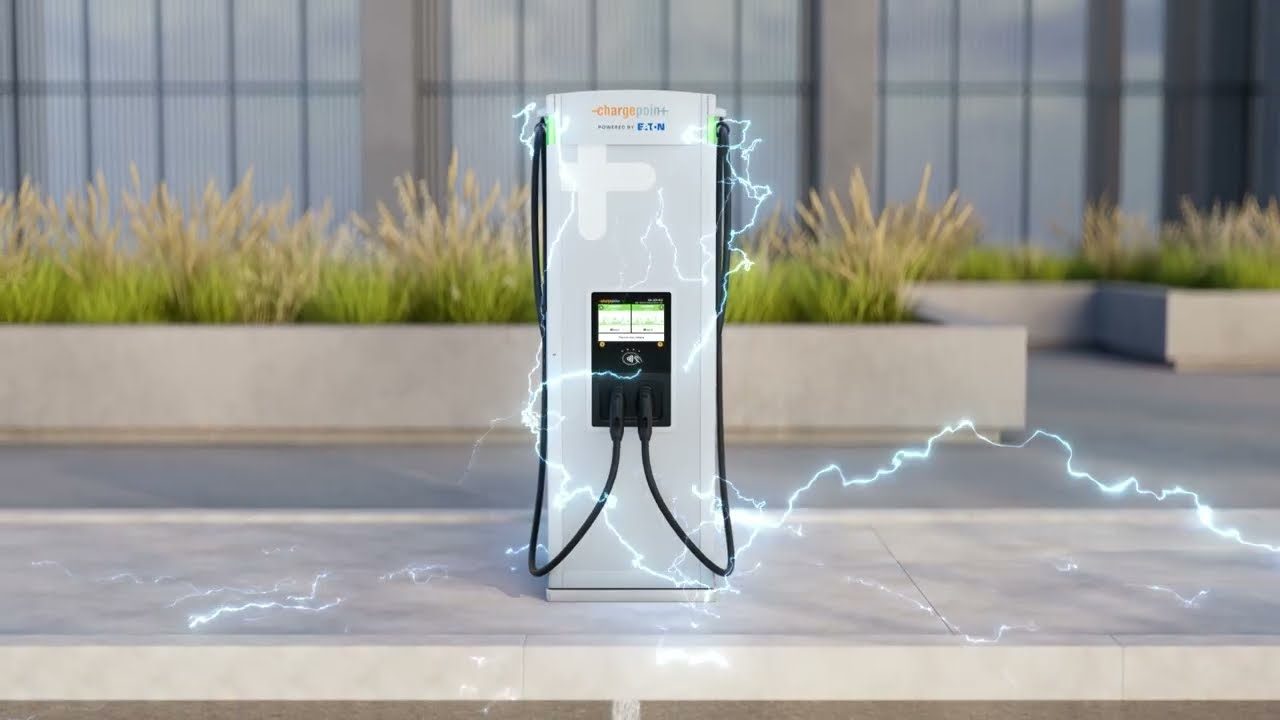
The Solo comes in 200-, 400-, and 600-kW configurations that can deliver up to 800 amps. In order to achieve the headline charging power figure of 750 kW delivered to a single port, you need at least two connected stations. They will share available power across up to four connected vehicles, meaning that all four won't get 750 kW simultaneously. But if a vehicle shows up that can accept 750 kW and there aren't a bunch of other vehicles plugged in, then it may pull that peak amount. That wouldn't be a passenger vehicle, of course, but rather an electric big rig like the Tesla Semi, which can pull over a megawatt.
ChargePoint pitches the Solo as the basis of a charging system that can distribute the available power to make the best use of it. So if one car can only accept a modest charging rate, the system can direct more of the available output to another that can use it.
ChargePoint and Eaton’s earlier microgrid announcement outlined how chargers could draw power directly from on-site batteries and solar panels, promising to reduce conversion losses and reliance on grid electricity when it’s most expensive.
The Solo also offers practical improvements for drivers, such as an Omni Port system of built-in adapters in order to offer both CCS and NACS connectors. The cables are suspended on moving arms, allowing the plug to reach any car's plug location, ChargePoint says. It also touts cut-resistant cables and an alarm system help deter vandalism by using the station’s speakers, screen, and lights to draw attention when it detects tampering.
For drivers, finding a more powerful charger won't shorten your stop if your EV can't take the extra power. But the ability to more easily shift power between plugs at a station could be a big convenience upgrade. If you've ever pulled up to a charging station only to find a Chevy Bolt occupying the last available 350-kW stall, you know that charging capacity isn't always put to its best use.

RECOMMENDED FOR YOU

Tesla Designed The Cybercab To Use LFP Cells In The Future
This Cheap Tesla Model S With 135,000 Miles Has A Surprising Amount Of Range Left
Tesla And Turo Have A New Way To Get People Hooked On FSD
The Ford Fathom's Home Backup System Will Be Way Cheaper Than The F-150 Lightning's
Audi Recalls 9,048 Q4 E-Trons Because The Battery Could Catch On Fire
Is The Hyundai Ioniq 6 A Good Used Buy? An Owner's Thoughts After 30 Months
Chery Joins China’s EV Charging Race With A Bold Promise