Home
Porsche
News
Porsche Wanted To Make An Electric Boxster. Now It May Just Kill It
The next-generation Porsche 718 was supposed to be EV-only by 2025. But its plans may be changing.
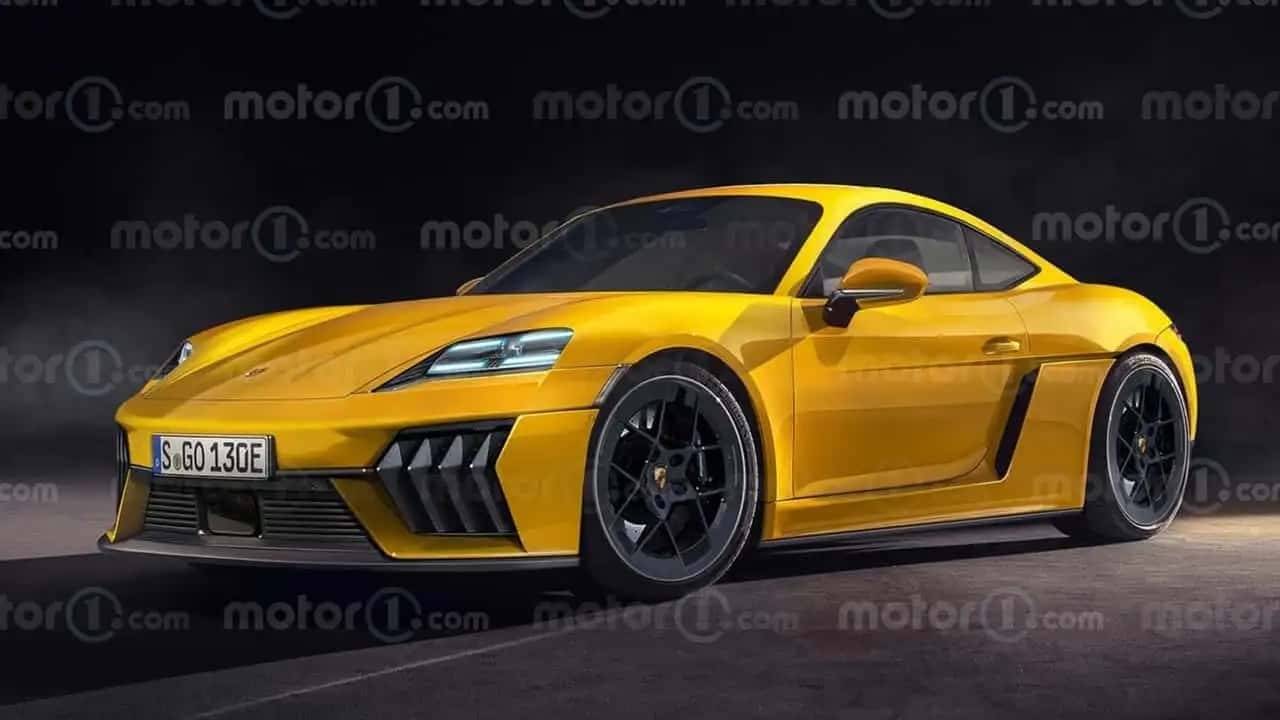
Photo by: Motor1.com
Mack Hogan 
By: Mack Hogan
Feb 2, at 2:15pm ET
Add InsideEVs as a preferred source in Google
- (https://twitter.com/intent/tweet?url=https%3A%2F%2Finsideevs.com%2Fnews%2F786169%2Fporsche-boxster-cayman-ev-canceled%2F&text=Porsche%20Wanted%20To%20Make%20An%20Electric%20Boxster.%20Now%20It%20May%20Just%20Kill%20It&via=InsideEVs)
- copy
Share
Comment
- The next-generation Porsche 718 Cayman and 718 Boxster were supposed to be purely electric.
- Porsche later said it would launch gas versions, and is now reportedly considering canceling the EV version entirely.
- The sports car market has already shrunk considerably, and its unclear if sports car buyers are open to EVs.
The all-electric Porsche 718 Boxster and Cayman may die before they ever get the chance to live, a new report from Bloomberg says.
Porsche is in the midst of an ongoing cash crisis, as both the luxury brand and its parent automaker, the Volkswagen Group, have seen sales collapse in China. At the same time, Porsche in particular is seeing a slower-than-expected transition to EVs and struggling to develop competitive software, all while tariffs hammer its bottom line. The company urgently needs to cut costs.
Now, that could put the electric 718 Cayman and 718 Boxster on the chopping block. Porsche's entry-level coupe and convertible models, respectively, the 718 Cayman and 718 Boxster, were supposed to go all-electric for their next generation. The company announced in March 2022 that the purely electric sports cars would debut in 2025.

This is an artist's rendering of what a 718 Cayman EV could look like. Porsche has not shared images or details on the model.
Photo by: Motor1
This was supposed to be a huge deal for the sports car market. Porsche is arguably the most important sports car brand, and making one of its two core sports car lineups all-electric would be a huge sign of confidence.
Unfortunately, in the years since the company made its bold claim, it has lost much of that confidence. It first planned to make the Macan SUV fully electric, but quickly decided to keep selling the gasoline Macan alongside the electric version when demand seemed lower than expected. Porsche now says there will be a gas replacement to go alongside the electric version. The Cayenne EV, too, won't replace its gas counterpart fully. A new gas and hybrid generation will arrive in a few years.
The Macan Electric was supposed to fully replace the gas Macan. Unfortunately for Porsche, buyers didn't go along with that plan, which is why it's now developing a next-generation gas Macan.
Photo by: Porsche
Meanwhile, Porsche has been backpedaling on its ambitions for the electric 718 for some time. First, it said that high-performance trims of the 718 would offer gas engines. Shortly thereafter, Car and Driver reported that there would be gas variants across the entire lineup.
But now, the EV version—the lone powertrain plan for the first few years of development—may not come at all. Bloomberg cites multiple sources with knowledge of internal Porsche discussions, who say that new CEO Michael Leiters is weighing cutting the company's losses.
Porsche declined to comment for this story.
The tumultuous development process has left the company with an EV-oriented platform in a segment that, for now, seems cool on electrification. And while I'm a big fan of sports cars and EVs, I can certainly see Porsche's hesitation.
The Cayenne Electric is Porsche's most advanced EV yet. But there will still be an entirely separate gas model for the foreseeable future, Porsche says, with an all-new model coming in a few years.
Photo by: Porsche
I was with a group of Porsche 911 and Boxster owners this weekend, and the discussion largely centered on weight, the relative engagement of manual and dual-clutch transmissions, the exhaust note of the 911 GT2, different light-weight option packages, the history of air-cooled motors and the "purity" of driving experiences. If you know Porsche folk, this is all they talk about, even during therapy. They have spent decades specifically worshiping rear- and mid-engined cars with flat sixes. They are a tough market for silent electric sports cars, which are bound to be heavier and less traditional than the 20th-century legends they worship.
Yet Porsche owners are excited about technology, and persuadable. The Taycan's performance credentials are unassailable, and the new Cayenne Electric seems to be a high-tech powerhouse. I remain confident that, in the long-term, electric sports cars will take off. The opportunities offered by quad-motor designs and instantaneous, limitless power remain broad and largely untapped.
But right now, in a cash crunch, I can see the logic here. The sports car market is a shadow of its former self, with few options, and fewer still that are popular and profitable. Those who do buy sports cars are typically older, richer and more passionate about their engines.
Try as you might, I don't think you're going to win over 50% of those buyers next year, let alone all of them.
Related Stories
The New Porsche Cayenne Electric Hits Reset On What An EV SUV Can Be
Porsche 718 Cayman And Boxster EVs: Everything We Know
Porsche Is Making Another Gas-Powered Boxster. Here's Why EV Fans Shouldn't Be Mad
2026 Polestar 6 Is Being Designed As An Electric Porsche 911 Rival
To win them over, EVs have to far outstrip gas sports cars not just in acceleration, but also in dynamics, engagement and outright pace. It's not enough to beat gas-cars in a straight line; They have to smash gas-car track records, and get cheaper, and, most importantly, lighter. Because as fast as modern EVs are, the lighter curb weight of gas sports cars gives them more responsive handling, better turn-in, better steering feel, better braking, and a more engaging experience overall.
On the flip side, the engine in a $500,000 gas supercar can't compare to an electric motor. Electric motors are more responsive, more torquey, more powerful for your dollar and smoother than any gas engine, with no obnoxious noise to annoy passersby. They're more efficient, more robust, easier to make long-lasting, easier to cool and simpler. Just plain better.
What do you think?
View
Comments
Once a company can pair those attributes with the curb weight and price of a gas sports car, the EV transition will progress naturally. Until then, though, I expect electric sports cars to remain a tiny fraction of the overall sports car market, which is itself a rounding error to the industry at large.
Contact the author: Mack.Hogan@insideevs.com
We want your opinion!
What would you like to see on Insideevs.com?
Take our 3 minute survey.
- The InsideEVs team
Share this Story
- (https://twitter.com/intent/tweet?url=https%3A%2F%2Finsideevs.com%2Fnews%2F786169%2Fporsche-boxster-cayman-ev-canceled%2F&text=Porsche%20Wanted%20To%20Make%20An%20Electric%20Boxster.%20Now%20It%20May%20Just%20Kill%20It&via=InsideEVs)
- copy
GO TO COMMENTS
(
)
Got a tip for us? Email: tips@insideevs.com
View all comments ( )
Trending
Lucid Is Slashing $15,000 Off The Gravity, But The Deal Won’t Last Long
The Remnants Of The Electric Saab That Never Was Are Going Up For Auction
What We Both Thought After Driving The Rivian R2
Aptera Finally Built Its First Car For Customer Delivery
Latest Stories
- Tesla FSD V15 Makes Your Drive Look Like Grand Theft Auto Nov 22 - News -
- Waymo Is Recalling Its Robotaxis Because They're Not Great At Dealing With Human Instructions Nov 21 - Autonomous Vehicles -
- This EV-Swapped 1967 Porsche 912 Has 300 HP And A Split Battery Pack Nov 21 - News -
- This Plug-In Hybrid SUV Towed A Boeing 747 On Only 2 Wheels. Yes, Really. Nov 21 - Towing -
- BYD's Latest SUV Can Hide Its Steering Wheel When You Don't Need It Nov 20 - China -
- What We Both Thought After Driving The Rivian R2 Nov 20 - Podcast -
- Hyundai’s N Vision 74 Was One Of The Coolest Car Designs In Recent Memory. Now It's Shelved Nov 20 - News -
RECOMMENDED FOR YOU
This EV-Swapped 1967 Porsche 912 Has 300 HP And A Split Battery Pack
Tesla FSD V15 Makes Your Drive Look Like Grand Theft Auto
The Best EV Lease And Finance Deals In November 2026
Waymo Is Recalling Its Robotaxis Because They're Not Great At Dealing With Human Instructions
This Hedley Studios Porsche 550 J Is A Shrunken Electric Replica Track Toy
This Plug-In Hybrid SUV Towed A Boeing 747 On Only 2 Wheels. Yes, Really.
BMW’s iX5 Beat The Lucid Gravity On Highway Range. Not On Efficiency