Home
News
Why You're Less Likely To Get Rear-Ended By An Electric Car
But you're more likely to be rear-ended in one.
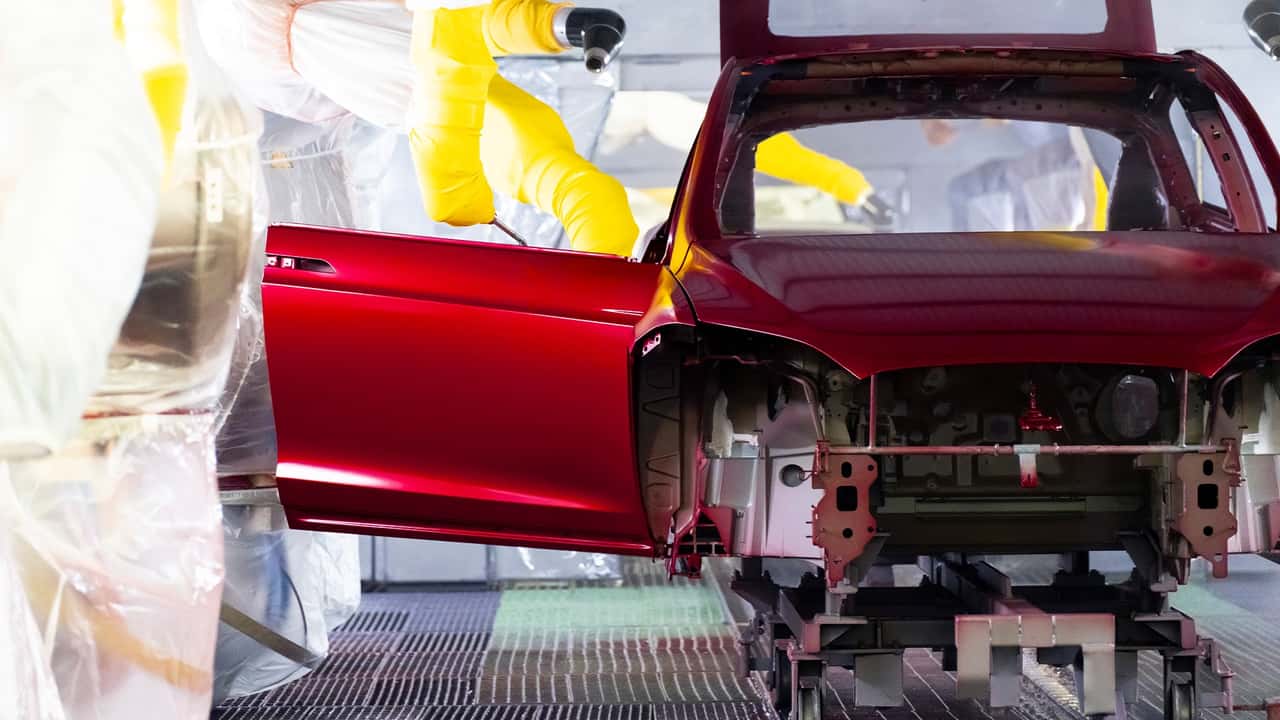
Photo by: Tesla
Rob Stumpf 
By: Rob Stumpf
Nov 14, 2024 at 11:00am ET
Add InsideEVs as a preferred source in Google
- (https://twitter.com/intent/tweet?url=https%3A%2F%2Finsideevs.com%2Fnews%2F740902%2Fless-likely-rear-ended-ev%2F&text=Why%20You%27re%20Less%20Likely%20To%20Get%20Rear-Ended%20By%20An%20Electric%20Car&via=InsideEVs)
- copy
Share
Comment
- EVs are less likely to rear-end other cars thanks to improved frontal collision avoidance tech
- They are, however, more likely to be rear-ended
- EVs still take more time and are more expensive to repair versus gas-powered cars
It turns out that driving an EV could make you less of a road hazard—at least from behind. A new study shows that EVs are racking up fewer and fewer front-end collisions compared to their gas-powered counterparts. The data shows that ICE cars are, on average, 6% more likely to be involved in a repairable front-end collision than EVs (32% vs 26%, respectively). So what's the secret, exactly? Well, it's all that fancy new driver-assistance tech!
Let's dive into why EVs are winning this battle. The major reason is just how new EVs are to market; fresh-off-the-line EVs on the road have a newer average model year compared to most gas-powered models. This means newer and more refreshed tech planted in EVs—lane-keeping, front-crash avoidance systems, and automatic emergency braking—are all doing their job quite well and padding the stats in the EVs' favor.

Photo by: Tesla
Interestingly, while repairable EVs are less likely to hit a vehicle from the front, they're more likely to be plowed into from the rear. The study shows that 36% of BEV repairs are for rear-end impacts versus 28% of ICE vehicles. This sounds like such a weird statistic, doesn't it? But stay with me here, because there might be an easy explanation as to why.
The study hypothesizes that regenerative braking could be to blame. Specifically, it calls out the difference in driving dynamics when driving an EV in single-pedal mode versus using friction braking to slow down an ICE-powered car. Despite EVs becoming more popular, they still only make up around 8% of new vehicle sales, so drivers—you know, the ones tailgating you while weaving in and out of traffic—might not be ready for an EV's regenerative braking to do its thing when the driver lifts off the gas pedal abruptly.
Let's talk turkey while we're here. Front-end collisions are significantly more expensive to fix than being hit in the rear. The study estimates that repair costs are, on average, around 40% higher for front-end crashes, making EVs an unexpected ally in this department. The flip side is that they're still more expensive in the shop and take longer to repair.

Get the best news, reviews, columns, and more delivered straight to your inbox.
back
Subscribe For more info, read our Privacy Policy & Terms of Use.
This could be due to the overwhelmingly high use of OEM parts to complete repairs. The study goes on to point out that 90.3% of parts used in BEV repairs are OEM parts directly from the manufacturer. ICE vehicles use around 64.4%, which helps to cut down on costs. And to rub salt in the wound, fewer parts can be repaired instead of replaced in EVs (12.4% vs 13.9%, respectively).
What do you think?
View
Comments
These stats don't mean that EVs are getting totaled at a higher rate than ICE. In fact, the total loss frequency is nearly the same, differing by less than one-tenth of a percent. However, the average total loss of an EV is higher at $32,718 for BEVs in Q3 versus $31,070 for model year 2021 and newer ICE cars.
It's only a matter of time before refreshed gas cars get equipped with similar tech that helps avoid those embarrassing "whoops" moments behind the wheel. For now, you can at least feel a little bit more secure pulling up to a red light when an EV is behind you—just hope that the EV driver doesn't have a speeding ICE car coming up behind it.
More EV Safety News
Tesla Just Released Autopilot Crash Data. We Have Doubts
BMW’s Best-Selling EV Recalled Because Chassis Beam May Crack
Self-Driving Cars Aren’t Making Roads Safer. But These Systems Are
How Hyundai And Kia Are Dealing With EV Fire Concerns In Korea
We want your opinion!
What would you like to see on Insideevs.com?
Take our 3 minute survey.
- The InsideEVs team
Share this Story
- (https://twitter.com/intent/tweet?url=https%3A%2F%2Finsideevs.com%2Fnews%2F740902%2Fless-likely-rear-ended-ev%2F&text=Why%20You%27re%20Less%20Likely%20To%20Get%20Rear-Ended%20By%20An%20Electric%20Car&via=InsideEVs)
- copy
GO TO COMMENTS
(
)
Got a tip for us? Email: tips@insideevs.com
View all comments ( )
Trending
‘We’re Moving Really Fast’: Ionna CEO On 500 kW EV Chargers And Flagship New Location
Every EV Motor Type Explained: They Aren't All The Same
I Tried Mercedes' Answer To Tesla FSD. Here's How It Went
Tesla Model 3 Maintenance Guide: What Needs Servicing And What Doesn't
Latest Stories
- Ford Just Started Fathom LFP Battery Production In Michigan. It's A Big Deal Nov 18 - Battery Tech -
- This GM EV1 Lives After A Painstaking Restoration Nov 18 - News -
- ‘We’re Moving Really Fast’: Ionna CEO On 500 kW EV Chargers And Flagship New Location Nov 18 - Charging -
- BMW's First U.S.-Made EV Is Now Rolling Off The Assembly Line Nov 18 - Manufacturing / Production -
- EV Owners Aren’t Worried About Their Batteries. They’re Worried About Myths Nov 18 - News -
- The Polestar 4 Is Getting Vehicle-To-Load, But The U.S. And Canada Are Left Out Nov 18 - Software -
- Waymo Pulls Its Robotaxis Off All U.S. Highways After California Ban Nov 18 - Autonomous Vehicles -
RECOMMENDED FOR YOU
The Best EV Lease And Finance Deals In November 2026
BMW's First U.S.-Made EV Is Now Rolling Off The Assembly Line
Ford's Radical New EV Manufacturing Process Is Already Building Trucks
EV Owners Aren’t Worried About Their Batteries. They’re Worried About Myths
Ford Tested 36,000 Mustang Mach-E Batteries. Here’s How They Held Up After 100,000 Miles
The Polestar 4 Is Getting Vehicle-To-Load, But The U.S. And Canada Are Left Out
They Wanted The Fiesta ST To Beat These EV Hot Hatches. It Came Last