Home
News
Charging
Here’s How To Make Your Holiday EV Road Trip Easier
Lots of drivers will be on the roads and at charging stations. It may take some strategizing to make the commute home as pain-free as possible.
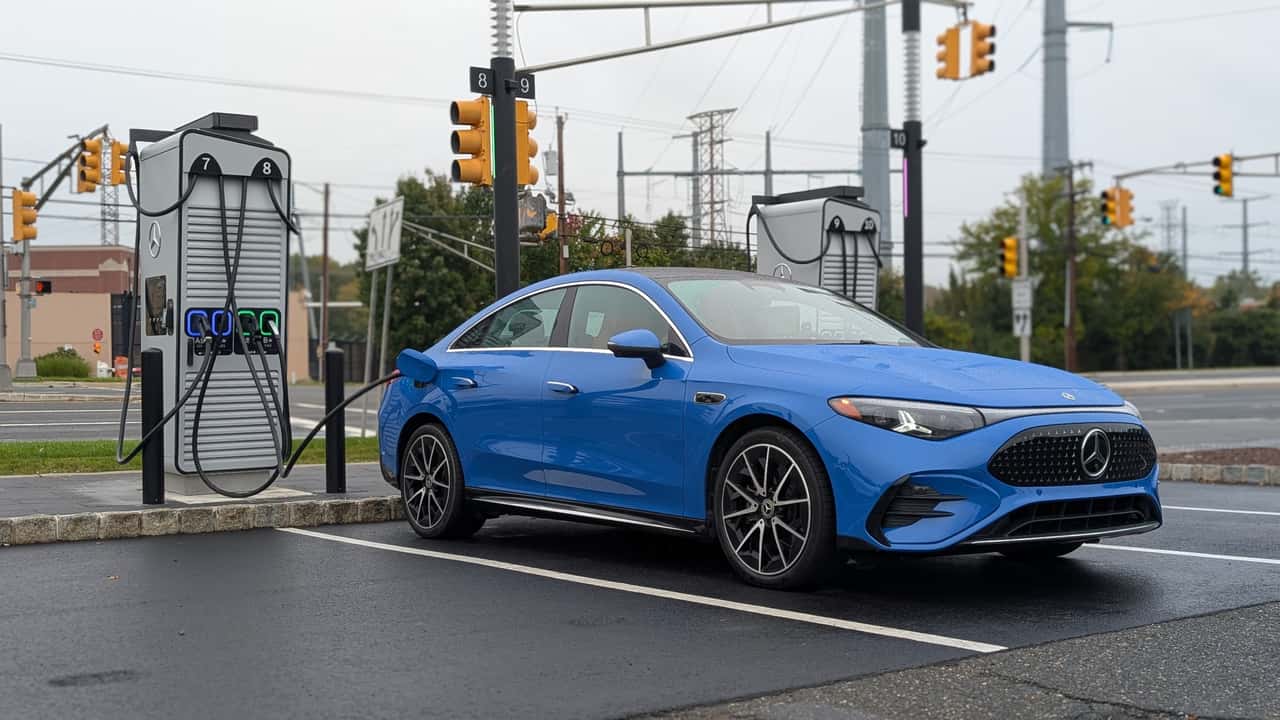
Photo by: Suvrat Kothari
Kevin Williams 
By: Kevin Williams
Nov 24, at 12:40pm ET
Add InsideEVs as a preferred source in Google
- (https://twitter.com/intent/tweet?url=https%3A%2F%2Finsideevs.com%2Fnews%2F816660%2Ftravel-tips-charging-holiday-road%2F&text=Here%E2%80%99s%20How%20To%20Make%20Your%20Holiday%20EV%20Road%20Trip%20Easier&via=InsideEVs)
- copy
Share
Comment
- Thanksgiving week is one of the most-traveled times of the year. Expect longer-than-usual queues at charging stations.
- Charging the night before your journey, or using a route planner, could help alleviate some of those concerns about EV charging queues.
- Be sure to bring NACS or CCS adapters to ensure your car can plug into every DC fast charger on roads.
It’s a short workweek for most of us here in the United States. In just a day or two, many of us will load up our cars and trek around the country to our loved ones. If you’re reading this, there’s a decent chance you’ll be taking on of those trips in an electric vehicle. EVs have come a long way, so in theory, range anxiety shouldn’t be much of an issue for anyone these days. Still, with so many drivers on the roads, there are bound to be annoyances that come with long EV road trips.
Here are a few tips that can take the edge off a long trip.
Try Preparing The Night Before

Photo by: Patrick George
DC fast charging times are getting better and better, but charging still takes longer than stopping for gas. Thus, bottlenecks can occur on well-traveled routes with limited DC fast charging stops. It’s just kind of the nature of the beast when most people are stopping for 20-30 minutes. Multiply that by the plethora of drivers also trying to charge up and get home, and well, it’s not hard to see why EV charging queues can balloon, adding time to your drive home.
But you can head some of that off if you prep the night before. For those with home charging, that means simply plugging the car in and ensuring it’s fully charged for the next day’s trip. For those who don’t have access to home charging, using a DC fast charger the night before, when everyone isn’t rushing to leave, could ease some of the frustration of charging up before getting on the roads.
Also, some DC fast charging companies give a discount for charging during off-peak hours. Prepping the night before won’t just save you time, it might save you money.
Use A Route Planner
Photo by: Kevin Williams/InsideEVs
We may have a set route in mind for our trip, and that could be all fine and dandy, but is it really the best route for our cars? Electric vehicles tend to consume more energy at higher speeds and when traveling up hills. Thus, it could be advantageous to maximize range by picking a flatter route, or one with lower speeds.
In most cases this won’t be necessary, but if you’re pushing the limits of your car and the infrastructure around you, it’s good to know. Most route planning apps—like A Better Route Planner, Plugshare, or even Google Maps—take into account which route is friendlier to your car’s range calculator, and may suggest detours if you get a big range boost from a route that’s nearly as quick.
These route planners will tell you exactly when and where to stop, depending on your car’s efficiency, your destination, your desired state of charge at arrival, and road conditions along the way. They can be adjusted to fit your real-world efficiency data or your need for breaks. Rather than just winging, using a route planner ensures you’re never in an uncomfortable situation without the range or charging ability to get where you need to go.
Always Have A Backup: Get Those Apps And Adapters Ready
Photo by: Hyundai
This goes hand in hand with route planning, but I think it is relevant here. The Sunday after Thanksgiving is typically the single busiest travel day of the year. You’re not the only one on the road who will need charging. Prepping the night before can help with the initial charging wait times at the start of your trip. If you’re on a long journey, chances are you’ll find yourself in a big queue at a strange charger.
When you’re planning your route with charging stops, pay attention to what brands they are and what ports they use. An increasing number of highway stops often have several competing charging stations. A Tesla Supercharging station could have an Ionna Rechargery nearby. Or maybe it’s an EV Go station. Or maybe it’s a charging station by Circle K or Shell. In any case, they tend to cluster together near high-power infrastructure. Rather than fumble with apps and payments at the station, I think it’s best if you research the charging companies on your route and pre-emptively install their apps and set up payment.
Similarly, bring an adapter. NACS is quickly making its way across the country, but not every station has NACS ports, and not every one has CCS. Some of the stations with your desired plug will likely be busy. An adapter that allows your car to access both NACS and CCS ports will save a lot of headaches.
Practice Good Charging Etiquette
Once again, you’re not the only one trying to get home for the holidays. Let’s keep the queue moving, and try not to charge more than 80%, if possible. Charging speeds slow substantially when EV batteries surpass 80%. It may have only taken 15-20 minutes to get to 80%, but it’ll take another 20 or so to reach 100%, or much longer in some cars. Chances are, there’s someone waiting. Not only is it courteous to unplug and move on, but it’s also probably quicker to charge again (if you need it) closer to your destination.

Stay informed with our newsletter every weekday
back
Subscribe For more info, read our Privacy Policy & Terms of Use.
What do you think?
View
Comments
Go Ahead And Take The Break, You Probably Need It
I know this list has mostly been about minimizing time lost due to charging, but I think it’s important to remember that it’s okay to take a break. Charging stops are inherently longer than refuelling a gas car, but I think that 15-30 minute break is helpful for safe driving. Taking a rest, using the restroom, or getting a snack can take the edge off a trip. Use an EV’s characteristics to your advantage.
I’ve been doing EV road trips since 2021, and it’s amazing to see just how far both vehicle range and charging infrastructure have come. Long trips are possible for most drivers these days, whereas years ago, it was a huge hardship or even impossible. With better apps, better infrastructure, and better cars, it’s only gotten easier. But it still pays to know what you’re doing. Drive safely out there, folks.
Related Articles
This 7-Seat EV Went 582 Miles On A Charge. But There’s A Catch
Pilot's EV Charging Network Isn't Slowing Down. It Just Hit 300 Locations
I Let Android Auto Plan My EV Roadtrip. Here’s How It Worked
The Rivian R2 Is A Charging Beast. But It's 'Just Fine' At Road Tripping
We want your opinion!
What would you like to see on Insideevs.com?
Take our 3 minute survey.
- The InsideEVs team
Share this Story
- (https://twitter.com/intent/tweet?url=https%3A%2F%2Finsideevs.com%2Fnews%2F816660%2Ftravel-tips-charging-holiday-road%2F&text=Here%E2%80%99s%20How%20To%20Make%20Your%20Holiday%20EV%20Road%20Trip%20Easier&via=InsideEVs)
- copy
GO TO COMMENTS
(
)
Got a tip for us? Email: tips@insideevs.com
View all comments ( )
Trending
Here’s How To Make Your Holiday EV Road Trip Easier
The BMW i3 Won Me Over In The Corners. But It Also Felt Wrong
These Are The Top 10 Black Friday EV Deals. Some Are $25,000 Off
Tesla's EVs Could Get One Big Upgrade Next Year
Latest Stories
- The BMW i3 Won Me Over In The Corners. But It Also Felt Wrong Nov 24 - Test Drives -
- Here’s How To Make Your Holiday EV Road Trip Easier Nov 24 - Charging -
- New York Says 'Enough Is Enough' To In-Car Subscriptions Nov 24 - News -
- An Empty EV Tried To Park Itself 868 Times In One Night. The Video Is Hilarious Nov 24 - News -
- These Are The Top 10 Black Friday EV Deals. Some Are $25,000 Off Nov 24 - Pricing -
- Lucid Gravity Robotaxis Just Took A Major Step Toward Commercial Launch Nov 24 - Autonomous Vehicles -
- The 2027 Cadillac Vistiq Gets A Price Bump And More Options Nov 24 - Pricing -
RECOMMENDED FOR YOU
‘We’re Moving Really Fast’: Ionna CEO On 500 kW EV Chargers And Flagship New Location
The BMW i3 Won Me Over In The Corners. But It Also Felt Wrong
Chevy, GMC, and Cadillac EV Owners Can Now Plug And Charge At Electrify America
New York Says 'Enough Is Enough' To In-Car Subscriptions
Tesla Drivers Can Now Plug In And Charge Automatically at Ionna Stations
An Empty EV Tried To Park Itself 868 Times In One Night. The Video Is Hilarious
BYD's Futuristic EV Charger Can Run On Sunshine And Batteries