Home
News
The U.S. Let Volvo Keep Selling Cars. Polestar Got A No. What About Mercedes?
China ties got Polestar banned in the U.S., and Mercedes-Benz is 20% Chinese-owned, but lawmakers may make an exception.
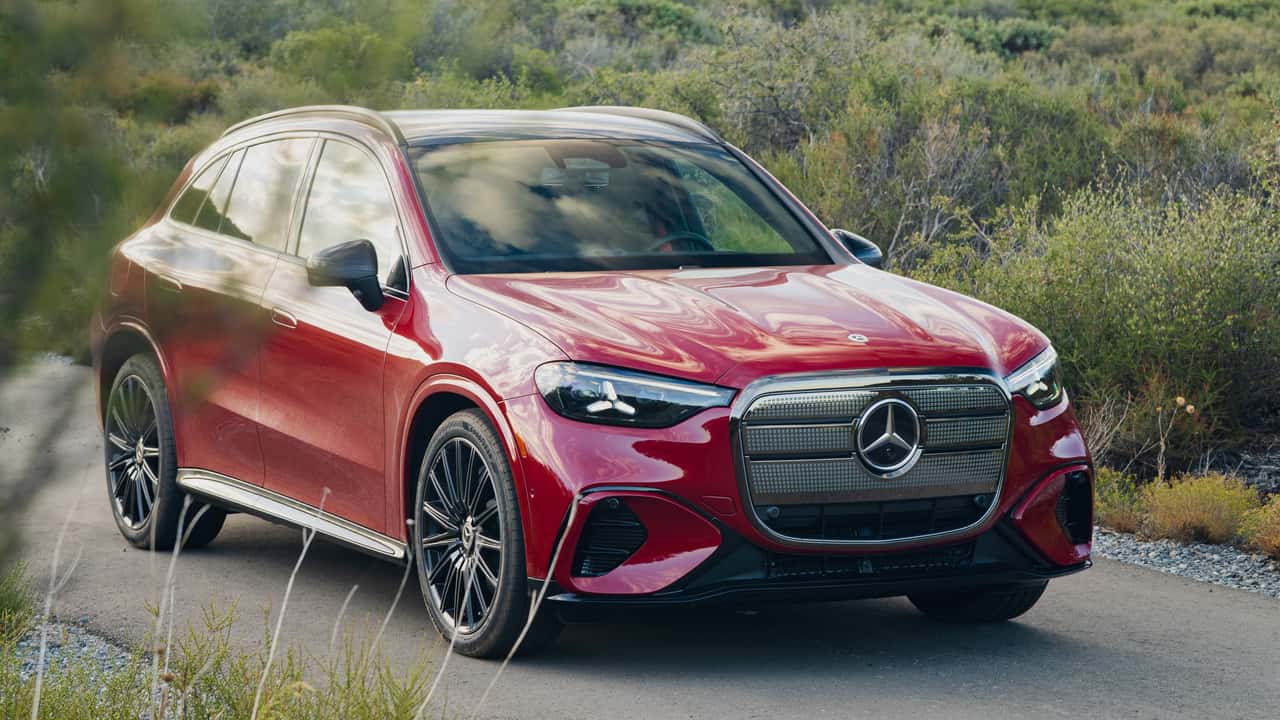
Photo by: Mack Hogan/InsideEVs
Andrei Nedelea 
By: Andrei Nedelea
Nov 22, at 8:00am ET
Add InsideEVs as a preferred source in Google
- (https://twitter.com/intent/tweet?url=https%3A%2F%2Finsideevs.com%2Fnews%2F816281%2Fmercedes-chinese-ownership-us-sales%2F&text=The%20U.S.%20Let%20Volvo%20Keep%20Selling%20Cars.%20Polestar%20Got%20A%20No.%20What%20About%20Mercedes%3F&via=InsideEVs)
- copy
Share
Comment
- Volvo can keep selling cars for now in the U.S. despite Geely’s roughly 79% stake in the company.
- There is new legislation working its way through Congress that may ban automakers with more than 15% Chinese ownership.
- Chinese investors own nearly 20% of Mercedes-Benz, above the bill’s proposed threshold. A possible exception or tweaks in the final version of the law could spare it.
The Volvo EX-90 and Polestar 3 roll off the same assembly line in South Carolina. They share much of their hardware and, according to Polestar, run the same software. However, when each manufacturer asked Washington for permission to keep selling them in America, they got different answers.
Now Congress is considering a tougher law aimed at keeping Chinese cars out of the U.S., one that could reintroduce headaches for Volvo and put another major automaker in a tough position. Congress is close to a deal on legislation that would ban cars from automakers with more than 15% Chinese ownership stake, as Bloomberg reported. This would be a tough pill for Mercedes-Benz, as around 20% of the company's stock is owned by Chinese investors.
But the publication reported that Republican and Democratic lawmakers are nearing a deal that could spare Mercedes. They want to send a bill to the president by the end of the year, but its terms have not yet been finalized.
Why Volvo Got A Yes And Polestar A No

Volvo EX90 assembly at the Volvo Ridgeville factory in South Carolina
Photo by: Volvo
The Volvo and Polestar decisions came under a Commerce Department rule finalized in 2025 aimed at controlling connectivity and self-driving technology. Washington’s concern is that a foreign adversary could use those systems to collect data on Americans or even remotely control vehicles. The new restrictions on certain Chinese- or Russian-linked software take effect for the 2027 model year. Hardware restrictions will follow in 2030 and apply to both gas and electric cars, including ones assembled on U.S. soil.
Chinese giant Geely has a majority stake in Volvo Cars, so the Swedish automaker had to apply for specific authorization to keep importing and selling connected cars. The Department of Commerce granted it. Volvo told InsideEVs it still has to meet the same software requirements as every other automaker. The Swedish foreign trade minister confirmed his government worked closely with Volvo to achieve compliance.

Stay informed with our newsletter every weekday
back
Subscribe For more info, read our Privacy Policy & Terms of Use.
Polestar is another Sweden-based automaker that is controlled by Geely. It applied and was denied authorization to keep selling cars from model year 2027 onward. So why was Polestar axed despite Volvo being saved? Polestar told its dealers it had asked the Department of Commerce that very question and had yet to get an explanation, pointing to the common software and the shared South Carolina production line.
Even though Polestar is a Volvo spinoff and also has a Swedish connection, the country’s trade minister said Polestar didn’t want the same assistance as Volvo. That’s one difference we know between their applications, but the U.S. government hasn’t explicitly said why things shook out this way, and Polestar did not appeal the decision.
Why Mercedes Is In The Conversation
Mercedes-Benz EQS SUV production in Alabama
The proposed Connected Vehicle Security Act would write existing restrictions into federal law and extend the U.S. sales ban to automakers with more than 15% Chinese ownership, even if they build their cars in America.
China’s state-owned BAIC Group owns 9.98% of Mercedes-Benz. Geely founder Li Shufu holds another 9.69% through an investment company. Taken together, that’s just shy of 20%, and over the new proposed threshold.
For reference, Geely owns 79% of Volvo and Geely founder Li Shufu reported beneficial ownership of 60.5% of Polestar’s shares in a September 2026 SEC filing.
That doesn't mean Mercedes will be locked out of the market, though, even if the bill passes as currently written.
“The U.S. is an extremely important market for us, and we're not going to do anything to jeopardize our success in the past and our success in the future,” Jason Hoff, CEO of Mercedes-Benz North America, said during a media roundtable with InsideEVs last week.
When asked whether the company had a plan for its Chinese shareholders to divest, Hoff declined to comment on specific conversations Mercedes has with shareholders. He was more direct about the legislation itself.
“You know, we always have and always will support anything that protects the national security of the United States. So we've never opposed this bill, but you know, in the end, we'll also take whatever steps we need to comply with it if it does get passed," Hoff said.
What do you think?
View
Comments
Mercedes says its Chinese shareholders have no seats on its management board and no say in day-to-day decisions. They could still have voting rights as shareholders. That matters because, according to Bloomberg, lawmakers are considering an exception that would let companies exclude passive investments with no voting rights from the proposed 15% ownership calculation.
It’s still unclear how Mercedes would prove its Chinese stakes qualify. In the meantime, House members have asked Mercedes to provide documents, answer two dozen questions by December 1, and arrange a meeting with its U.S. boss.
Even Russia Is Beating The U.S. In EV and PHEV Market Share
America's Clean Car Retreat Is Complete. The World Will Move On Without Us
Trump Could Be Ready To U-Turn On Chinese EVs, One Senator Claims
China Has An Iron Grip On EV Batteries. Here's America’s Plan To Break It
We want your opinion!
What would you like to see on Insideevs.com?
Take our 3 minute survey.
- The InsideEVs team
Share this Story
- (https://twitter.com/intent/tweet?url=https%3A%2F%2Finsideevs.com%2Fnews%2F816281%2Fmercedes-chinese-ownership-us-sales%2F&text=The%20U.S.%20Let%20Volvo%20Keep%20Selling%20Cars.%20Polestar%20Got%20A%20No.%20What%20About%20Mercedes%3F&via=InsideEVs)
- copy
GO TO COMMENTS
(
)
Got a tip for us? Email: tips@insideevs.com
View all comments ( )
Trending
Lucid Is Slashing $15,000 Off The Gravity, But The Deal Won’t Last Long
The Remnants Of The Electric Saab That Never Was Are Going Up For Auction
What We Both Thought After Driving The Rivian R2
Aptera Finally Built Its First Car For Customer Delivery
Latest Stories
- The U.S. Let Volvo Keep Selling Cars. Polestar Got A No. What About Mercedes? Nov 22 - News -
- Tesla FSD V15 Makes Your Drive Look Like Grand Theft Auto Nov 22 - News -
- Waymo Is Recalling Its Robotaxis Because They're Not Great At Dealing With Human Instructions Nov 21 - Autonomous Vehicles -
- This EV-Swapped 1967 Porsche 912 Has 300 HP And A Split Battery Pack Nov 21 - News -
- This Plug-In Hybrid SUV Towed A Boeing 747 On Only 2 Wheels. Yes, Really. Nov 21 - Towing -
- BYD's Latest SUV Can Hide Its Steering Wheel When You Don't Need It Nov 20 - China -
- What We Both Thought After Driving The Rivian R2 Nov 20 - Podcast -
RECOMMENDED FOR YOU
The Best EV Lease And Finance Deals In November 2026
Tesla FSD V15 Makes Your Drive Look Like Grand Theft Auto
Mercedes Is Bringing Hands-Free Driving To Certain U.S. Highways In 2027
Waymo Is Recalling Its Robotaxis Because They're Not Great At Dealing With Human Instructions
I Tried Mercedes' Answer To Tesla FSD. Here's How It Went
This EV-Swapped 1967 Porsche 912 Has 300 HP And A Split Battery Pack
This Mercedes Went 539 Miles On A Charge. Is Range Anxiety Finally Dead?