
Even Russia Is Beating The U.S. In EV and PHEV Market Share
Gasoline shortages are pushing Russian buyers toward electric cars and plug-in hybrids. Most of them come from China.

-
EVs and PHEVs have captured a larger share of the Russian market as the country reels from a fuel crisis.
-
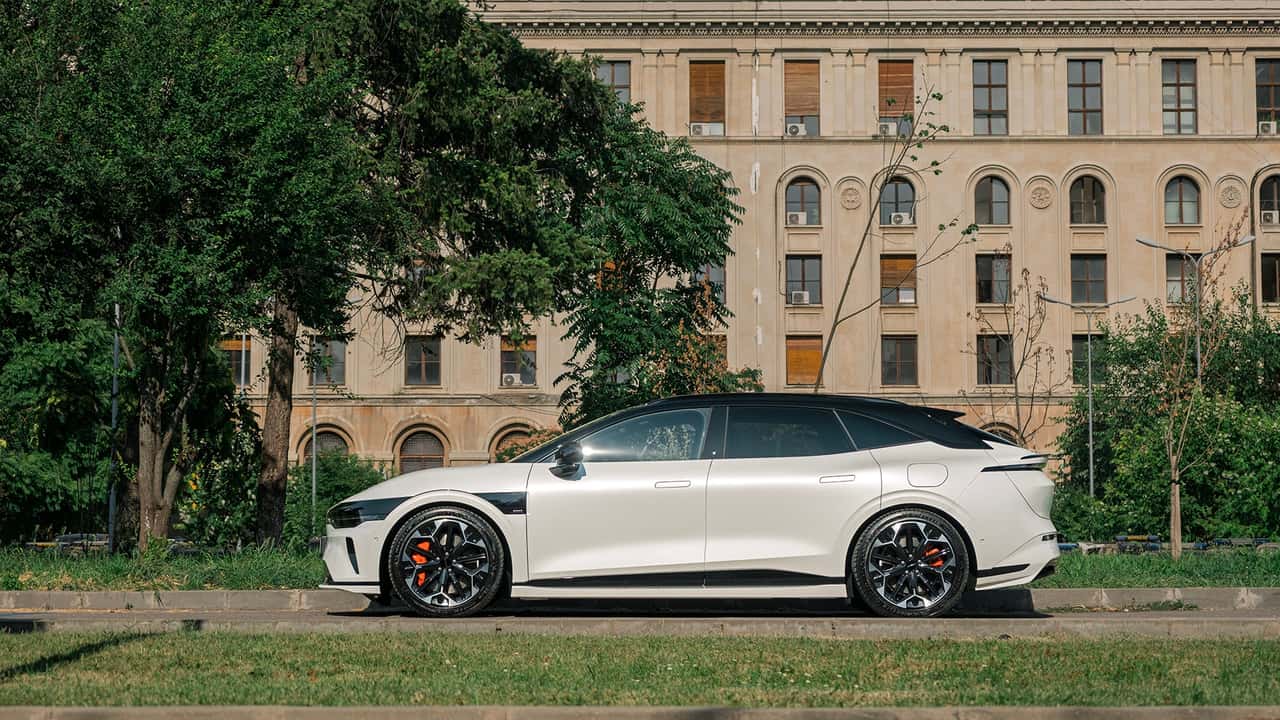
Gasoline shortages following Ukrainian refinery strikes are pushing Russian buyers toward Chinese plug-in cars.
- Russia's EV and PHEV market share is now higher than the U.S.'s
Russia is an unlikely place for an electric car sales breakthrough. It has enormous oil resources, long driving distances, middling infrastructure, and winters that wreak havoc on EV range. Yet it now has a higher share of plug-in car sales than the United States, according to new research from Autostat, as cited by The New York Times. There's a clear reason why
Ukrainian strikes on Russian refineries have disrupted fuel supplies, leaving motorists searching for gasoline or waiting hours at stations, as the NYT has reported. So while the country has plenty of oil, refining it and delivering it to customers has been a major challenge in 2026. That has given some buyers a pressing reason to choose a car that can run without it.
Citing Russian automotive research agency Autostat, the NYT reports that electric vehicles and plug-in hybrids reached a combined 11.5% of Russia’s new car market at the end of September, up from about 5% at the beginning of the year. That share is slightly higher than America’s.
The statistic includes plug-in hybrids, so it doesn't establish that Russia has overtaken the U.S. in fully electric cars alone.
Autostat chief Sergei Tselikov recounts what determined him to make the switch. After visiting five nearby gas stations, none of which had gasoline, he bought a GWM Ora 03 GT electric hatchback in July. He notes that the model’s price rose by roughly $2,000 within days as demand increased.

Reuters reported that Russian sales of new pure electric cars and plug-in hybrids reached 26,543 during the months of June through August, more than double the 12,187 sold in the same period a year earlier. It linked the increase to fuel shortages and said suppliers had been caught off guard by demand. Separately, NEWS.ru cited Tselikov reporting 2,216 new electric-car sales in August, up 105%, with the main growth coming from models priced at 2 million–3 million rubles ($23,500–$35,300).
America, meanwhile, faces a different disruption. EV sales spiked just before September 30, 2025, when the federal tax credit ended, then immediately slumped, although they have shown some signs of recovering.
Cox Automotive estimates that Americans bought 78,895 new battery-electric vehicles this August, accounting for 5.7% of new-vehicle sales. Volume rose 2.5% from July but fell 46.9% against the unusually strong August 2025 comparison. That is a BEV-only figure, so it should not be compared directly with Russia’s combined 11.5%.
The Energy Information Administration, citing Omdia, says BEVs represented 6% of new light-duty sales in the second quarter, with PHEVs adding 1.4%. It covers an earlier period than Russia’s reported September share, but shows how low plug-in interest remains among Americans, although conventional hybrids reached 16%.
The European Union is much further along. ACEA reports 1.64 million BEV registrations during January through August, representing 21.7% of new cars. Another 758,082 PHEVs brought the combined plug-in share to 31.7%. In Europe, more model choice and lower prices are helping buyers switch, with higher fuel prices providing a clear nudge.
China operates on another scale again. According to CPCA figures, August retail sales included 698,000 BEVs and 307,000 plug-in hybrids (including range extenders). That is roughly 1 million plug-in cars capturing over 65% of the country’s passenger car market. Fully electric models alone accounted for approximately 45.3%.
The numbers aren’t perfectly apples-to-apples. But in a world of rising gas prices and growing EV demand, America looks further and further behind the pack.
RECOMMENDED FOR YOU

South Korean Police Are Cracking Down On Tesla Owners Jailbreaking FSD
This 400 kW EV Charger Uses Old EV Batteries To Avoid Costly Grid Upgrades
Do Those Funky Tesla Wheel Covers Actually Boost Range?
A YouTuber Turned An Old BMW i3 Into A Tiny Pickup Truck For $8,000
How Cheap Chinese EVs Are Sneaking Around Europe's Tariffs
Rivian Is Selling More Vans Than R1S And R1T EVs Combined
'A Weird Religious Stance:' GM Exec Says Ditching Radar For Self-Driving 'Ignores Physics'