
How Cheap Chinese EVs Are Sneaking Around Europe's Tariffs
One Chinese online car marketplace found a loophole to bring cheap, used Chinese EVs to Europeans.
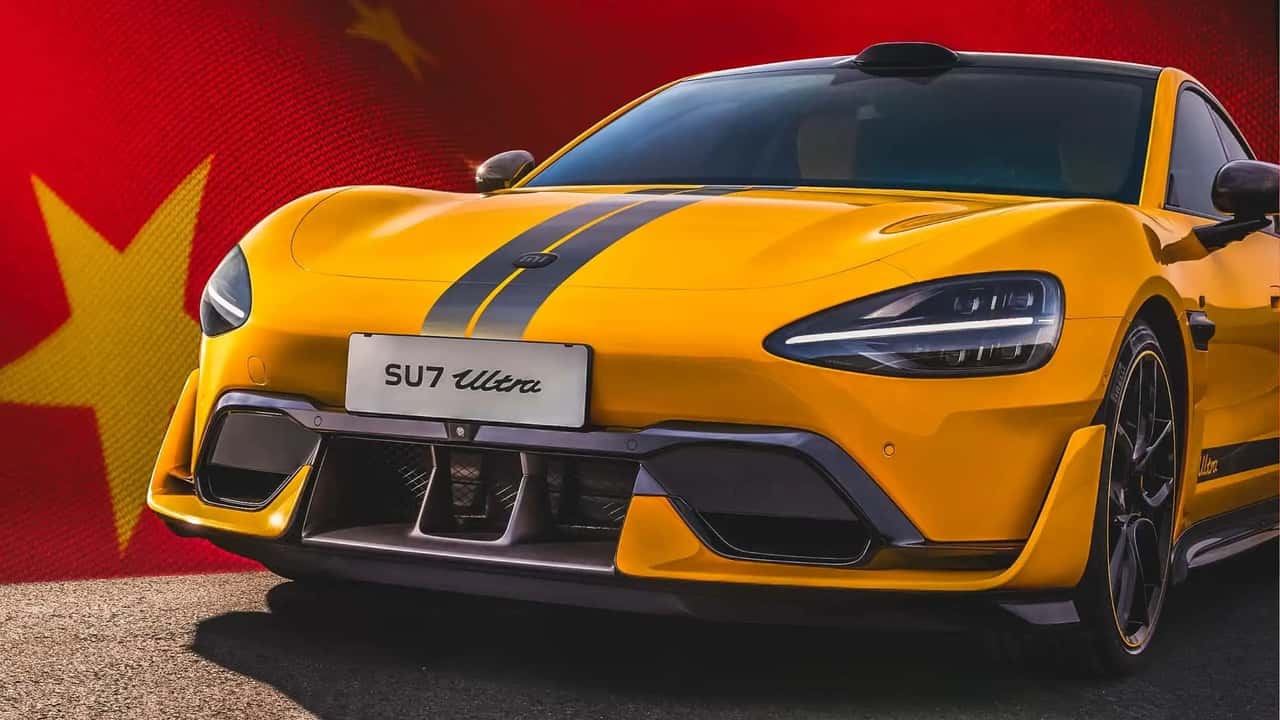

- Used EV exports from China to Western countries are growing rapidly.
- European buyers have found a loophole to importing Chinese EVs without additional massive tariffs.
- China EV Marketplace exported 290% more cars to Europe so far this year.
The Western world has spent the past few years building a fairly substantial tariff wall around inexpensive Chinese EVs. China, meanwhile, spent that same time perfecting the craft of building an enormous amount of low-cost cars.
You can probably guess what happened next: someone found a backdoor that lets consumers bypass those tariffs. The key is buying used cars instead of new ones.

China EV Marketplace, a company that exports Chinese vehicles and parts abroad, told CarNewsChina that the number of used cars it sold to Europe increased by more than 280% year-over-year. Throughout the end of September, it managed to export 7,900 cars to the EU. Those vehicles enabled buyers to navigate around Europe's import duties of up to 45.3% on Chinese EVs. Vehicles with over 6,000 kilometers are only subject to 10% tariffs, according to the China EV Marketplace.
The marketplace currently has more than 2,600 used cars for sale on its site. These include popular EV brands like BYD, Geely, Nio, Xiaomi, Zeekr, and more. The cheapest vehicle listed is a 2022 CheryQQ Little Ant city car for around $4,000. The priciest is a Zeekr 009 luxury van for $120,000.
The pitch is simple—its Shanghai-based buyers find used, low-mileage EVs and act as a broker to sell them to buyers across the sea. Other costs like inspection, shipping, plus standard import and homologation fees all still apply. But those prices are still low enough to attract a significant number of buyers.
According to the company's website, it can ensure that any vehicle you buy is homologated to be street legal in the EU. (Sadly, the workaround doesn't quite work in the U.S., which means neither of us are going to score a cheap Xiaomi SU7, sorry.) The whole process isn't quick, though. China EV Marketplace says it takes up to three weeks to get your car ready for shipping, then up to three months for it to actually reach your local port. After that comes certification, customs, and local shipping. There are other hurdles to actually using a Chinese-market vehicle in Europe; the company notes that it can set you up with a charging adapter to interface between the Chinese and European plug standards.

EVs aren't the endgame, either. Europe's new import cap of 350,000 new Chinese-sourced plug-in hybrids also has buyers seeking the used route to avoid the artificially inflated markup.
"Tariffs have already weakened demand for new Chinese BEVs among our European customers. We expect the hybrid import cap to put pressure on new PHEV sales too,” said China EV Marketplace's COO, Jakub Gersl, in a statement to CarNewsChina. "Pre-owned cars are exempt from the additional BEV tariffs and from the new hybrid (PHEV) quota. That is why we are making pre-owned vehicles the main focus of our European business."
For now, this particular loophole exists mostly for Europe and a select few other markets. Though with more and more countries gaining exposure to Chinese EVs, other North American markets like Canada and Mexico probably aren't that far off of the CEVM.
More Chinese EV News
RECOMMENDED FOR YOU
BYD's New 3-Row SUV Brings 5-Minute Flash Charging To European Families
Tesla's Cybercab Fixes A Big Repairability Problem With Its Structural Batteries
BYD Will Put Solid-State Batteries In An EV Next Year: Executive
GM Didn't Want Hybrids. Now It's Putting Them In Its Biggest SUVs: Report
BYD’s $10,000 EV Is Getting A Huge Upgrade, With 5-Minute Charging
ChargePoint’s New Charger Can Hit A Whopping 750 kW. That's Not Even Its Best Trick.
'A Weird Religious Stance:' GM Won't Be Going Camera-Only For Self-Driving Cars