Home
Dacia
Spring
News
Dacia’s Answer To Cheap Chinese EVs Used To Be One. Now It’s European
Built in Slovenia, the all-new Dacia Spring gets a roomier body and up to 155 miles of range, starting at €17,900 in Italy.
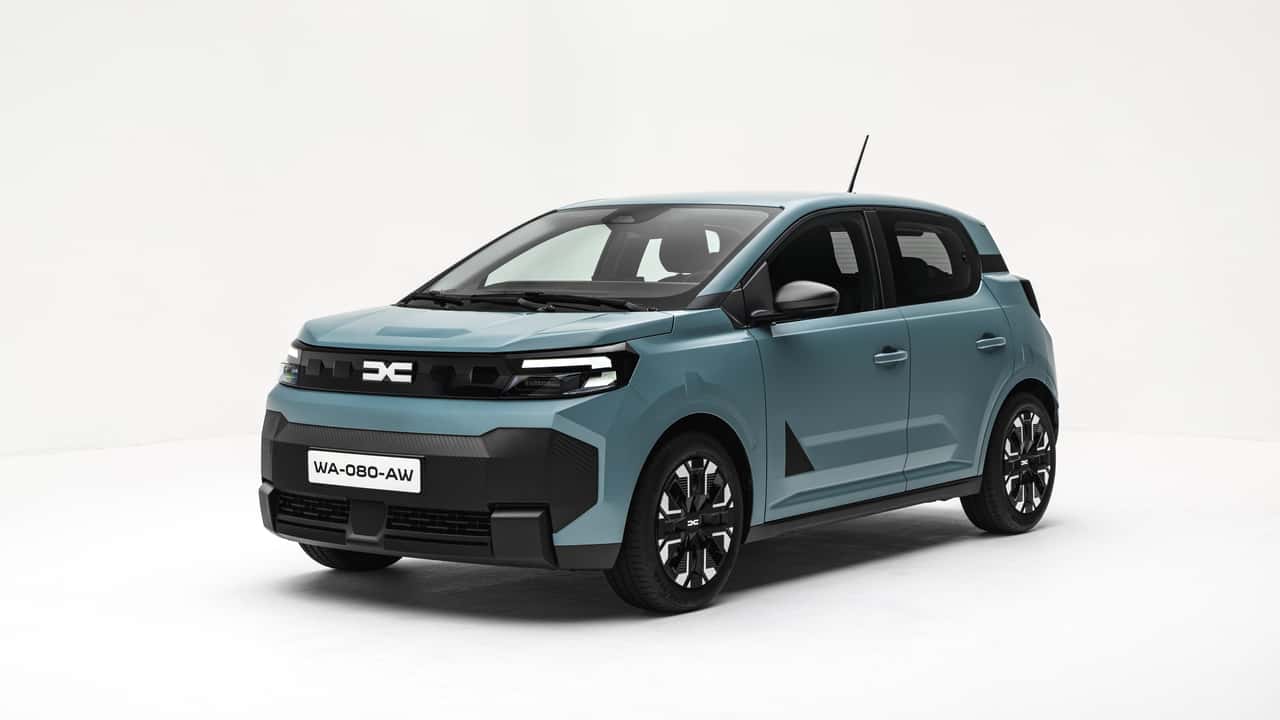
Photo by: Dacia
Andrei Nedelea 
By: Andrei Nedelea
Sep 8, at 1:24am ET
Add InsideEVs as a preferred source in Google
- (https://twitter.com/intent/tweet?url=https%3A%2F%2Finsideevs.com%2Fnews%2F807452%2Fall-new-dacia-spring-revealed%2F&text=Dacia%E2%80%99s%20Answer%20To%20Cheap%20Chinese%20EVs%20Used%20To%20Be%20One.%20Now%20It%E2%80%99s%20European&via=InsideEVs)
- copy
Share
Comment
- The all-new Dacia Spring moves production from China to Slovenia, starting at €17,900 in Italy.
- It shares its platform with the Renault Twingo and offers up to 155 miles of WLTP range from a 27.5-kWh LFP battery.
- A larger body brings more space, while optional 50-kW DC charging takes the battery from 15–80% in 28 minutes.
Can Europe build affordable electric cars without handing the business to China? The original answer from European budget brand Dacia came with an ironic twist: Its affordable Spring EV was built in China. The completely redesigned second generation changes that, moving production to Slovenia while keeping its price low.
In Italy, it starts at €17,900, and even the better-equipped Journey trim doesn’t exceed €20,000. That’s about the same as the outgoing China-made model, and you get an all-new European-made car with better specs.
This isn’t another facelift. The Spring has had several, and none could hide the fact that it was still related to the Renault Kwid, a cheap combustion car for the Indian market. The new Spring shares its platform with the new Renault Twingo E-Tech, but it wants to look chiseled and serious, not cute and cheerful like the French car.
Gallery: Dacia Spring (2027) Debuts in Paris

102
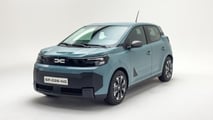

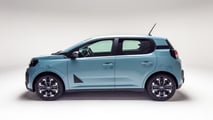
Source: Motor1.com Germany
The Spring’s specifications look very familiar alongside the Renault’s. Both have a single front-mounted motor producing roughly 80 horsepower and 175 Nm (129 pound-feet), and they both draw from a 27.5-kilowatt-hour battery. Dacia confirms the pack’s LFP chemistry and says the state capacity is the usable number. The Spring manages up to 250 kilometers (155 miles) on the WLTP cycle, slightly behind the Twingo’s 263 kilometers (163 miles).
That’s if you can match the claimed consumption figure of 4.9 miles/kWh (12.7 kWh/100 km).
It accelerates from a standstill to 100 km/h (62 mph) in 12.1 seconds and tops out at 130 km/h (81 mph). That's pretty slow, but Dacia says existing Spring owners average just 34 kilometers (21 miles) per day; you mostly see these cars in town, and 75% of charging takes place at home. This car is built around those routines.

Stay informed with our newsletter every weekday
back
Subscribe For more info, read our Privacy Policy & Terms of Use.
Using a 7-kW home wallbox, the Spring’s standard 6.6-kW onboard charger takes 2 hours and 55 minutes to charge the battery from 15% to 80%. The optional 11-kW charger cuts that to 1 hour and 55 minutes when connected to a sufficiently powerful three-phase wallbox.
As with the previous model, a DC fast charger isn't standard. It's bundled with the more powerful AC charger, and even though it only charges at up to 50 kW, which is pretty modest, it can bring the battery from 15-80% in 28 minutes.
The base Expression trim gets manual air conditioning, rear parking sensors, a seven-inch digital instrument display and a smartphone-based multimedia system—it has no central screen. Journey adds a 10.1-inch touchscreen with wireless Apple CarPlay and Android Auto, a reversing camera, and keyless entry.
Crank Windows And No Radio: Why American Cheap EVs May Be Far More Spartan Than Chinese Ones
Cheap Chinese EVs? Canadians Are More Interested Than You’d Think
These Cheap Chinese EVs Could Do Great In Canada
Europe’s Favorite Cheap SUV Is Going Electric
What do you think?
View
Comments
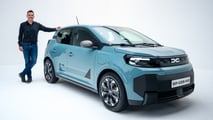
Measuring 3.85 meters (151.5 inches), the new Spring is 15 centimeters (5.9 inches) longer than the outgoing model. It’s also 18 cm (7 in) wider than before, which makes it look much more planted on the road and a lot less like a tall and narrow kei car.
Dacia says it developed the new Spring in less than two years. Sharing its underpinnings with the Twingo helps keep costs and development time down, giving it a credible shot at competing with Chinese rivals on value. European production could help win over buyers, too, especially since choosing it doesn’t mean paying a hefty premium.
We want your opinion!
What would you like to see on Insideevs.com?
Take our 3 minute survey.
- The InsideEVs team
Share this Story
- (https://twitter.com/intent/tweet?url=https%3A%2F%2Finsideevs.com%2Fnews%2F807452%2Fall-new-dacia-spring-revealed%2F&text=Dacia%E2%80%99s%20Answer%20To%20Cheap%20Chinese%20EVs%20Used%20To%20Be%20One.%20Now%20It%E2%80%99s%20European&via=InsideEVs)
- copy
GO TO COMMENTS
(
)
Got a tip for us? Email: tips@insideevs.com
View all comments ( )
Trending
Kia EV3 Lease Deals Are Here, And It’s Cheaper Than The Chevy Bolt And Nissan Leaf
I Let Android Auto Plan My EV Roadtrip. Here’s How It Worked
This Chevy Bolt Has 470,000 Miles. Here’s How Much A New Battery Was
Here's What It's Like To Take Delivery Of A Rivian R2
latest articles
- Can The BMW iX3 Take Down The Tesla Model Y L And Rivian R2? Oct 20 - News -
- Waymo Plans To Have 20,000 Cars By The End Of 2027 Oct 20 - News -
- The Boring Company Uses Tesla Model 3 Sleds To Shuttle Shipping Containers Through Its Tunnels Oct 20 - News -
- How Much Range Do EVs Lose When Parked? (And How to Stop It) Oct 20 - EV 101 -
- This Chinese EV Is Now Made In Europe. More Are Coming Oct 20 - News -
- GM Is Closing Its Detroit EV Battery Plant Oct 20 - Industry -
- The 2027 Lexus NX Plug-In Hybrid Gets A Bigger Battery And Fast Charging Oct 20 - Official -
RECOMMENDED FOR YOU
Waymo Plans To Have 20,000 Cars By The End Of 2027
How Much Range Do EVs Lose When Parked? (And How to Stop It)
The Boring Company Uses Tesla Model 3 Sleds To Shuttle Shipping Containers Through Its Tunnels
GM Is Closing Its Detroit EV Battery Plant
This Chinese EV Is Now Made In Europe. More Are Coming
The 2027 Lexus NX Plug-In Hybrid Gets A Bigger Battery And Fast Charging
Here's What It's Like To Take Delivery Of A Rivian R2