Home
News
Cheap Chinese EVs? Canadians Are More Interested Than You’d Think
Plus, Germany ranked second-highest in EV production last year, and automakers argue for the safety of robotaxis.
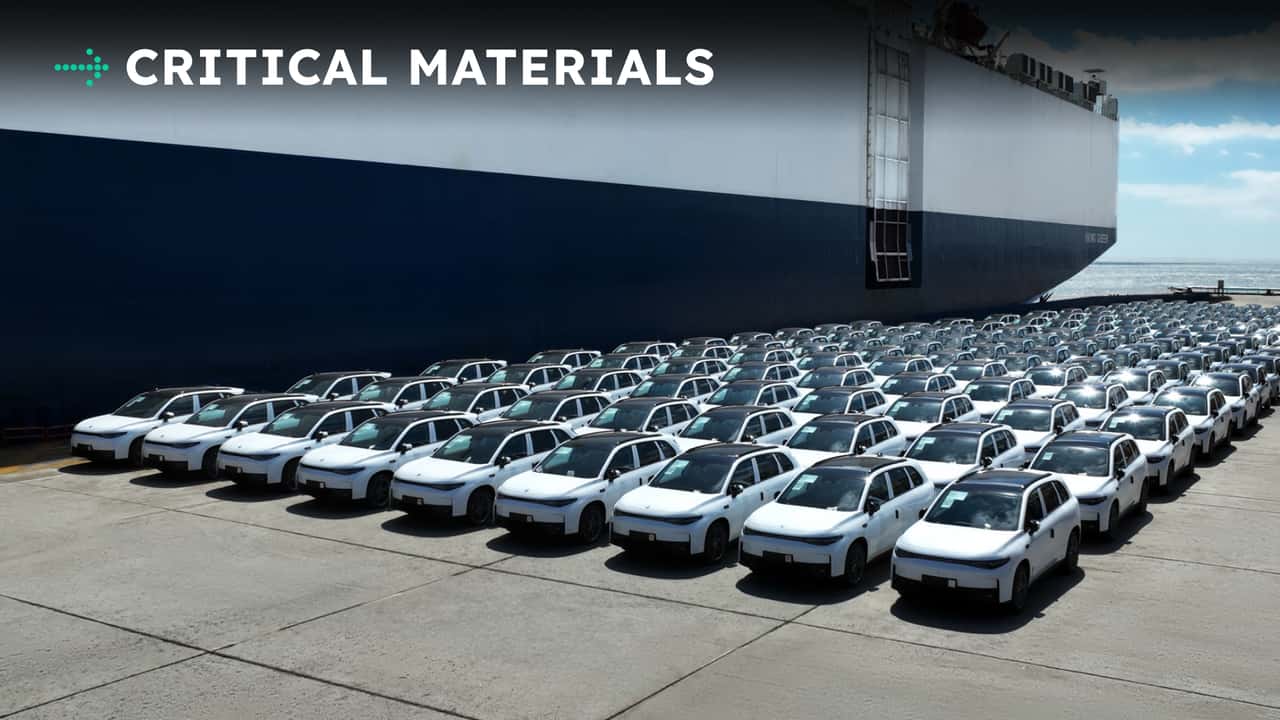
Photo by: Leapmotor
Rob Stumpf 
By: Rob Stumpf
Feb 5, at 10:00am ET
Add InsideEVs as a preferred source in Google
- (https://twitter.com/intent/tweet?url=https%3A%2F%2Finsideevs.com%2Fnews%2F786422%2Fcanada-chinese-ev-survey-positive%2F&text=Cheap%20Chinese%20EVs%3F%20Canadians%20Are%20More%20Interested%20Than%20You%E2%80%99d%20Think&via=InsideEVs)
- copy
Share
Comment
When Canada announced it would ease tariffs on imported Chinese electric cars, American automakers went nuts. Cheaper, more modern vehicles on the way to what was once an important manufacturing partner to Detroit—and that's a bit too close to home for comfort.
Canadians, on the other hand, are here for it. Not only will they be getting more affordable cars, but they also get to watch as their neighbors to the south get green with EV envy.
Get Critical Materials in your inbox.
The must-read auto and tech briefing, every weekday.
Sign up here.
Welcome back to Critical Materials, your daily roundup for all things electric and tech in the automotive space. Also on deck: Germany ranked second in EV production last year and automakers argue the safety of self-driving in D.C. Let's jump in.
One note for our regular readers: Starting next Monday, Feb. 9, the full Critical Materials roundup will only be available as a newsletter. Sign up above to get our EV news and analysis in your inbox each morning.
25%: Canadians Really Do Want Chinese EVs: Report

Photo by: Xiaomi
It's not just Ford CEO Jim Farley who's really into Chinese EVs. It turns out that pretty much all of Canada is open to the idea of these high-tech electric cars hitting its streets.
A new poll by Leger shows that not only are Canadians aware of the deal to import more Chinese EVs into Canada with a dramatically reduced 6% tariff rate, but the majority of those surveyed actively supported the measure. Canada's CTV National News breaks down the numbers:
The Leger poll indicates seven in 10 people surveyed were aware of the agreement between Ottawa and Beijing, with awareness significantly higher among men and people aged 55 and over.
61% of respondents supported allowing more Chinese electric vehicles into the Canadian market, including 24% who strongly backed the decision and 38% who somewhat supported it.
Support was notably higher in Quebec at 72%, as well as among men and Canadians aged 55 and over.
This is pretty awkward timing for North American automakers. Canada has spent decades aligning its vehicle standards and supply chains with the U.S.—where Chinese-built EVs are effectively blocked from the market due to either regulatory constraints or tariffs that make the vehicles too expensive to import and sell. Yet Canadians, who are faced with rising living costs and fewer affordable EV options, appear to be more interested in results rather than protectionist ideology.
The drive behind that attitude is simple, too. Chinese automakers are very good at building EVs quickly and cheaply. We're talking about quality vehicles with tons of tech inside that make even the most modern Western cars feel like the Stone Age. It's arguably hard for consumers to ignore, especially when government incentives are shrinking or disappearing.
Meanwhile, domestic brands will soon start to feel the pressure. If Canadians are open to Chinese EVs and the vehicles prove to be competent and align with American safety standards, the reason to block the cars out of the U.S. market starts to melt away.
50%: Germany Ranks Second In EV Production For 2025
Volkswagen ID.3 GTX (2024)
While American automakers slowly backed out of prior EV manufacturing commitments last year, Germany quietly did something that nobody expected: it kept building.
According to figures published by the German Association of the Automotive Industry (VDA), Germany produced a whopping 1.67 million electrified passenger cars last year, a whopping 73% of which were full battery-electric vehicles. That helped to lock Germany in as the world's second-largest EV production hub, comfortably ahead of the U.S. (though well behind China). Here's Reuters with the numbers:
Production of battery-electric vehicles rose by 15% to 1.22 million, while plug-in hybrid production jumped by 54% to around 450,000, according to the data, published on Feb. 4.
In total, 1.67 million electric passenger cars were manufactured domestically, a 23% increase.
That made Germany again the second-most-important production location for electric cars worldwide, ahead of the U.S. with 1.04 million, VDA said, while China produced 16.1 million.
From a manufacturing perspective, Germany is doing exactly what it said it would do, despite the global EV market hitting a bit of uncertainty and purchasing incentives starting to wobble.
Moving forward, Germany will still need to face the test of consumerism with cheaper alternatives flooding the market. But industry leaders say they aren't worried, believing that European vehicle quality will keep demand solid in the long run. The latest numbers don't exactly bear that out.
75%: Tesla and Waymo Defend Self-Driving In Before The Senate
Photo by: Patrick George
A U.S. Senate committee heard from the top brass at Tesla and Waymo on Wednesday on the topic of self-driving. Both companies made the argument that their autonomous driving systems are safer than humans (and that's despite recent incidents like striking a child or running over a cat).
The two-and-a-half-hour-long committee meeting didn't result in any meaningful actions, but CBS News breaks down the polarized essence of the hearing:
Senators on the Senate Committee on Commerce, Science and Transportation on Wednesday expressed an eagerness to eliminate avoidable crashes from distracted or otherwise impaired drivers through autonomous vehicles, but also expressed concerns about recent autonomous vehicle incidents.
"Fully autonomous vehicles offer the potential to reduce crashes on roads, but we have seen the risk of letting companies beta test on our roads with no guardrails," said the committee's ranking member, Sen. Maria Cantwell of Washington.
What makes this interesting is that both companies have very different takes on autonomy. Waymo believes in stuffing as much sensor data into its systems as possible and slowly building out its operational design domain, while Tesla believes that vision-based sensors can solve all of its problems and hopes that its fleet of cars around the world will feed enough data back to train its models at a faster speed.
The government is balancing an argument of safety versus rapid deployment. They understand that pushing out autonomous vehicles that deliver on the objective of safer driving could mean safer roads, but in the same breath, they also acknowledge that enrolling all Americans as beta testers alongside these cars could be a safety risk without proper federal oversight.
Bryant Walker Smith, a professor at the University of South Carolina School of Law, summed it up perfectly in his written testimony:
We find ourselves in a time of profound change. Change often involves a loss of control, whether actual or perceived. That can be scary and destabilizing both for individuals and for societies.
The ability of communities to set their own rules—and yes, even restrictions—on AVs acts as a steam release valve on a boiler. It keeps pressure from building up, and that in turn reduces the risk of catastrophic explosion.
Would I advise a community to ban AVs? Absolutely not. I would tell them that we should be concerned about automated driving but terrified about conventional driving. Nevertheless, preserving that option lets me have that conversation.
What do you think?
View
Comments
100%: How Should The Feds Handle Driverless Cars?
Photo by: Patrick George
I don't think it's hard to admit that no single manufacturer has driverless cars down to a perfect science yet. There's a giant gap for that last little bit of perfection—but, admittedly, it could be the difference between getting to work on time without touching the steering wheel and never coming home again. Clearly some significant safety issues that need to be addressed and handled before self-driving is anywhere near what any sane person would consider to be ready to prime time.
How should federal regulators handle self-driving cars? Should there be more regulatory oversight to protect consumers, or would speeding up development help to solve the problems at a faster pace and, as a result, hopefully save more lives?
More EV News
Ford May Partner Up With A Chinese EV Company. It's Part Of A Growing Trend.
Is The World's First Solid-State Battery EV Already Delayed? (Updated)
I Drove The 2026 Polestar 4. It May Be America's Weirdest EV
BMW's Most Important Electric Car Is One Big Step Closer To Your Driveway
We want your opinion!
What would you like to see on Insideevs.com?
Take our 3 minute survey.
- The InsideEVs team
Share this Story
- (https://twitter.com/intent/tweet?url=https%3A%2F%2Finsideevs.com%2Fnews%2F786422%2Fcanada-chinese-ev-survey-positive%2F&text=Cheap%20Chinese%20EVs%3F%20Canadians%20Are%20More%20Interested%20Than%20You%E2%80%99d%20Think&via=InsideEVs)
- copy
GO TO COMMENTS
(
)
Got a tip for us? Email: tips@insideevs.com
View all comments ( )
Trending
GM's Next-Generation EV Platform Has 30% Less Wiring And 20% Less Battery
Can The BMW iX3 Take Down The Tesla Model Y L And Rivian R2?
GM's OnStar AI Assistant Debuts In The Cadillac Lyriq
Electrify America’s Largest EV Charging Station Is Missing One Big Thing
latest articles
- Spotify’s First Native In-Car App Is Hitting Audi EVs First Oct 22 - Software -
- Tesla Says 75% Of New Car Buyers Subscribe To FSD In North America Oct 21 - News -
- 'End Of The Year': Tesla Says Cybercab Customer Deliveries Will Begin Soon Oct 21 - News -
- The Midterms Won't Mean Much For EV Policy, Analysts Say Oct 21 - News -
- General Motors Isn't 'Walking Away' From EVs, Top Exec Says Oct 21 - News -
- GM Is Adding Its Own Version Of Tesla's Sentry Mode To Cars Oct 21 - News -
- Rivian Was The Second Best-Selling EV Brand In Q3 2026, But Still Far Behind Tesla Oct 21 - News -
RECOMMENDED FOR YOU
Tesla Says 75% Of New Car Buyers Subscribe To FSD In North America
Spotify’s First Native In-Car App Is Hitting Audi EVs First
'End Of The Year': Tesla Says Cybercab Customer Deliveries Will Begin Soon
The Midterms Won't Mean Much For EV Policy, Analysts Say
The Best Affordable Electric Cars In 2026: Cheap, Reliable Options For Everyone
General Motors Isn't 'Walking Away' From EVs, Top Exec Says
The Boring Company Uses Tesla Model 3 Sleds To Shuttle Shipping Containers Through Its Tunnels